Beach Tennis Rules: The Ball Never Bounces
ITF beach tennis rules, where the ball may never bounce on your side.
Beach tennis is a racket sport played mostly as doubles on sand, and the ball may never bounce on your side. At Wildcard Sport, we research official federation rulebooks and equipment specifications to provide clear guides for emerging racket sports. The International Tennis Federation (ITF) rules set a 52.5 by 26.2 foot (16.0 by 8.0 m) court, one serve per point and a single deciding point at deuce.
How Beach Tennis Works
Every rally in beach tennis consists entirely of volleys. Under Rule 24b of the ITF Rules of Beach Tennis (2023 edition), a team forfeits the point the instant the ball touches the sand on its side of the net. Because the ball cannot bounce, players must strike every shot directly out of the air.
Doubles represents the standard competitive format. Two pairs compete on opposite sides of a raised net on a level sand surface. Singles matches follow the same aerial rules but use a narrower court.
Touching the net during a point is strictly prohibited. Rule 24f states that a player loses the point if their body or racket touches the net while the ball remains in play.
Court Dimensions and Net Height
A standard doubles beach tennis court measures 52.5 feet (16.0 m) in length and 26.2 feet (8.0 m) in width. Singles matches use the same 52.5-foot (16.0 m) length but narrow the width to 14.8 feet (4.5 m) under Rule 1. This layout creates a doubles playing area of 1,377.8 square feet (128.0 square meters) and a singles area of 775.0 square feet (72.0 square meters).
The net height depends directly on the tournament division. Rule 1 mandates a minimum net height of 5 feet 7 inches (1.7 m) for women's, mixed doubles, and junior events. Men's events at major ITF tournament tiers require a net height of 5 feet 11 inches (1.8 m).
These major tiers include World Tour BT100, BT200, and BT400 events, alongside Sand Series tournaments, the World Cup, and World or Regional Championships. Organizers at lower-tier men's BT10 and BT50 events may raise the net to 5 feet 11 inches (1.8 m) only with prior ITF approval. Under Rule 1, net height must remain completely uniform along its length and cannot change during an event.
Boundary lines shift during play. Under Rules 1 and 2, lines move through the sand as players slide, but officials or players must reset them before each point begins. The court surface itself must consist of levelled sand completely free of rocks and shells.
| Specification | Beach Tennis Doubles | Beach Tennis Singles |
|---|---|---|
| Court length | 52.5 ft (16.0 m) | 52.5 ft (16.0 m) |
| Court width | 26.2 ft (8.0 m) | 14.8 ft (4.5 m) |
| Total court surface | 1,377.8 sq ft (128.0 sq m) | 775.0 sq ft (72.0 sq m) |
| Number of players | 4 players (2 per team) | 2 players (1 per side) |
| Minimum net height | 5 ft 7 in to 5 ft 11 in (1.7 to 1.8 m) | 5 ft 7 in to 5 ft 11 in (1.7 to 1.8 m) |
| Serves allowed | 1 serve | 1 serve |
| Bounces permitted | 0 bounces | 0 bounces |
Rackets and Balls
A beach tennis racket features a solid hitting surface without traditional strings. Under Appendix II of the ITF rules, the overall racket length cannot exceed 19.7 inches (50 cm). The hitting surface itself has a maximum length of 11.8 inches (30 cm) and a maximum width of 10.2 inches (26 cm).
Rackets must maintain a constant thickness of no more than 1.5 inches (38 mm). This thickness requirement matches the frame profile of a standard padel racket. However, beach tennis rackets can measure up to 19.7 inches (50 cm), which is longer than padel frames capped at 17.9 inches (45.5 cm).
The sport uses low-compression balls. Rule 4 and Appendix III approve ITF Stage 2 orange balls. These balls must have a mass between 1.27 and 1.65 ounces (36.0 to 46.9 g) and a diameter between 2.36 and 2.70 inches (6.00 to 6.86 cm).
For more details on equipment design, explore our guide comparing padel ball vs tennis ball specifications.
Serving and Net Play
Players receive only one service attempt per point. Under Rules 17 and 18, there is no second service. The server stands anywhere behind the baseline, releases the ball by hand, and strikes it before it touches the sand.
Receiving teams share return duties. Under Rule 16, either player on the receiving side can return the serve.
Mixed doubles features a specific serving requirement. Rule 17 mandates that male players in mixed doubles competitions must serve underarm.
Beach tennis does not use a let rule on serves. Rule 22 states that if a serve touches the net and lands in the opponent court, the ball remains live.
Scoring and the Match Tie-Break
Games use standard tennis point counting with sudden-death resolution. Points advance through 15, 30, and 40, but games use a No-Ad format under Rule 8. When a game reaches deuce at 3-3 in points, a single deciding point determines the game winner.
Sets are won by reaching 6 games with a 2-game margin. If both teams tie at 6-6 in games, they play a tie-break game to 7 points.
Under Rule 8b, the tie-break winner must reach 7 points with a margin of 2 points. Matches are contested as the best of 3 sets under Rule 6. However, if teams split the first two sets at one set all, the third set is replaced by a match tie-break.
This match tie-break is played to 10 points with a 2-point margin under Rule 7. You can compare this structure to other racket systems in our guide on padel scoring.
Where It Started and Who Runs It
Beach tennis emerged in Italy during the early 1970s. According to the Association of National Olympic Committees (ANOC), vacationing tennis players in Lido degli Estensi started the game on beaches using tennis rackets and existing volleyball nets.
ANOC reports that the first championship was held in 1978 at Torredembarra, Spain. Around 2008, the sport reached Rio de Janeiro.
Rome hosted the world championships in 2009. ANOC states that the International Tennis Federation recognised beach tennis as one of its disciplines formally from 2010. Moscow hosted the first ITF World Team Championship in 2012.
Beach tennis is on the program of the ANOC World Beach Games. The discipline was contested at the 2019 Games in Qatar.
Beach Tennis in the United States
Beach tennis established a presence on the West Coast in 2009. According to the Santa Monica Daily Press, West Coast Beach Tennis, led by Donny Young, launched in Hermosa Beach in 2009.
The paper reported that three courts had opened on the sand near 2600 Ocean Front Walk in Santa Monica. The Santa Monica Daily Press described the sport as one-serve, volley-only tennis with sudden-death deuces and playable lets.
Beach tennis draws 3,600 US searches a month (Semrush, October 2026). For other sand and paddle games, see footvolley, sports like pickleball and our new sports guides.
Beach Tennis vs Padel and Tennis
Beach tennis differs from lawn tennis and padel through court surface, ball flight, and equipment size. Traditional tennis allows balls to bounce once on hard, clay, or grass surfaces before a return. Padel features enclosed glass walls and synthetic turf surfaces, as our guide to what padel is explains.
Beach tennis eliminates bounces and walls completely. Players use solid paddles on sand and must return every shot directly out of the air. Lawn tennis allows two serves and replays net-cord serves, while beach tennis allows one serve and treats net cords as live balls.
Racket rules also distinguish the disciplines. Beach tennis rackets reach 19.7 inches (50 cm) in length, while padel rackets cannot exceed 17.9 inches (45.5 cm). Both sports share a 1.5-inch (38 mm) thickness cap, while lawn tennis uses strung frames.
To see how hard-court racket games compare, read our breakdown of padel vs tennis. Before you buy a beach tennis racket, use our new sport quiz to compare it with other games.
Frequently Asked Questions
How many serves do you get in beach tennis?
You get only one serve in beach tennis. Under Rule 17 of the ITF rules, there is no second service attempt. If the server faults or misses the ball, the receiving team wins the point immediately.
How many sets are in beach tennis?
Matches are played as the best of 3 sets under Rule 6. A team must win 2 sets to claim the match victory. If the match is tied at one set all, a 10-point match tie-break replaces the third set under Rule 7.
Is a beach tennis racket the same as a padel racket?
No, a beach tennis racket is not identical to a padel racket. Under ITF Appendix II, beach tennis rackets can measure up to 19.7 inches (50 cm) in total length, which is longer than the 17.9-inch (45.5 cm) limit for padel rackets. Both sports share the same maximum frame thickness of 1.5 inches (38 mm) and use solid hitting surfaces without strings.
Where is beach tennis from?
Beach tennis is from Italy. The Association of National Olympic Committees records that vacationing tennis players first played the game in the early 1970s on the beaches of Lido degli Estensi using existing volleyball nets.
Is beach tennis an Olympic sport?
No source we cite lists beach tennis as an Olympic sport. It is on the program of the ANOC World Beach Games and was contested under the Association of National Olympic Committees at the 2019 World Beach Games in Qatar. The International Tennis Federation officially governs the discipline worldwide.
How many players are in beach tennis?
Beach tennis is primarily played with 4 players in doubles, featuring two teams of two. Official rules also support singles competition with 2 players on a narrower 14.8-foot (4.5 m) court under Rule 1.
What is a beach tennis ball?
A beach tennis ball is an ITF Stage 2 low-compression orange ball. Under Rule 4 and Appendix III, the ball has an approved mass between 1.27 and 1.65 ounces (36.0 to 46.9 g) and a diameter between 2.36 and 2.70 inches (6.00 to 6.86 cm).
Sources
Try a Free Tool
More Sports to Explore
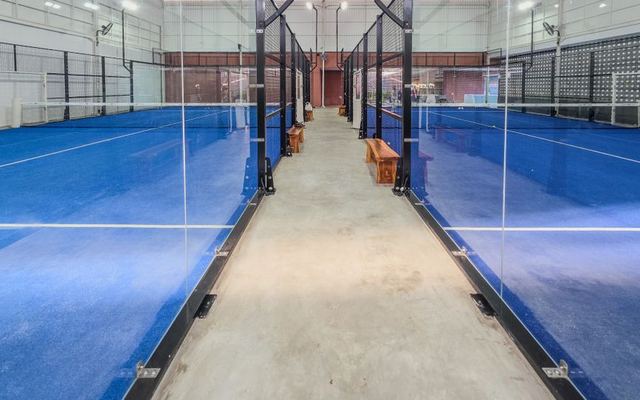 PadelDoubles racket sport on an enclosed 20 x 10 m court where the walls stay in play.
 TeqballSoccer skills over a curved table, singles or doubles, with no physical contact allowed.
 TchoukballSeven-a-side handball variant where you score off rebound frames and interceptions are banned.
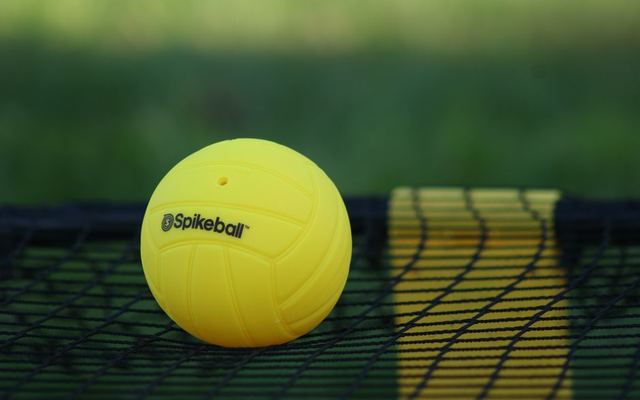 SpikeballTwo-on-two, up to three touches, then spike the ball onto a round net; no sides after the serve.
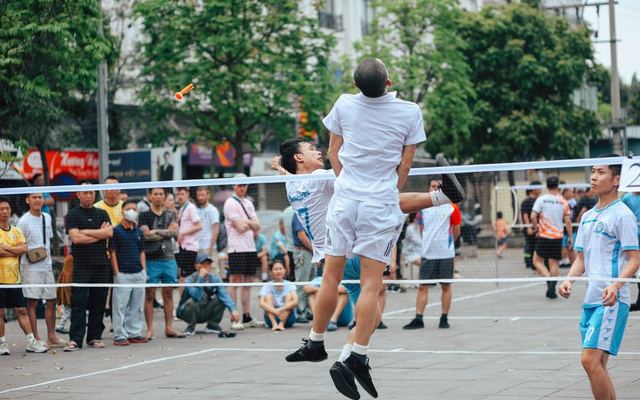 FootvolleyBeach volleyball rules, but no hands, arms or forearms: two-on-two on sand.
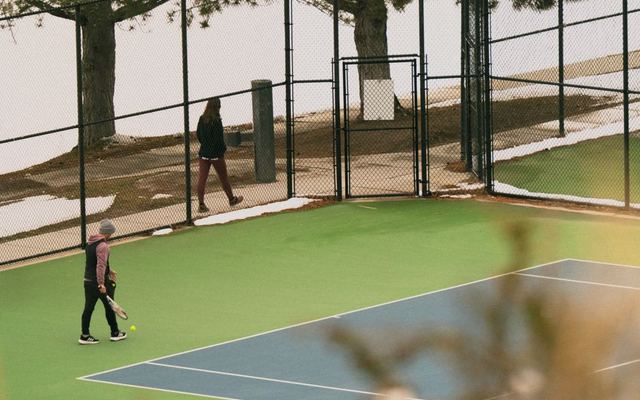 Platform TennisCold-weather doubles on a heated raised deck inside wire screens that stay in play.
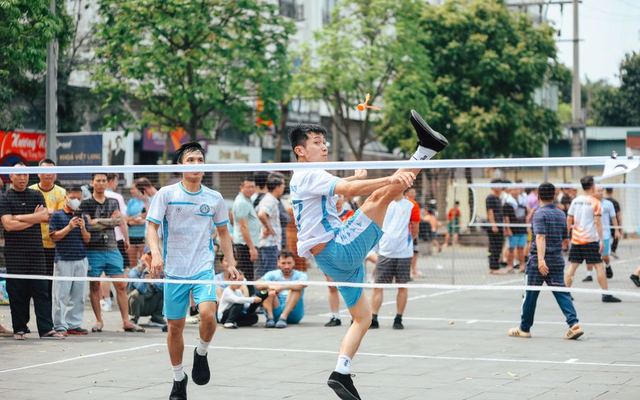 Sepak TakrawThree-a-side kick volleyball with a woven ball: feet, legs, chest and head only.
 Chess BoxingOne-on-one, alternating rounds of fast chess and amateur boxing; win by checkmate or knockout.