Padel vs Pickleball vs Tennis
How padel stacks up against pickleball and tennis, rule by rule.
Padel sits between pickleball and tennis in court size, combining tennis-style scoring with enclosed wall play and an underarm serve. At Wildcard Sport, we research official federation rulebooks and equipment standards to map how each racket sport actually functions.
Pickleball uses the smallest court. It pairs a 20 by 44 foot court with a solid paddle and a lightweight plastic ball. Tennis sits at the other end of the scale with a 78-foot court, a strung racket, and an overhead serve.
Padel is played inside a 32.8 by 65.6 foot (10 by 20 m) walled enclosure with a short perforated racket.
In 2025, tennis counted 27.3 million US players according to the United States Tennis Association (USTA). The Sports & Fitness Industry Association (SFIA) reported 24.3 million US pickleball players that same year. The United States Padel Association (USPA) cited SFIA data showing 1,073,000 padel players in the United States.
The USPA counted just over 1,000 padel courts open across 31 states as of April 2026. With about 1,000 padel courts nationwide, court access decides first whether padel is an option for you.
All Three at a Glance
Official specifications from the governing bodies define how each sport behaves on court. The International Padel Federation (FIP), USA Pickleball (USAP), and the International Tennis Federation (ITF) publish precise equipment and court standards.
| Specification | Padel | Pickleball | Tennis |
|---|---|---|---|
| Court dimensions | 32.8 x 65.6 ft (10 m x 20 m) interior | 20 ft x 44 ft (6.10 x 13.41 m) | 78 ft length; 27 ft singles / 36 ft doubles |
| Lined court area | About 2,153 sq ft (200 m²) | 880 sq ft (81.75 m²) | 2,808 sq ft (doubles) |
| Court enclosure | Completely enclosed walls and mesh | Open court | Open court |
| Allowed court surfaces | Cement, synthetic material, artificial grass | Not covered by our sources | Not covered by our sources |
| Center net height | 34.6 in (0.88 m) | 34 in (0.864 m) | 3 ft (0.914 m) |
| Net height at posts | 36.2 in (0.92 m) | 36 in (0.914 m) | 3.5 ft (1.07 m) |
| Serve motion | Underarm after bounce, at or below waist | Underarm volley or drop serve below waist | Struck before bounce, overhead permitted |
| Scoring format | 15-30-40, Advantage, Star or Golden Point | Points on serve only, to 11, win by 2 | 15-30-40, deuce and advantage, or No-Ad |
| Non-volley zone | None (walls in play) | 7 ft from net on each side (kitchen) | None |
| Racket or paddle rules | Max 17.9 in (45.5 cm) length, perforated, wrist cord | Max 17 in length, length + width ≤ 24 in, solid | Max 29.0 in (73.7 cm) length, strung |
| Ball diameter | 2.50 to 2.67 in (6.35 to 6.77 cm) | 2.87 to 2.97 in (7.29 to 7.54 cm) | 2.57 to 2.70 in (6.54 to 6.86 cm), Types 1 and 2 |
| Ball weight | 1.98 to 2.10 oz (56.0 to 59.4 g) | 0.78 to 0.935 oz (22.1 to 26.5 g) | 1.98 to 2.10 oz (56.0 to 59.4 g) |
| Ball bounce test | 53.1 to 57.1 in (135 to 145 cm) from 100 in (2.54 m) | 30 to 34 in from 78 in onto granite | 53.1 to 57.9 in (135 to 147 cm), Type 2 |
| US players in 2025 | 1,073,000 (SFIA via USPA) | 24.3 million (SFIA) | 27.3 million (USTA) |
| Pick it if | An enclosed court is near you | You want the smallest court | You want an overhead serve and the biggest court |
The net is the one close match. At center court, padel measures 34.6 inches (0.88 m), pickleball 34 inches (0.864 m) and tennis 36 inches (0.914 m). All three center net heights sit within 5 cm (2 inches) of each other.
Court footprint shows a wider gap. Pickleball covers 880 square feet, which is less than half of padel's 2,153 square feet (200 square meters). A standard doubles tennis court requires 2,808 square feet of lined surface.
Courts and Walls
Padel courts are completely enclosed, and the walls are part of play. Under FIP rules, a padel court measures 32.8 feet (10 m) wide by 65.6 feet (20 m) long inside the enclosure. Approved playing surfaces include cement, synthetic material, or artificial grass.
The surrounding walls remain in play throughout the rally. Once the ball bounces in the opponent's court, it may hit the solid walls or wire mesh and stay live. Players may also hit the ball directly into their own solid back or side wall to return it over the net.
Pickleball and tennis do not use boundary enclosures. A pickleball court measures 20 feet by 44 feet for both singles and doubles play. It features a 7-foot non-volley zone, often called the kitchen, extending from the net on each side.
Players cannot volley the ball while standing inside this 7-foot zone. Tennis courts measure 78 feet (23.77 meters) long, with a 27-foot singles width and a 36-foot doubles width.
You can review exact spacing and clearance requirements with our padel court dimensions guide and our padel court space checker. Our guide to padel court surface options covers the three surfaces FIP allows.
Serving and Scoring
Serving rules dictate how each point begins. Under FIP regulations, a padel serve requires the ball to bounce on the ground before contact. The server must strike the ball at or below waist level while keeping at least one foot on the court surface.
Pickleball also prohibits overhead serves. According to the USA Pickleball rulebook, a volley serve requires an upward arc with contact below the waist and the paddle head below the wrist. Pickleball players may alternatively use a drop serve, letting the ball fall to the ground before striking it.
Tennis uses a different service motion. The ITF rules state that the ball must be released by hand and struck before it touches the ground. The tennis server may jump with both feet off the ground and hit the ball from an overhead position.
Scoring structures also diverge between these sports. Padel and tennis share the traditional 15, 30, and 40 framework with deuce and advantage play. FIP regulations allow Star Point or Golden Point options to settle a game at 40-40, while tennis permits a No-Ad format.
Pickleball uses a distinct side-out scoring method. According to USA Pickleball rules, standard games play to 11 points, win by two, with points awarded only to the serving side. You can study point progressions in our padel scoring guide and review full match procedures in our padel rules overview.
Balls and Shoes
Equipment rules cover rackets and balls in all three sports. Padel rackets cannot exceed 17.9 inches (45.5 cm) in length. They feature a solid, perforated hitting surface without strings, and players must wear a mandatory wrist cord during play.
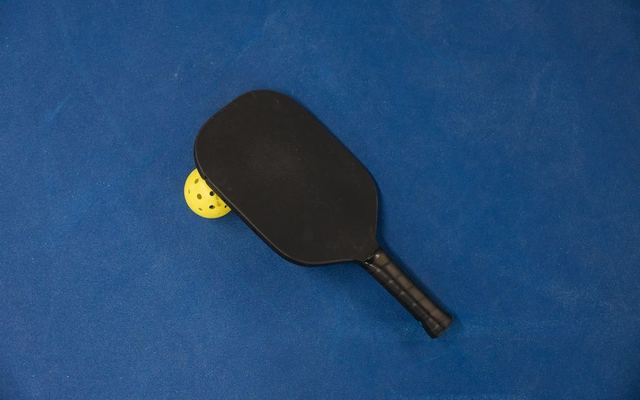
Pickleball paddles cannot exceed 17 inches in length, and the combined length and width cannot exceed 24 inches. USA Pickleball equipment standards prohibit holes in the paddle surface. Tennis rackets are strung, measuring up to 29.0 inches (73.7 cm) in length.
Padel balls rebound 53.1 to 57.1 inches (135 to 145 cm) when dropped from 100 inches (2.54 m).
Type 2 tennis balls rebound 53.1 to 57.9 inches (135 to 147 cm). Padel balls measure 2.50 to 2.67 inches (6.35 to 6.77 cm) across and weigh 1.98 to 2.10 ounces (56.0 to 59.4 g). Tennis balls share that weight band, but Type 1 and Type 2 balls allow diameters up to 2.70 inches (6.86 cm).
Pickleball balls are plastic balls with holes. According to the USAP equipment standards manual, they weigh 0.78 to 0.935 ounces (22.1 to 26.5 g) with a diameter of 2.87 to 2.97 inches. When dropped from 78 inches onto granite, an approved pickleball rebounds between 30 and 34 inches.
Footwear demands also vary based on court surfaces. No rulebook in our sources sets a shoe outsole for any of the three sports. Wilson explains that padel shoes need more traction on artificial grass, while tennis soles are flatter so players can slide on hard courts.
You can read our complete analysis in our padel ball vs tennis ball comparison. For outsole details, see our padel shoes guide, which compares padel and tennis shoes. Check our padel rackets guide to examine approved racket materials and frame weights.
Which Sport Should You Pick?
The learning curve across these sports reflects their mechanical constraints. The Lawn Tennis Association (LTA) notes that padel is generally considered easier to learn than tennis because of the smaller court, underarm serve, and slower ball. The LTA states that the wall represents the biggest difference between padel and tennis.
Court access limits padel in the United States, where the USPA counted just over 1,000 padel courts across 31 states in April 2026.
Padel is not the right choice for players without dedicated local facilities. If no enclosed court is near you, pickleball or tennis is the practical choice.
Our answer would change if an enclosed padel court opened near you.
If you want to start playing, read our guide on how to play padel and our tips on how to start playing padel. You can also use our court locator to find facilities in your state. If you are exploring other court options like platform tennis or beach tennis, browse our new sports guides.
 How to Play Padel, Point by Point
 How to Start Playing Padel
 How to Find a Padel Court Near You
 Platform Tennis Rules and Court Dimensions
 Beach Tennis Rules: The Ball Never Bounces
 Every Sport We Cover, Side by Side
Head-to-Head Comparisons
We have published a separate comparison for each matchup.
Our head-to-head guides include:
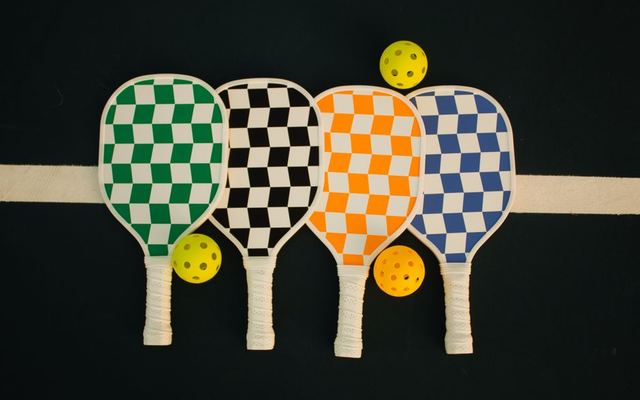 Padel vs PickleballCourt walls, paddle surfaces, and non-volley kitchen rules compared side by side.
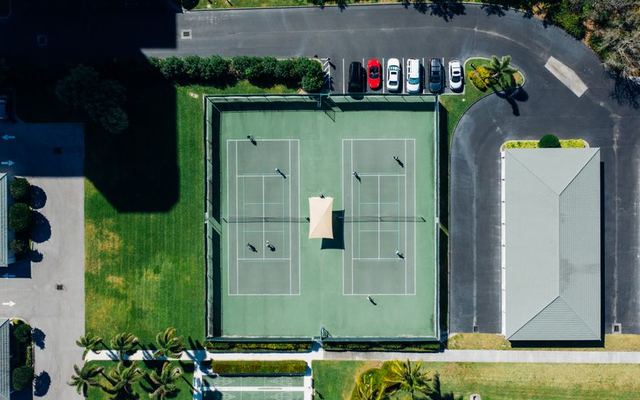 Padel vs TennisCourt size and serve rules compared.
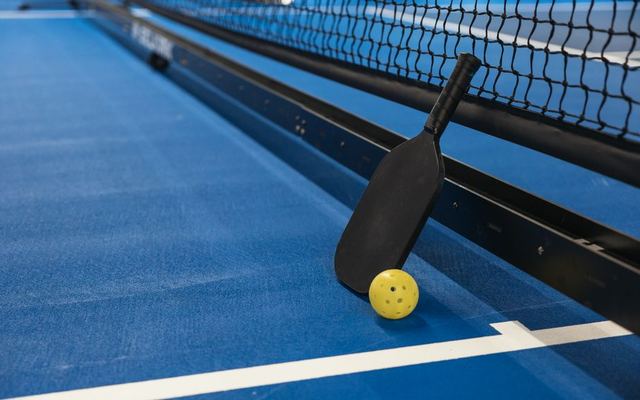 Pickleball vs TennisSide-out scoring rules, ball materials, and court size differences analyzed.
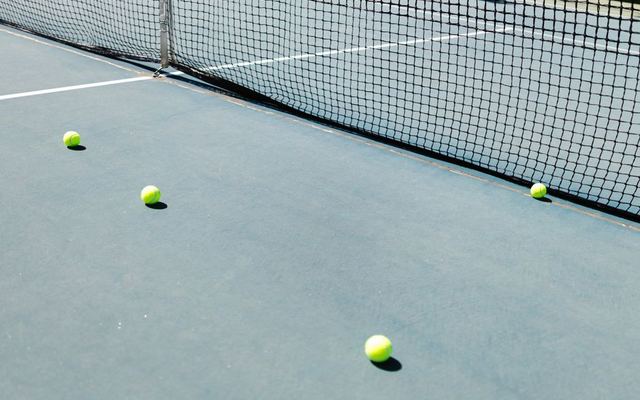 Padel Ball vs Tennis BallTechnical data on rubber core rebound, diameter limits, and weight tolerances.
You can also explore broader equipment guides in our padel gear guides or find sports like pickleball across our emerging sports index. If you want to evaluate which sport matches your experience, try our new sport quiz. Check our guide to padel vs pickleball to see direct rule differences, or locate local courts before buying your first racket.
Frequently Asked Questions
Is padel more like tennis or pickleball?
Padel takes its scoring and a felt-covered ball from tennis, and its waist-height serve after a bounce is closer to pickleball's drop serve. The FIP rules are written for pairs on a 32.8 by 65.6 foot (10 by 20 m) court enclosed by walls and wire mesh. Neither tennis nor pickleball lets the ball play off walls.
Which is easier to learn: padel, pickleball or tennis?
Governing bodies do not publish official difficulty rankings comparing all three sports. However, the Lawn Tennis Association (LTA) notes that padel is generally considered easier to learn than tennis because of the smaller court, underarm serve, and slower ball. The LTA highlights the enclosed wall as the biggest structural difference between the two sports.
Which court is the biggest?
Tennis features the largest court of the three sports. A standard doubles tennis court covers 2,808 square feet across a 78 by 36 foot playing area. By comparison, a padel court covers about 2,153 square feet (200 square meters), and a pickleball court measures 880 square feet.
Are padel and tennis scored the same way?
Padel and tennis share the traditional 15, 30, and 40 scoring structure, but their options at 40-40 differ. Both sports use game, set, and match systems with deuce and advantage scoring. FIP regulations permit Star Point or Golden Point options to conclude games at 40-40, while ITF tennis rules allow an approved No-Ad alternative.
Can I use my tennis gear for padel?
You cannot use a tennis racket for padel because FIP rules require a short, perforated racket without strings. Many tennis balls fall inside padel's 2.50 to 2.67 inch (6.35 to 6.77 cm) diameter range, but the largest legal tennis balls do not. For footwear, Wilson says tennis soles are flatter and built to slide on hard courts, and our padel shoes guide reports that Wilson does not recommend tennis shoes for padel.
How many people play padel vs pickleball vs tennis in the US?
Tennis had 27.3 million US players in 2025 according to the USTA, while SFIA reported 24.3 million pickleball players. Padel participation reached 1,073,000 US players in 2025, based on SFIA data published by the USPA. The USPA also confirmed just over 1,000 padel courts open across 31 states as of April 2026.
Sources
- FIP Rules of Padel
- USA Pickleball Official Rulebook
- ITF Rules of Tennis
- USA Pickleball Rules Summary
- USA Pickleball Equipment Standards Manual
- LTA Padel vs Tennis Guide
- USTA Tennis Participation Report
- SFIA Pickleball Participation Data
- USPA Padel Player and Court Statistics
- Wilson Footwear Comparison Guide
All Comparisons
- Padel vs Pickleball: The Key DifferencesHow padel and pickleball differ on court size and walls, using the International Padel Federation and USA Pickleball rulebooks and 2025 US player counts.
 Sports Like Pickleball, Compared by RulesSports like pickleball include padel, POP Tennis, beach tennis and platform tennis. Compare their courts and serve rules from each governing body's rulebook.
- Padel vs Tennis: The Key DifferencesHow padel and tennis differ on court size and serve rules, using the International Padel Federation and International Tennis Federation rulebooks.
- Pickleball vs Tennis: The Key DifferencesHow pickleball and tennis differ on court size and serve rules, using the USA Pickleball rulebook and the International Tennis Federation rules.
- Padel Ball vs Tennis Ball: What's DifferentHow padel balls and tennis balls differ in size and bounce under the International Padel Federation and International Tennis Federation rules.