What Is Floorball? Rules and How to Play
How floorball is played under IFF rules, and where to play in the US.
Floorball is an indoor stick-and-ball team sport governed by the International Floorball Federation (IFF). At Wildcard Sport, we research official federation rulebooks and primary records to explain how new sports work. A standard match pits two teams against each other to score more goals than the opponent within the rules.
According to the IFF Rules of the Game, floorball is preferably played indoors on a hard, even surface at an approved venue. At most six players per team may be on the rink at once during play. A standard lineup includes five field players and one goalkeeper who plays without a stick.
Teams assign their field runners into basic roles as forwards and defenders. If a team chooses to pull its goalkeeper, it may field six field players instead. Substitutions may take place at any time and an unlimited number of times during a match.
Floorball Basics
A regulation match requires two competing sides aiming to place a light plastic ball into the opposing net. Rounded corners on the boards help keep the ball in play. Two referees with equal responsibility control official matches.
Stick-on-stick checking, high swings, and body checks are illegal.
Each team may dress a maximum of 20 players for a match under rule 301.1. Substitutions occur on the fly without stopping game action. All player changes must take place inside the team's designated substitution zone under rule 302.
Floorball Rink Size and Game Length
A standard floorball rink measures 131 feet by 66 feet (40 meters by 20 meters). It is enclosed by rounded boards standing 20 inches (50 centimeters) tall. Under rule 101, the smallest permitted rink for competitive play is 118 feet by 59 feet (36 meters by 18 meters).
The IFF explainer notes that rinks up to 144 feet by 72 feet (44 meters by 22 meters) are allowed as long as the length is double the width. The 2026 rulebook states only the 36-by-18-meter minimum size, making the upper limit a point of variation between federation publications. The goal cage measures 63 inches wide by 45 inches high (160 centimeters by 115 centimeters).
Each goal sits inside a marked goal area of 13.1 feet by 16.4 feet (4 meters by 5 meters). Inside lies a smaller 3.3-by-8.2-foot (1-by-2.5-meter) goalkeeper area where only the goalie can operate. In many places, floorball is also played three-on-three without a goalkeeper on small rinks with small goals.
Official matches consist of three 20-minute periods of effective time with two 10-minute intermissions. Administrating authorities may allow shorter games for local competitions, but matches cannot run less than two 15-minute periods.
Rules for Stick Height and Body Contact
Floorball rules ban stick checking and limit physical contact strictly to shoulder-to-shoulder challenges. It is a free-hit offence to hit, block, lift, or kick an opponent's stick when trying to reach the ball. Hitting an opponent's body is also an automatic foul.
Player contact is strictly limited. It is an offence to force or push an opponent in any way other than shoulder to shoulder. The IFF's explainer adds that players may not push, tackle or obstruct an opponent.
A field player may not raise the stick blade above waist level in the back-swing or follow-through. A high swing is allowed only if no other player is nearby.
Field players cannot play the ball above knee level with a stick, foot, or lower leg. Stopping the ball with a thigh does not count as above knee level. Players are also barred from jumping to stop the ball or playing the ball between an opponent's legs.
Standard infractions result in a free hit for the opposing team. More serious offences trigger penalties of two, five, or ten minutes, or expulsion for the rest of the game.
Gear for Players and Goalies
A field player needs only a stick, athletic shoes, and standard gym clothes. The IFF explains that beginners face no large equipment investment and can start with only shoes and a stick. No previous stick-sport experience is required.
All sticks, blades, and balls must be IFF-approved and marked under rules 107 and 406. Shafts have evolved from heavy, thick plastic to lighter carbon-fiber materials. Sticks for small children are shorter and bend more than adult shafts.
The blade may not be sharp, and its hook curve cannot exceed 1.18 inches (30 millimeters). Tampering with the shaft other than shortening it is prohibited.
The goalkeeper is not allowed to use a stick under rule 403. A goalie wears a protective helmet, specialized pants, a jersey, and protective gear. The IFF strongly recommends protective eyewear for all field participants and mandates eye protection for junior players under 18.
How Physically Demanding It Is
Modern floorball requires short running spurts in different directions, quick reactions, and precise stick handling. Field players rely on speed and elasticity. The IFF states that a player's physical factors do not decide how good they are.
The IFF says girls and boys, women and men can play equally.
Goalkeepers face different physical demands. The role requires good endurance and strong mid-body muscle fitness.
How Floorball Began
Floorball traces its roots to 1958 in Minneapolis, Minnesota. A local company introduced plastic sticks under the brand name Cosom, launching floor hockey across the United States and Canada. The modern sport of floorball was developed later in Sweden during the 1970s.
According to the IFF history record, the floorball associations of Finland, Sweden, and Switzerland founded the IFF on April 12, 1986, in Huskvarna, Sweden. Ten years later, Sweden hosted the first men's World Championship in 1996. A sold-out final of 15,106 spectators packed the Stockholm Globe Arena.
The first women's World Championship was played in Åland, Finland, in 1997. American involvement began around the same time. The IFF dates the founding of the US association to May 5, 1993, and the USA officially joined the IFF in 1994.
Who Plays, Worldwide and in the US
The IFF says floorball is played in over 80 countries, close to 75 of which are IFF members. Northern Europe, Switzerland, and the Czech Republic have the most players. According to IFF licensed-player statistics, there were 330,762 registered players in 2022.
Sweden led that count with 102,373 licensed players. The Czech Republic recorded 40,941 players, while Switzerland had 33,066. In the United States, the IFF recorded 186 licensed players that year.
Reporting by KSHB notes that a Swedish player brought floorball to Boston more than 20 years ago. The undated article says teams exist in at least 26 states. USA national team coach Mark Gallagher described the game as combining elements of roller hockey, ice hockey, and street hockey.
The game uses plastic sticks and a light plastic ball instead of a puck, which the article says makes it a bit safer than ice hockey. If you want to explore other indoor options, read our guide to tchoukball or discover kin-ball. You can also read about cageball and speedgate.
Olympic Recognition
The International Olympic Committee (IOC) granted the IFF provisional recognition on December 11, 2008, and full recognition on July 8, 2011. Recognition does not put floorball on the Olympic program. No federation source schedules the sport for a future Olympic Games.
Floorball is played at The World Games instead. Floorball was an invitational event at Lahti 1997 and has been on the official program since Wrocław 2017. Floorball was also played at The World Games 2022 in Birmingham, Alabama.
At The World Games, teams have 14 players in total and play three 15-minute periods. To find other court games that fit your athletic background, try our new sports to try quiz.
Frequently Asked Questions
What is floorball and how is it different from hockey?
Floorball is an indoor six-a-side team sport played on a gym floor using lightweight plastic sticks and a light plastic ball instead of a puck. The only pushing contact allowed is shoulder to shoulder. The goalkeeper wears protective pads and a helmet but does not use a stick.
How many players are on a floorball team?
At most six players per team may be on the rink at once during play, typically five field runners and one goalkeeper. Match rosters allow a maximum of 20 players under official IFF rules. Teams may also field six field players with no goalkeeper, and in many places floorball is also played three-on-three.
Is floorball a contact sport?
Floorball allows only shoulder-to-shoulder contact when players contest the ball. Forcing, pushing, tackling, or obstructing an opponent in any other way is illegal, and hitting an opponent's stick results in an immediate foul. Infractions lead to free hits or timed penalties of two, five, or ten minutes.
Does the floorball goalie use a stick?
No, the goalkeeper is not allowed to use a stick under IFF rule 403. Goalkeepers defend the goal without a stick. They wear an approved helmet, specialized goalkeeper pants, a jersey, and protective gear.
What equipment do you need to play floorball?
Field players need only indoor athletic shoes, comfortable clothing, and an IFF-approved floorball stick to start playing. Goalkeepers require a protective helmet mask, padded pants, a jersey, and protective gear. The IFF strongly recommends protective eyewear for all participants and mandates eye protection for junior players under 18.
Is floorball an Olympic sport?
Floorball is recognized by the International Olympic Committee, but it is not on the Olympic Games program. The sport received provisional IOC recognition in 2008 and full recognition in 2011. It is on the official program of The World Games.
Is floorball played in the United States?
Yes, floorball is played in the United States, with teams active in at least 26 states. A Swedish player introduced the sport to Boston more than 20 years ago, and the national association joined the IFF in 1994. In 2022, the IFF recorded 186 licensed players in the country.
How long is a floorball game?
A regulation floorball game consists of three 20-minute periods of effective time with two 10-minute intermissions. Administrating authorities may allow shorter games for local competitions, but matches cannot run less than two 15-minute periods. At The World Games, teams play three 15-minute periods.
Sources
Try a Free Tool
More Sports to Explore
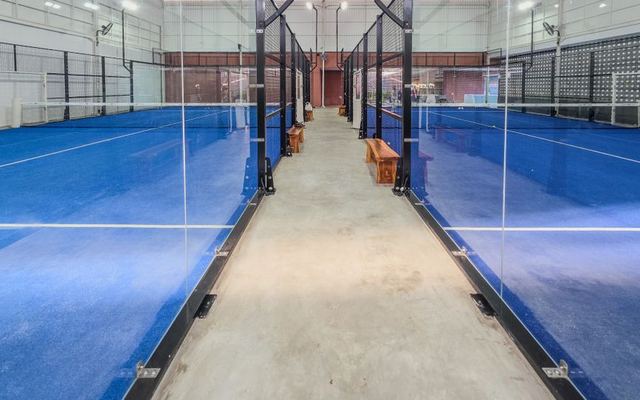 PadelDoubles racket sport on an enclosed 20 x 10 m court where the walls stay in play.
 TeqballSoccer skills over a curved table, singles or doubles, with no physical contact allowed.
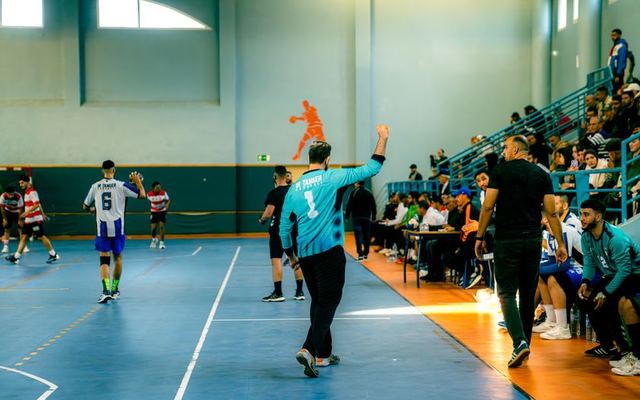 TchoukballSeven-a-side handball variant where you score off rebound frames and interceptions are banned.
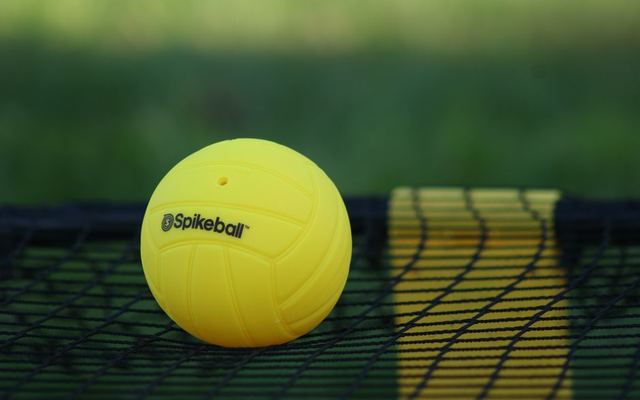 SpikeballTwo-on-two, up to three touches, then spike the ball onto a round net; no sides after the serve.
 FootvolleyBeach volleyball rules, but no hands, arms or forearms: two-on-two on sand.
 Beach TennisTennis scoring on sand with stringless rackets and low-compression balls, no bounce allowed.
 Platform TennisCold-weather doubles on a heated raised deck inside wire screens that stay in play.
 Sepak TakrawThree-a-side kick volleyball with a woven ball: feet, legs, chest and head only.