One Name, Three Games: What Cageball Means
A giant gym ball, a college push game, and a caged soccer format.
Cageball is the name of two or three different games. At Wildcard Sport, we research emerging sports from primary rulebooks, archival records, equipment specifications, and federation listings. In American schools, a cage ball is a giant inflatable ball for gym games. Springfield College played a 25-a-side cage ball contest that its archive says resembled pushball. In Germany, cageball is small-sided soccer inside a walled enclosure.
Three Games Called Cageball
The term cageball does not describe a single sport with one governing body. In the United States, the name means giant inflatable balls that measure 24 to 72 inches (61 to 183 cm) across, used for cooperative games in physical education. Archival records from Springfield College describe cage ball as an annual interclass contest on a football field where 50 students pushed an oversized ball toward goal posts. In Europe, Topend Sports documents cageball as an indoor soccer variation where four players per team compete inside an artificial turf pen surrounded by walls and netting.
Topend Sports also notes that cage ball serves as an alternate name for pushball. Our information on German caged soccer relies on that single Topend Sports source, making its operational records much thinner than the manufacturing catalogs and collegiate archives available for the giant ball. Our new sports guides covers other games played in gyms and enclosed pitches.
Cage Ball Sizes and Weights
According to Physical Education Update, a standard cage ball measures roughly 4 to 6 feet (48 to 72 inches or 1.2 to 1.8 m) in diameter. Equipment supplier Morley Athletic sells cage balls spanning from 24 inches up to 72 inches in diameter. A cage ball has an inflatable bladder inside a fabric cover.
Supplier School Health sells heavy-duty cageballs and pushballs in four distinct configurations with specific weight ratings. Their 36-inch (91.4 cm) ball weighs 4.9 pounds (2.22 kg), while the 48-inch (121.9 cm) version weighs 8.6 pounds (3.90 kg). Moving to larger dimensions increases mass substantially: the 60-inch (152.4 cm) model weighs 13 pounds (5.90 kg), and the 72-inch (182.9 cm) ball weighs 19 pounds (8.62 kg).
The 72-inch ball weighs almost four times as much as the 36-inch ball. School Health sells these heavy-duty balls with a multicolored nylon cover and a polyurethane bladder, noting that an inflator must be purchased separately. The company spells its heavy-duty line as cageball in one word, while marketing a separate lightweight version under the name Ultra-Lite Cage Balls in two words.
Morley Athletic manufactures covers from heavy-duty nylon or vinyl, uses reinforced bladders that are sold separately, makes its covers removable and washable, and recommends electric inflators for large balls. The Springfield College rules describe modern cage balls as having an inner rubber bladder, a vinyl or canvas cover and laces like a football.
Cage Ball Games for PE Class
School Health suggests using giant cage balls for activities such as crab soccer and volleyball with parachutes. These games let many students participate at once, supporting the development of coordination and cooperative movement. Morley Athletic lists traditional cage ball games, giant volleyball, cooperative relay races, team-building challenges, physical education classes, summer camps, and recreation centers as common environments for the equipment.
One documented physical education game uses the cage ball as a target. In this drill, the class divides into two teams on opposite sides of a gymnasium court, with the cage ball placed at the center line. Both teams receive an equal quantity of soft balls, such as Gatorskin balls, which players throw at the giant ball to push it across the opposing team's foul line.
Players may not cross the half-court line to throw their balls or retrieve loose ammunition. The game concludes immediately when the cage ball rolls completely across a team's foul line, or if any player touches the cage ball with their body. The National Association for Sport and Physical Education (NASPE) considers traditional dodgeball unsuitable for school curricula because it singles out children as human targets. In this version no player is a target, though players still have to dodge the rolling cage ball.
Springfield College Cage Ball and the Push Game
At Springfield College in Massachusetts, cage ball was an organized campus tradition rather than an informal gym class drill. Archival holdings in the Digital Commonwealth contain a document titled "Cage Ball Rules," dated approximately 1950 to 1975. The institution staged this annual contest outdoors on a football field between undergraduate classes, matching freshmen against sophomores.
The match fielded two teams of 25 players each, putting 50 athletes on the turf simultaneously to push an oversized sphere across the opponent's goal line. Contestants played two 20-minute halves separated by a 10-minute rest break, creating 40 minutes of total push time. The rules say the balls are usually 48 or 60 inches (121.9 or 152.4 cm) in diameter.
The archival rulebook established a tiered three-level scoring system based on where the ball crossed the perimeter:
- Pushing the ball across the opponent's end line earned 1 point.
- Pushing the ball entirely under the crossbar of the football goal post yielded 2 points.
- Forcing the sphere entirely over the crossbar of the goal post delivered the maximum score of 3 points.
A 16mm black-and-white film running a little over 11 minutes, dated about 1962, documents a cage ball game played on Pratt Field at Springfield College.
Cageball Soccer Rules
German soccer coach Jörg Berger invented cageball so association football squads could continue playing during harsh winter conditions. Topend Sports notes that Berger reportedly described the concept as "street soccer on artificial turf." The game usually takes place on an artificial turf pitch measuring 78.7 by 49.2 feet (24 by 15 meters), an area of 3,875 square feet (360 square meters).
A solid perimeter wall measuring 3.3 feet (one meter) high surrounds the entire playing boundary, with protective netting rising an additional 13.1 feet (four meters) directly above the wall. This structure forms a continuous barrier 16.4 feet (five meters) in total height, keeping the ball entirely contained. Each squad fields three outfield players and one goalkeeper, totaling four athletes per side and eight players on the field.
Gameplay differs sharply from standard association football because the perimeter barriers eliminate out-of-bounds stoppages. The ball remains continuously in play, removing throw-ins, offside violations, and goal kicks from the rule set. Players take free kicks immediately, although normal football rules still penalize illegal fouls and deliberate handling. Athletes exploring soccer adaptations can contrast this enclosed cage format with teqball, or with padel and sepak takraw.
Cageball vs Pushball
The archival rules from Springfield College state that collegiate cage ball closely resembles pushball. Pushball is said to have been invented by M. G. Crane of Newton, Massachusetts, in 1891. Harvard University played pushball the following year, in 1892, and Emory University and Rensselaer Polytechnic Institute also played it for limited periods. Topend Sports notes that cage ball serves as an alternate term for pushball, entirely separate from Berger's caged soccer concept.
| Sport Variant | Equipment Details | Team Size | Playing Surface | Primary Scoring Objective |
|---|---|---|---|---|
| Physical Education Cage Ball | 24 to 72 inch nylon or vinyl ball (4.9 to 19 lbs for 36 to 72 inches) | Whole class in two teams | Gymnasium court | Roll ball across foul lines with soft balls or complete cooperative drills |
| Springfield College Cage Ball | 48 or 60 inch ball | 25 players per side | Outdoor football field | Push ball across end line (1 pt), under goal post (2 pts), or over goal post (3 pts) |
| German Caged Soccer | Not published | 4 players per side (3 outfielders, 1 goalkeeper) | 78.7 by 49.2 ft (24 by 15 m) artificial turf with a 3.3 ft (1 m) wall and 13.1 ft (4 m) net | Kick ball into opponent goal without out-of-bounds stoppages |
Physical education cage ball with target throws avoids physical collisions between players. Players looking for small-sided footwork drills inside perimeter walls should seek an indoor caged soccer pitch rather than an equipment catalog selling 72-inch spheres. Readers deciding among modern recreation activities can also take our new sport quiz to match their available court space.
Frequently Asked Questions
What is cageball?
Cageball refers to two or three different activities depending on the region and context. In American physical education, it is a giant inflatable ball between 24 and 72 inches used for group gym games. Springfield College historically played an interclass campus push contest with 25 players per team using a 48 or 60-inch ball. In Germany, cageball is an indoor soccer game played four-a-side on artificial turf inside a fully walled enclosure where the ball never leaves play.
How big is a cage ball?
A standard cage ball measures roughly 4 to 6 feet (48 to 72 inches) in diameter according to Physical Education Update. Manufacturer Morley Athletic produces balls ranging from 24 inches to 72 inches across. School Health sells heavy-duty models measuring 36 inches (4.9 pounds), 48 inches (8.6 pounds), 60 inches (13 pounds), and 72 inches (19 pounds). Springfield College archival documents note that collegiate matches traditionally used 48 or 60-inch balls.
What games can you play with a cage ball in PE?
Physical education teachers use cage balls for cooperative relays, giant volleyball, crab soccer, and parachute activities. In one documented game, a class splits into two teams on opposite sides of a gymnasium with the cage ball placed at center court. Players throw soft balls, such as Gatorskin balls, at the cage ball to drive it across the opposing team's foul line without crossing the half-court line or touching the giant ball directly.
How do you play cageball soccer?
Cageball soccer is played with four players per team, consisting of three outfield players and one goalkeeper. The match takes place on an artificial turf pitch measuring about 78.7 by 49.2 feet (24 by 15 meters) enclosed by a 3.3-foot (one meter) solid wall and a 13.1-foot (four meter) net. Because the enclosure keeps the ball in play at all times, there is no offside, throw-in or goal kick, and free kicks are taken immediately under normal football foul rules.
Is cageball the same as pushball?
Cage ball is an alternate name for pushball in some athletic contexts, according to Topend Sports. Archival records from Springfield College note that its 25-a-side cage ball game closely resembled pushball. Pushball is said to have been invented in 1891 by M. G. Crane of Newton, Massachusetts, and was played at Harvard University, Emory University, and Rensselaer Polytechnic Institute. German caged soccer is completely unrelated to pushball.
Who invented cageball?
German football coach Jörg Berger invented the caged soccer version of cageball to provide indoor training during winter months. For the giant ball push game, Springfield College archives state that cage ball resembled pushball, which is said to have been invented by M. G. Crane in 1891.
Is there offside in cageball?
There is no offside rule in caged soccer. Because the field is fully enclosed by walls and netting, the ball never goes out of bounds, eliminating throw-ins, goal kicks, and offside stoppages entirely. Play continues without interruption, and referees restart action with immediate free kicks when fouls or deliberate handballs occur.
Sources
Try a Free Tool
More Sports to Explore
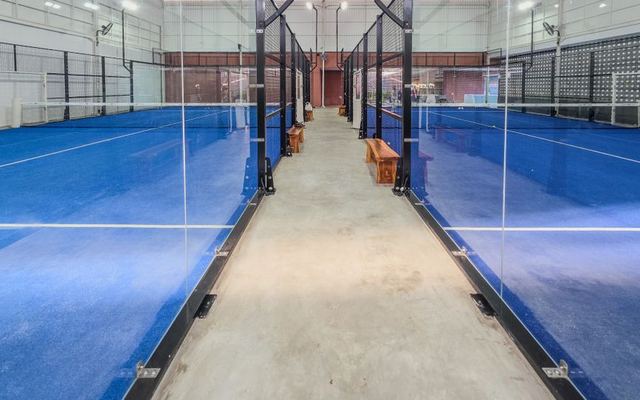 PadelDoubles racket sport on an enclosed 20 x 10 m court where the walls stay in play.
 TeqballSoccer skills over a curved table, singles or doubles, with no physical contact allowed.
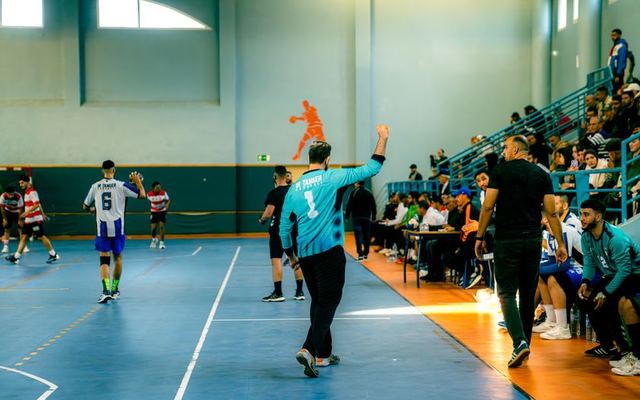 TchoukballSeven-a-side handball variant where you score off rebound frames and interceptions are banned.
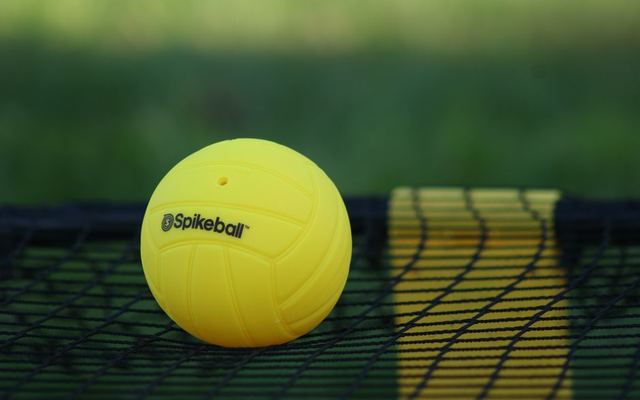 SpikeballTwo-on-two, up to three touches, then spike the ball onto a round net; no sides after the serve.
 FootvolleyBeach volleyball rules, but no hands, arms or forearms: two-on-two on sand.
 Beach TennisTennis scoring on sand with stringless rackets and low-compression balls, no bounce allowed.
 Platform TennisCold-weather doubles on a heated raised deck inside wire screens that stay in play.
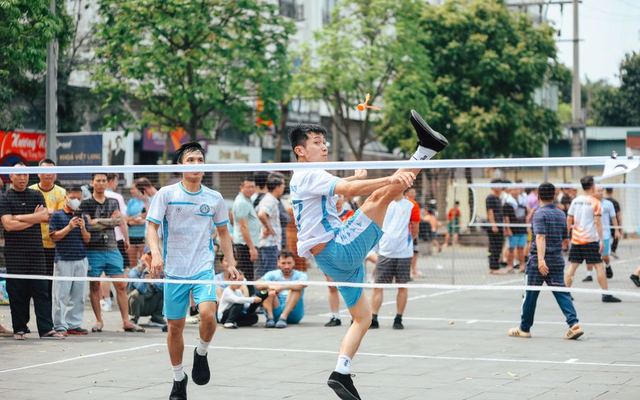 Sepak TakrawThree-a-side kick volleyball with a woven ball: feet, legs, chest and head only.