Tchoukball Rules and Court Setup
How tchoukball is played under FITB rules, including the rule of threes.
Tchoukball is a non-contact indoor team sport in which you score by bouncing a ball off a rebound frame so it lands before a defender can catch it. At Wildcard Sport, we research emerging sports directly from official governing body rulebooks and international federation archives. Defenders may never intercept a pass or obstruct a shot.
How Tchoukball Is Played
Two teams of seven active players compete on an indoor court measuring 85.3 to 95.1 feet (26 to 29 m) long by 49.2 to 55.8 feet (15 to 17 m) wide. Each baseline features an angled rebound frame positioned behind a semicircular forbidden zone with a radius of 9.8 feet (3 m). Players pass the ball without letting it touch the floor, take up to three steps, hold the ball for at most three seconds, and complete up to three passes before shooting.
A point is scored when the rebounded ball hits the floor in bounds before a defender catches it. Attackers concede a point to the opponent if a shot misses the frame, bounces out of bounds, lands inside the forbidden zone, or strikes the shooter.
Court Layout and Forbidden Zones
The International Tchoukball Federation (FITB) Official Rules set the playing area at 85.3 to 95.1 feet (26 to 29 m) long under Rule 1.1. The rules describe the indoor game on a court of about 88.6 by 52.5 feet (27 by 16 m). Some pages print a 131 by 66 foot (40 by 20 m) court, but the current FITB rules do not.
For beach tchoukball, the designated court shrinks to approximately 68.9 by 39.4 feet (21 by 12 m). That smaller sand surface accommodates five-on-five play rather than the standard indoor squad size.
An angled rebound frame sits at each end of the court facing the field of play. Directly in front of each frame lies the forbidden zone, which forms a D-shaped semicircle with a radius of 9.8 feet (3 m). Under the rules, the ball must never touch the ground during live passing sequences.
How Points Are Scored and Lost
A team earns a point when an attacker throws the ball against the rebound frame and it bounces onto the floor in bounds before any defending player catches it. Under Rule 8.1, the attacking team also receives the point if a defender attempts to catch the rebound but drops it, or if the ball touches a defender below the knee.
Shooters can also concede points directly to the opposing team. Under Rule 8.2, an attacker gives away a point if the shot misses the rebound frame entirely. The shooter also concedes a point if the rebound flies out of bounds, lands inside the 9.8-foot (3 m) forbidden zone, or strikes the shooter directly.
When a team concedes a point through a shooting error or a defensive score, that conceding side restarts play. Following a fault restart, the team in possession must complete at least one pass before shooting at a frame. Possession transfers between teams after every completed shot or rules infraction.
The Rule of Threes
Tchoukball structures its core offensive mechanics around strict limits of three. Rule 7.1 lists each limit as a fault.
The four core limits under Rule 7 include:
- Steps: A player may take a maximum of 3 steps while holding the ball.
- Seconds: A player may hold the ball for at most 3 seconds before releasing a pass or a shot.
- Passes: An offensive possession allows a maximum of 3 passes among teammates before attempting a shot.
- Frame shots: A player commits a fault if making a 4th consecutive shot at a frame on which 3 consecutive shots have already been completed.
Taking a fourth step, holding the ball for a fourth second, completing a fourth pass, or taking a fourth consecutive shot on the same frame results in an immediate fault. Other rule infractions include touching the ball below the knee or dropping the ball during a pass. Possession switches to the opposing team after every fault.
Defending Without Contact
Tchoukball eliminates physical confrontation by outlawing defensive interference before a shot strikes the frame. Rules 7.1.7 and 7.1.8 state that defenders may not obstruct or intercept.
Touching an opponent's pass or deflecting a shot before it rebounds off the frame constitutes illegal obstruction. Because defenders cannot intercept passes in mid-air, defensive positioning focuses on reading rebound angles and catching the ball before it touches the court.
Rule 4.3 allows knee pads and elbow pads and requires shoes without studs. For other team games, see our overview of kin ball or the spikeball rules.
Teams and Match Format
An official indoor tchoukball team carries a squad of up to 12 registered players, with 7 players on the court at once. Under Rule 4.1, a team with 4 or fewer players on the court forfeits the match. In beach tchoukball, squads field 5 active competitors on the court instead of 7.
Equipment specifications depend on the division of play under Rule 3. Men compete with a ball measuring 22.8 to 23.6 inches (58 to 60 cm) in circumference and weighing 15.0 to 16.8 ounces (425 to 475 g). Women play with a ball measuring 21.3 to 22.0 inches (54 to 56 cm) around and weighing 11.5 to 14.1 ounces (325 to 400 g). Mixed matches use the women's ball.
Matches consist of three 15-minute periods separated by intervals of no more than 5 minutes. The game clock runs continuously without stopping during each 15-minute period. A regulation match provides 45 minutes of running-clock play and lasts up to 55 minutes including intervals.
Origin and the Thulin Prize
Tchoukball originated through the research of Dr. Hermann Brandt, an eminent Swiss biologist whose research into physical activity led to the sport. His paper "A Scientific Criticism of Team Games" won the Thulin Prize, presented at the University of Lisbon on August 16, 1970.
Historical records show a minor divergence regarding the exact year of invention. The FITB 50th anniversary history states that Brandt invented the sport in 1969, while the official rules foreword notes that he officially introduced it in 1970. Brandt named the sport after the "tchouk" sound produced when the ball rebounds off the frame.
Brandt died in November 1972. The International Tchoukball Federation was founded on June 5, 1971, with Switzerland and France as its first member nations.
Where It's Played, Including the US
The International Tchoukball Federation lists its headquarters in Singapore on the FITB member directory. The federation hosted its first World Championships in 1984, and later staged the 2019 edition in Malaysia. At its 50th anniversary in 2021, the federation reported 49 member organizations and stated that tchoukball had been promoted in more than 80 countries.
Taiwan embraced tchoukball during the 1980s according to FITB historical records. The federation reports that tchoukball grew into the 3rd sport of Taiwan, attracting over 200 teams to its national championship tournaments.
In the United States, monthly search interest for "tchoukball" stands at 4,400 searches (Semrush, October 2026). However, the United States does not appear on FITB's member list as of October 2026, while Mexico and Haiti are listed members in the Americas. With no US body listed, organized US play is hard to find. Compare tchoukball with other new sports such as teqball, or try our new sports selector tool.
Frequently Asked Questions
How many passes are allowed in tchoukball?
A team may make a maximum of 3 passes before shooting the ball at a rebound frame. Completing a 4th pass is an offensive fault under Rule 7.1. Possession immediately transfers to the opposing team when a team exceeds this passing limit.
How many players are on a tchoukball team?
An indoor tchoukball team fields 7 players on the court from an overall roster of up to 12 squad members. A team with 4 or fewer players on the court forfeits the match under Rule 4.1. Beach tchoukball uses 5 players per side on the court.
How do you score in tchoukball?
A team scores a point when an attacker bounces the ball off a rebound frame and it touches the floor in bounds before an opponent catches it. The attacking side also earns a point if a defender fails to control the rebound or touches the ball below the knee. Attackers concede a point directly to opponents if a shot misses the frame, lands in the forbidden zone, or hits the shooter.
Is tchoukball a contact sport?
No. FITB's rules say play is designed to avoid violent physical contact. Defenders may not obstruct or intercept, and touching a ball passed or shot by an opponent before it hits the frame is obstruction under Rules 7.1.7 and 7.1.8.
How many steps can you take in tchoukball?
A player holding the ball may take a maximum of 3 steps before passing or shooting. Taking a 4th step is penalized as a rules fault under Rule 7.1. The sport also limits players to holding the ball for at most 3 seconds.
Where did tchoukball come from?
Tchoukball came from the research of Dr. Hermann Brandt, a Swiss biologist. FITB's 50th-anniversary page dates the invention to 1969, while the official rules say Brandt first officially introduced it in 1970. The sport takes its name from the sound the ball makes when striking the rebound frame.
Is tchoukball an Olympic sport?
No FITB page we cite records Olympic status for tchoukball. FITB runs its own World Championships, first held in 1984.
Sources
Try a Free Tool
More Sports to Explore
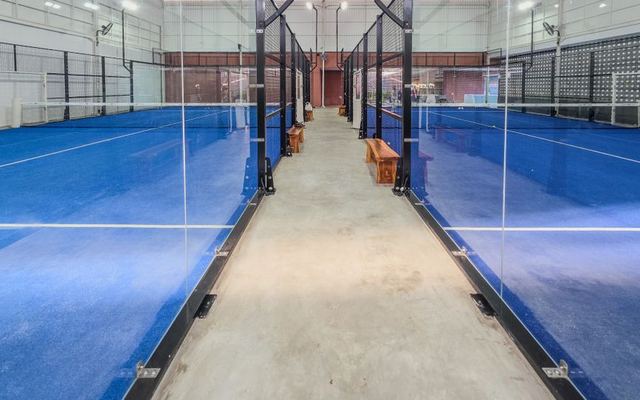 PadelDoubles racket sport on an enclosed 20 x 10 m court where the walls stay in play.
 TeqballSoccer skills over a curved table, singles or doubles, with no physical contact allowed.
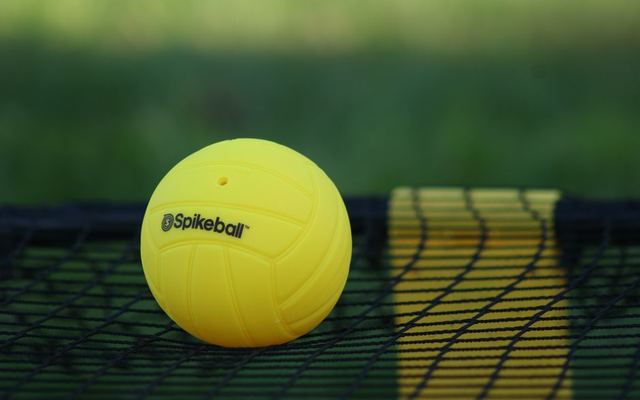 SpikeballTwo-on-two, up to three touches, then spike the ball onto a round net; no sides after the serve.
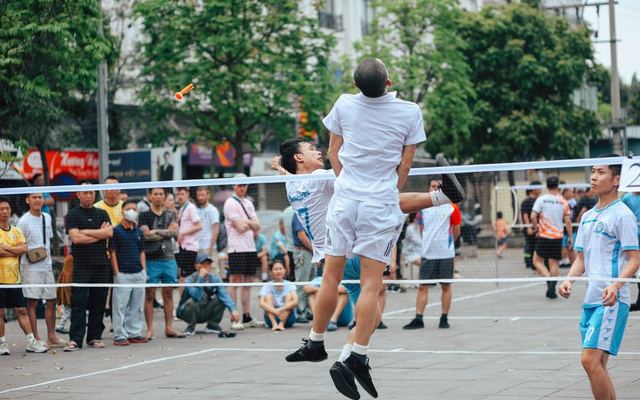 FootvolleyBeach volleyball rules, but no hands, arms or forearms: two-on-two on sand.
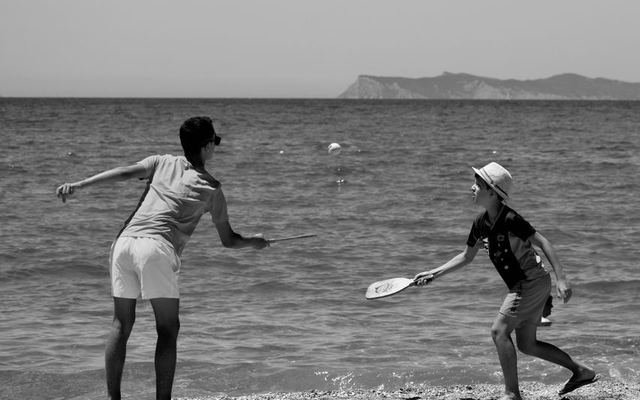 Beach TennisTennis scoring on sand with stringless rackets and low-compression balls, no bounce allowed.
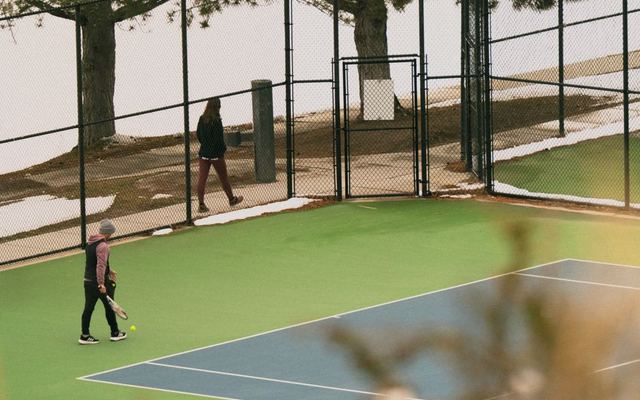 Platform TennisCold-weather doubles on a heated raised deck inside wire screens that stay in play.
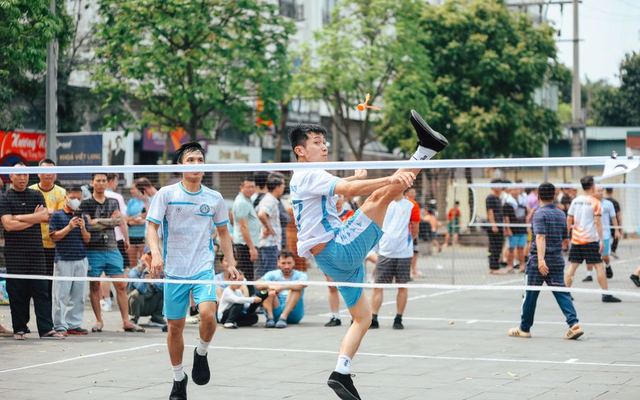 Sepak TakrawThree-a-side kick volleyball with a woven ball: feet, legs, chest and head only.
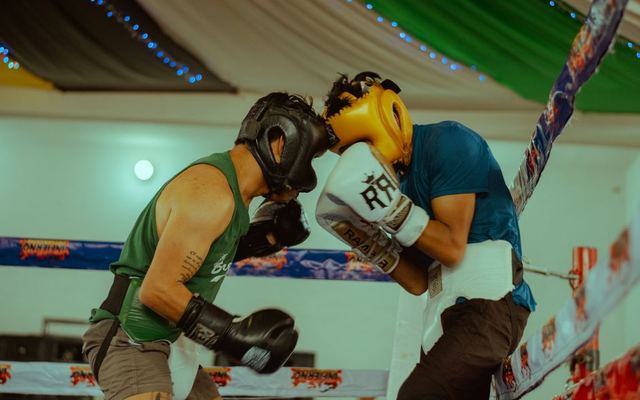 Chess BoxingOne-on-one, alternating rounds of fast chess and amateur boxing; win by checkmate or knockout.