Spikeball Rules and How to Play Roundnet
Legal touches, rim hits and tournament scoring, from the official rules.
Spikeball is played two against two around a circular net. At Wildcard Sport, we check each rule against the official rulebooks and link them. Teams get up to three alternating hits to return the ball onto the net.
There are no boundaries once the serve is airborne. Points end when the ball touches the ground, hits the rim directly, bounces twice on the net, or fails to return. Games use rally scoring to 11, 15 or 21 points under Spikeball's rules, or 15 or 21 under the international rulebook, and must be won by two.
The receiving team sets up first. A legal serve starts with every player except the receiver at least 7 feet (2.13 m) from the net. Two consecutive service faults award the point to the receiving team.
Setup and Equipment
The International Roundnet Federation (IRF) recommends at least 33 by 33 feet (10 by 10 m) of space per court under Rule 1.2.2. There are no out-of-bounds lines, so that space is a guide rather than a court. For other games that need little setup, see our new sports guides.
An approved roundnet set consists of five rims, five legs, and a net. IRF Rule 1.1.2 mandates a set diameter of 36 inches (91.4 cm) and a height of 8 inches (20.3 cm). The regulation ball is inflated between 0.3 and 0.5 pounds per square inch (PSI), measuring about 12 inches (30 cm) in circumference under Rule 1.1.4.
Net tension should be consistent. Spikeball's consumer rules state that a ball dropped from 3 feet (0.91 m) should rebound 12 to 18 inches (30.5 to 45.7 cm). Under IRF Rule 1.1.3, a tournament net should bounce a ball dropped from 5 feet (1.5 m) about 20 inches (50 cm).
How Games Are Scored
Spikeball matches use rally scoring, meaning either team can score on any rally. A team earns a point whenever their opponents commit a fault or fail to make a legal return.
Target scores vary by competition level. Spikeball consumer guidelines note that games typically run to 11, 15, or 21 points, with the tournament director choosing the finish line. In sanctioned tournament play, IRF Rule 3.4 specifies standard games to 15 or 21 points.
Winning requires a margin of at least two points. For example, a tie at 14-14 must continue past 15 until one side leads by two, such as 17-15. Under IRF Rules 3.4.1 and 3.4.2, tournament organizers can establish a hard cap where the next point wins outright.
Serving and Service Faults
The receiving team establishes their court positions first before every serve. The server stands directly across from the designated receiver. Only that designated receiver is permitted to field the ball off the net.
All players except the receiver must start at least 7 feet (2.13 m) from the set edge. IRF Rule 1.2.3 establishes a service line 7 feet (2.13 m) from the rim and a serving circle 8.5 feet (2.6 m) from the center. Spikeball recreational rules note that newer players may stand closer to the rim during casual games.
Serving mechanics must meet exact physical criteria. Under IRF Rules 4.4.5 through 4.4.8, the ball must travel at least 4 inches (10 cm) from the release before being struck. The server may take one step, but one foot must keep contact with the ground until the ball hits the net under Rules 4.4.3 and 4.4.4.
Servers must strike the ball cleanly rather than throwing it. Any striking force is legal, and short drop serves are permitted. However, a serve may not travel higher than the receiver's shoulder when the receiver is in an athletic stance.
Failed service attempts count as faults. A serve that touches the rim, strikes a pocket, or exceeds shoulder height is an immediate fault. The server receives a second serve after one fault, but two consecutive faults award a point to the receiving team.
Team rotation dictates who serves next. If the serving team wins the point, the server switches places with their partner to serve to the second opponent. If the receiving team wins the point, the next designated player on their squad serves.
Touches and Rallies
A team has up to three touches to return the ball onto the net. Touches must alternate between teammates during a possession. One player cannot hit the ball twice in a row.
Hits may use any part of the body under IRF Rule 5.2. However, the ball cannot be caught or thrown under Rule 5.3. Under IRF Rule 5.2.4, simultaneous contact by two teammates counts as two hits.
Possession ends when the ball strikes the net mesh. Under IRF Rule 5.5.1, a team loses the point if the ball hits the ground, bounces twice on the net, or fails to clear the set. Teams playing other alternate net sports like teqball or sepak takraw will recognize this three-touch sequence.
Rim Hits and Pockets
Direct contact with the set frame ends the rally immediately. Under IRF Rule 5.5.1, a team loses the point if the ball's first contact with the set is the rim, legs, or underside. The ball must bounce cleanly off the mesh to remain active.
Pockets represent a different legal category. A pocket occurs when the ball strikes the net near the rim, changing trajectory without touching the rim. Under IRF Rule 5.5.2, pockets are legal during rallies, but a pocket on a serve counts as a fault.
Roll-up shots are also permitted during open play. Under IRF Rule 5.5.3, a roll-up occurs when the ball lands fully on the net, rolls into the rim, and exits cleanly. This contact is completely legal and keeps the rally alive.
Hinders and the No-Hit Zone
Touching the equipment during a rally results in an immediate loss of point. Under IRF Rule 5.7, any contact with the rim, legs, or net mesh during active play ends the point against the offending player.
Because roundnet has no boundaries, players frequently cross paths. An impeded player may call a hinder under IRF Rules 6.4 through 6.7. The point is replayed if the opponent attempted to avoid interference and a good touch was possible.
If the opponent made no effort to avoid interference, the impeded team earns the point.
Tournament play includes a circle called the No Hit Zone. IRF Rule 1.2.4 defines this zone as a circle drawn 3 feet (90 cm) from the center of the set. Under Rule 5.6.3, a player who has touched inside this circle cannot make the final hit of a possession until both feet are back outside.
Backyard vs Tournament Rules
Spikeball's consumer rules and the IRF tournament rules differ on game length, net tension and the No Hit Zone. The IRF rules used here were adopted on October 10, 2021.
| Rule element | Spikeball consumer rules | IRF tournament rules (Rulebook 2021) |
|---|---|---|
| Standard game length | Typically 11, 15, or 21 points | Typically 15 or 21 points (Rule 3.4) |
| Net drop test | Ball dropped from 3 ft (0.91 m) rebounds 12 to 18 in (30.5 to 45.7 cm) | Ball dropped from 5 ft (1.5 m) should bounce 20 in (50 cm) (Rule 1.1.3) |
| Service distance | 7 ft (2.13 m), but newer players may stand closer | 7 ft (2.13 m) service line, 8.5 ft (2.6 m) circle (Rule 1.2.3) |
| No Hit Zone | Not in Spikeball's consumer rules | 3 ft (90 cm) radius circle enforced (Rules 1.2.4, 5.6.3) |
Toymaker Jeff Knurek conceived the game in 1989. According to Mount Vernon News, Spikeball Inc. was created in 2008, and CEO Chris Ruder paid $800 for the trademark.
Ruder pitched the concept on the Season 6 finale of Shark Tank. Reporting from Looper reports that Daymond John's offer for 20% never closed and cites about $19 million in annual revenue as of 2019. The game is now generically called roundnet.
Today, USA Roundnet describes itself as the National Governing Body in the United States, with eleven volunteer committees. USA Roundnet works with the International Roundnet Federation, while Spikeball's own events run as the Spikeball Tour Series. The keyword "spikeball" draws 33,100 US searches a month (Semrush, October 2026).
Next to a court sport like tchoukball, roundnet needs very little equipment. Still choosing? Take our new sport quiz. Before a match, mark a service line 7 feet from the rim and test your net bounce against the official spikeball rules.
Frequently Asked Questions
How many hits do you get in Spikeball?
Teams get up to three alternating hits per possession before returning the ball to the net. Teammates must alternate touches, meaning one player cannot hit the ball twice in a row. Under IRF Rule 5.2.4, simultaneous contact by two teammates counts as two hits.
Can you hit the rim in Spikeball?
Hitting the rim directly is illegal and results in an immediate loss of point. Under IRF Rule 5.5.1, any ball whose first contact is the rim, legs, or underside ends the rally against the hitting team. If a ball lands cleanly on the net and rolls over the rim, the shot is a legal roll-up under Rule 5.5.3.
How many serves do you get in Spikeball?
A server receives two attempts to execute a legal serve. If the first serve results in a fault, such as hitting the rim or exceeding shoulder height, the server takes a second serve. Committing two consecutive faults awards the point to the receiving team.
Can you return a serve in Spikeball with one touch?
The designated receiver can return a serve directly onto the net with one touch. Teams are allowed up to three touches, but they are not required to use all three hits. Only the designated receiver is permitted to make that initial return.
Can Spikeball be played 1v1?
Spikeball's official rules describe a 2-on-2 game, and neither Spikeball nor the IRF rules we cite publish a 1v1 format. The sport is designed around four players positioned in a cross formation around the set.
What is a pocket in Spikeball?
A pocket occurs when the ball strikes the net near the rim, changing trajectory without touching the rim. Pockets are legal during open rally play under IRF Rule 5.5.2. If a pocket occurs on a serve, it is ruled a fault and the server must try again.
Is Spikeball a sport?
Spikeball is the brand name and equipment manufacturer for the sport officially called roundnet. USA Roundnet acts as the National Governing Body in the United States, managing eleven volunteer committees. International tournament competition is governed by the International Roundnet Federation.
Sources
Try a Free Tool
More Sports to Explore
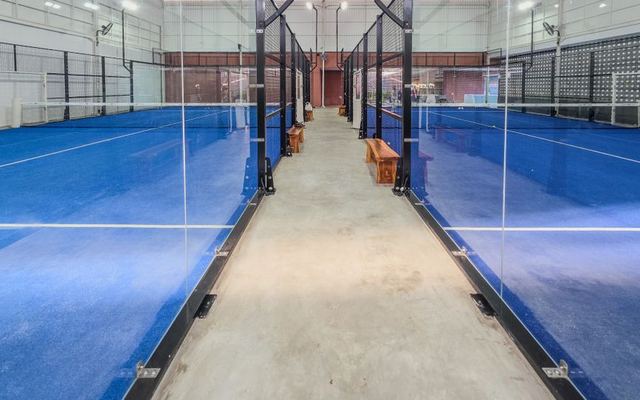 PadelDoubles racket sport on an enclosed 20 x 10 m court where the walls stay in play.
 TeqballSoccer skills over a curved table, singles or doubles, with no physical contact allowed.
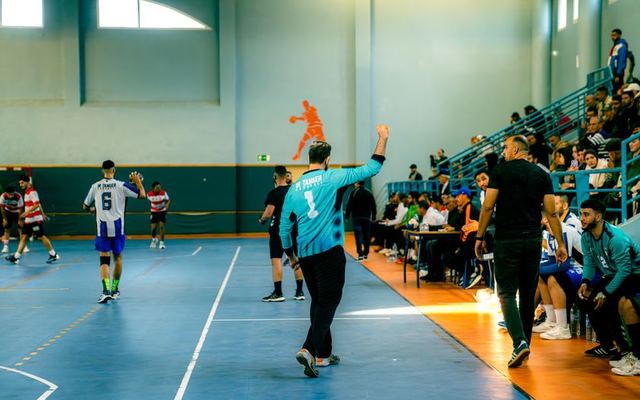 TchoukballSeven-a-side handball variant where you score off rebound frames and interceptions are banned.
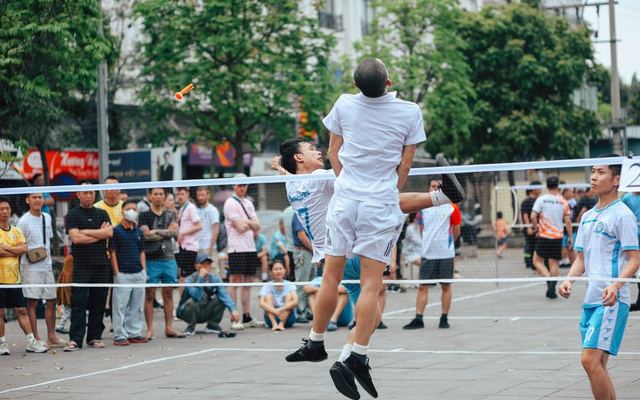 FootvolleyBeach volleyball rules, but no hands, arms or forearms: two-on-two on sand.
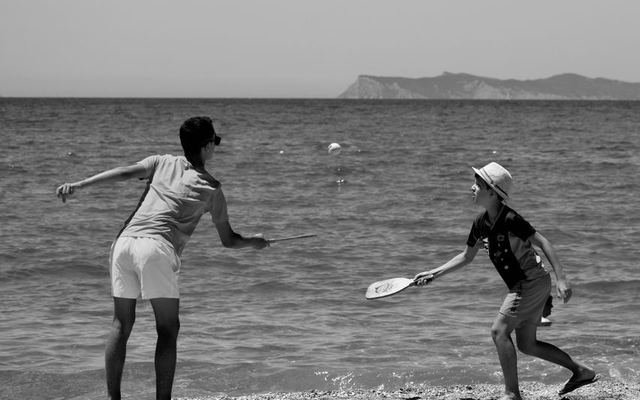 Beach TennisTennis scoring on sand with stringless rackets and low-compression balls, no bounce allowed.
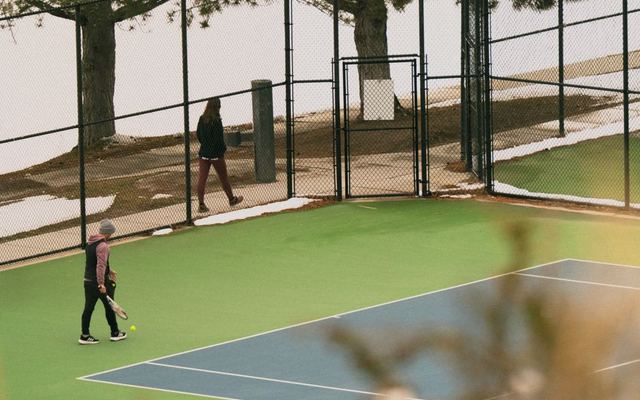 Platform TennisCold-weather doubles on a heated raised deck inside wire screens that stay in play.
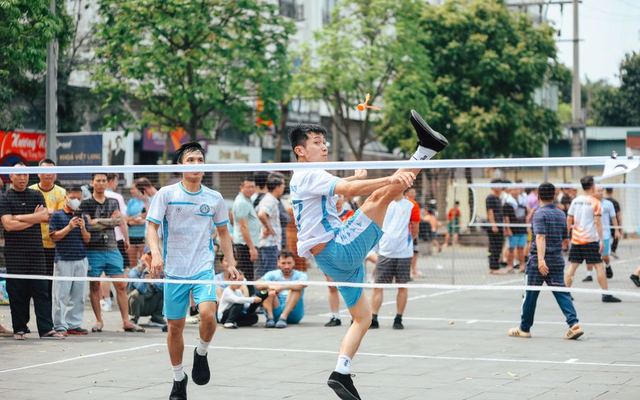 Sepak TakrawThree-a-side kick volleyball with a woven ball: feet, legs, chest and head only.
 Chess BoxingOne-on-one, alternating rounds of fast chess and amateur boxing; win by checkmate or knockout.