What Is Padel? Doubles Played Inside Walls
A doubles racket sport where the ball stays live off the walls.
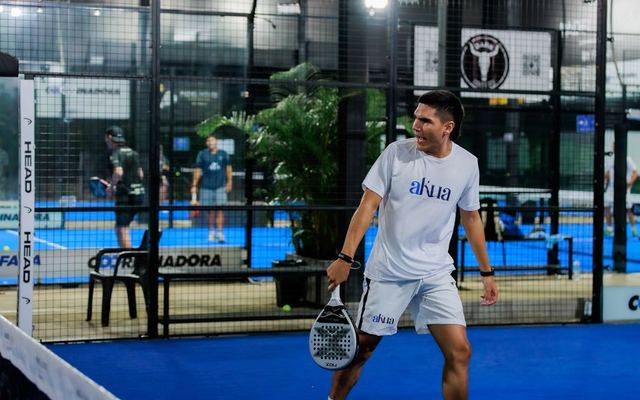
Padel is a doubles racket sport played on an enclosed 20-meter by 10-meter court with glass walls and metal mesh fencing. At Wildcard Sport, we research official federation rulebooks and governing body releases and link every source. Points start with a bounced serve struck at or below the waist, score like tennis, and allow players to return balls off the perimeter walls after a bounce.
Padel in Plain Terms
Padel combines elements of tennis and squash into a fast doubles format inside an enclosed court. According to LTA Padel, the sport offers a fast-paced environment where players return balls off surrounding glass walls. Dedicated matches take place exclusively in pairs.
LTA Padel reports that around 90% of courts worldwide are built specifically for doubles. On the official LTA Padel rules page, competitive matches require four players on a dedicated court. This setup makes padel a social team game.
Community matchmaking apps and club rotations coordinate regular games to solve that four-player requirement. If you want to begin playing, read our guide on how to start playing padel.
The Court and Its Walls
A regulation padel court measures 32 feet 10 inches (10 m) wide by 65 feet 7 inches (20 m) long inside its enclosure. A net divides it, 34.6 inches (0.88 m) high at the center and 36.2 inches (0.92 m) at the ends, under the rules of the International Padel Federation.
The total court surface covers about 2,153 square feet (200 square meters). By comparison, a standard tennis court measures 78 by 36 feet (23.77 by 10.97 m), about 2,807 square feet (260.8 square meters), according to the LTA. The LTA states that a padel court is roughly 25% smaller than a standard tennis court.
The perimeter structure must enclose the court completely. End enclosures stand 13 feet 1 inch (4 m) high, with a 9-foot-10-inch (3 m) wall topped by 3 feet 3 inches (1 m) of metal fence. The FIP allows walls made of glass, brick, or other rigid materials that produce a uniform bounce.
To inspect specific facility footprints, consult our breakdown of padel court dimensions.
What You Play With
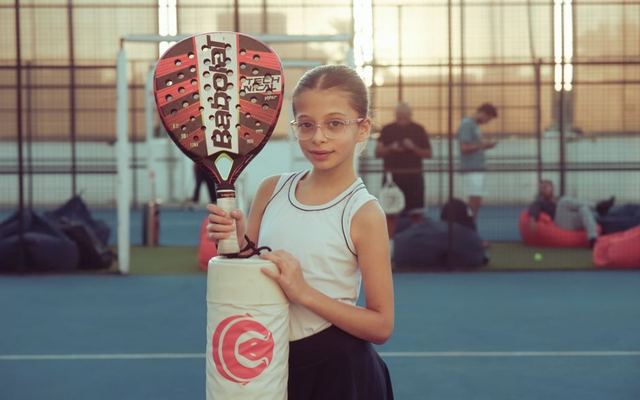
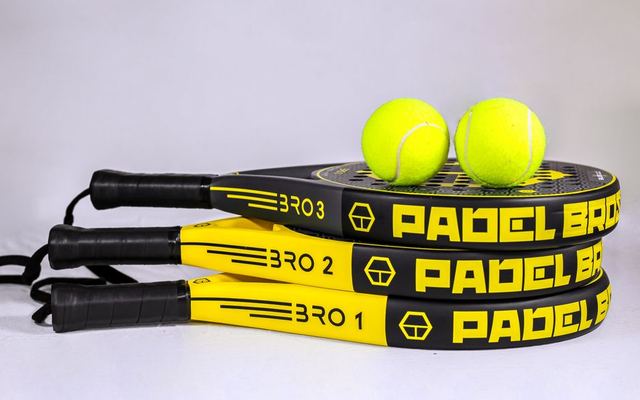
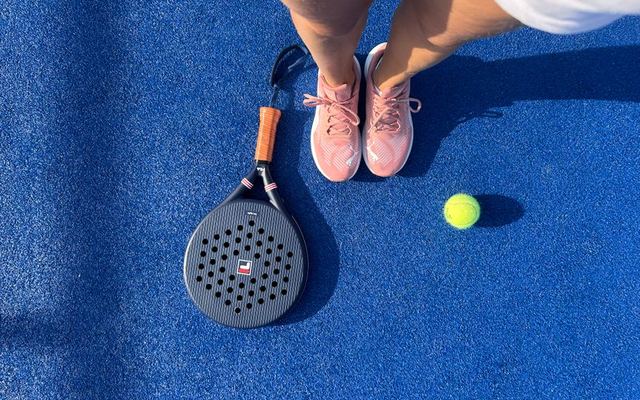
Padel equipment relies on a solid, stringless perforated racket and a low-pressure rubber ball. Under FIP equipment rules, a racket must not exceed 17.9 inches (45.5 cm) in total length, 10.2 inches (26 cm) in width, and 1.5 inches (38 mm) in thickness. Both hitting faces must remain flat.
The hitting surface features drilled holes measuring 0.35 to 0.51 inches (9 to 13 mm) across the center area. A wrist cord attached to the handle is mandatory. The LTA's padel vs tennis guide notes that rackets are shorter than tennis frames, feature thicker heads, and are commonly built with carbon fiber or fibreglass.
The LTA says round heads give more control and diamond heads give more power. Read our equipment recommendations in our guide to the best rackets for beginners.
The ball measures 2.50 to 2.67 inches (6.35 to 6.77 cm) across and weighs 1.98 to 2.10 ounces (56.0 to 59.4 g). It uses rubber construction with lower internal pressure than a tennis ball, which makes it travel lower and slower. Most venues provide rental rackets and balls on site, so new players need minimal equipment to begin.
How a Point Works
A padel point starts with an underarm serve struck at or below waist level after a floor bounce. The server must keep at least one foot on the ground behind the service line and strike the ball diagonally into the receiver's service box. A serve struck above the waist or landing outside the receiver's box is a fault.
Rallies depend on a specific contact order. The ball must bounce once on the opponent's turf before touching their back glass wall or side metal fence. If the incoming ball strikes an enclosure wall before touching the floor, the hitting team loses the point.
Once the ball bounces on the floor, it can strike the glass wall or fence and remain live. Players must return the rebound before it bounces a second time on the court surface. Players may also hit the ball directly into their own rear glass wall to drive it back over the net.
For full match regulations, review our complete guide to padel rules.
Scoring and Match Formats
Padel scoring follows the traditional tennis system of games, sets, and matches. Points advance from 15 to 30, 40, and game. A team must win six games with a two-game advantage to claim a set, and matches are contested as the best of three sets.
When a game reaches a 40-40 tie, known as deuce, competitions decide the outcome using several official formats. Under FIP Rule 1, organizers can select traditional advantage scoring, a golden point sudden-death rally, or a star point format. For tie-break point structures and match rotation rules, read our complete guide to padel scoring.
Where It Started, and Why It's Padel
Enrique Corcuera invented padel in 1969 at his home in Las Brisas, Acapulco, Mexico. The sport evolved from residential court play into a structured international game governed by federations. In 1997, federations in Spain and Argentina officially agreed to standardize the name as "Padel", replacing the spelling "Paddle" previously used in Argentina.
Our guide to where padel originated covers the full timeline.
How Many People Play
Over 35 million people play padel in 150 nations and 20 dependent territories. The International Padel Federation, based in Lausanne, Switzerland, governs the worldwide game through 100 affiliated national federations. The FIP World Padel Report 2025, published on December 2, 2025, recorded 77,300 courts worldwide after 14,355 new courts were built in 2025 alone.
Global club venues surpassed 24,600 locations in that report. At the professional level, Premier Padel serves as the top global tour after absorbing the World Padel Tour from 2024 under an agreement between Qatar Sports Investments and Damm.
Miami hosted the Miami Premier Padel P1 from March 23 to 29, 2026, at the Miami Beach Convention Center, its second year in a row. The 2026 calendar had 25 events across 17 countries, according to USA Padel.
In the United States, USA Padel acts as the national governing body. The organization operates as a not-for-profit with a volunteer president and board, recognizing FIP as the international authority. The Sports & Fitness Industry Association (SFIA) 2026 Topline Participation Report, as cited by USA Padel, recorded 1,073,000 Americans who played padel in 2025 during the first year SFIA tracked the activity.
Participation data shows that 835,000 Americans played between 1 and 7 times in 2025, while 238,000 played 8 or more times. The American player community remains broad but predominantly occasional. Finding consistent doubles matches requires connecting with active local club networks.
USA Padel reported just over 1,000 courts open across 31 states as of April 13, 2026. To find a court, read our guide to finding a padel court near you.
Padel vs Tennis and Other Racket Sports
Padel differs from traditional racket sports through its enclosed court boundaries, solid composite racket, and mandatory doubles play. The LTA notes that padel is generally easier to learn than tennis because of the smaller court, underarm serve, and slower ball.
Because the ball can be played off the back glass after it bounces, a padel rally can continue after the ball passes you. Learn more about tactical differences in our detailed comparison of padel vs tennis.
| Feature | Padel | Tennis |
|---|---|---|
| Court dimensions | 65 ft 7 in x 32 ft 10 in (20 m x 10 m) | 78 ft x 36 ft (23.77 m x 10.97 m) |
| Playing area | 2,153 sq ft (200 sq m), about 25% smaller (LTA) | 2,807 sq ft (260.8 sq m) |
| Perimeter enclosure | Enclosed by 13 ft 1 in (4 m) end walls and fence | Open court without walls |
| Competition format | Doubles on dedicated courts (LTA Padel) | Singles and doubles formats |
| Racket construction | Stringless perforated composite | Strung racket frame |
| Ball pressure | Lower pressure, lower and slower bounce | Standard tennis ball pressure |
Padel is also distinct from pickleball and other emerging paddle sports. For an in-depth breakdown of court sizes, paddles, and rule differences, see our comparison of padel vs pickleball. Other regional wall and paddle sports, such as platform tennis, use different court specifications and equipment rules.
Who Padel Isn't For
Padel does not suit players seeking dedicated solo singles competition. Because official federation play takes place exclusively as doubles, individual players must recruit partners or rely on club matching systems. Solo athletes who want independent single-player matches should choose tennis or squash instead.
Our assessment would change if federations publish an official singles format and clubs build dedicated courts for it. Until governing bodies sanction singles play, the sport remains an exclusively four-player doubles commitment.
Frequently Asked Questions
What is padel and how is it played?
Padel is an enclosed doubles racket sport played on a 65 ft 7 in by 32 ft 10 in (20 by 10 m) court surrounded by glass walls and mesh fencing. Points begin with a bounced serve struck at or below waist level into the opposite service box. Four players use solid, perforated composite rackets to hit a low-pressure rubber ball across a net, returning rebounds off the glass perimeter walls.
Is padel the same as pickleball?
Padel is not the same as pickleball. Padel is played inside a fully enclosed court where the ball stays live off the walls, with a low-pressure rubber ball and tennis scoring. Our padel vs pickleball comparison covers how pickleball differs.
Is padel tennis or squash?
Padel is a distinct sport that blends structural elements from tennis and squash. It uses standard tennis scoring, a central net, and opposite service boxes, but adds walls, which is why LTA Padel says it is often described as a mix of tennis and squash. The defining rule requires the ball to bounce on the opponent's floor before striking the perimeter walls.
Why is it spelled padel and not paddle?
The spelling was standardized as "Padel" in 1997 when federations in Spain and Argentina agreed on a single international term. Argentina had previously spelled the sport "Paddle."
Can you play padel with 2 people?
Official padel matches are played exclusively as doubles with four players. LTA Padel notes that around 90% of courts worldwide are constructed specifically for doubles play. Two players can rally for practice, but LTA Padel says the game is played only as doubles.
Is padel easier than tennis?
The Lawn Tennis Association notes that padel is generally easier to learn than tennis due to its smaller court, underarm bounced serve, and slower ball. Most venues hire out rackets and balls, so you can try it without buying gear.
How many people play padel in the US?
According to the SFIA 2026 Topline Participation Report cited by USA Padel, 1,073,000 people played padel in the United States in 2025. Among those players, 835,000 played between 1 and 7 times, while 238,000 played 8 or more times. The sport is supported by just over 1,000 courts operating across 31 states as of April 2026.
To book your first doubles game, read our guide to finding a padel court near you, or start from the padel basics guides.