Padel Courts, From Size to Cost
The walls are in play, so a padel court is a building, not just a surface.
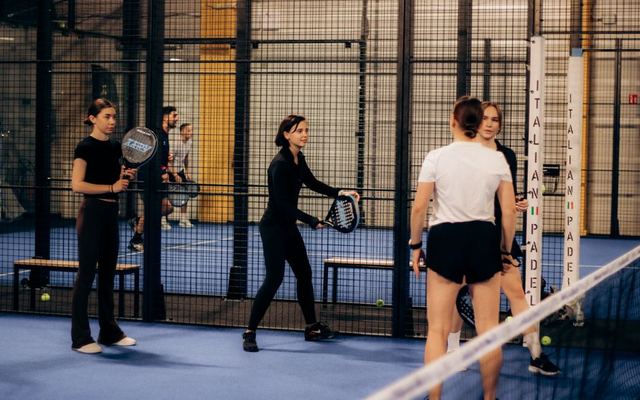
A padel court is a fully enclosed area 65.6 by 32.8 feet (20 by 10 meters), about a third the size of a tennis court. At Wildcard Sport, we research padel courts from federation rules, governing-body guidance and manufacturer pages. The court features 13.1-foot (4-meter) end walls made of glass and mesh that stay in play, a central net, and usually an artificial grass surface.
Why the Walls Make It a Structure
Every padel court is an enclosed box. Under the International Padel Federation (FIP) Rules of Padel, labelled "Review of application 01.01.2026", the court must be completely enclosed. Rule 1 designates the insides of the walls, the metal mesh fence, the ground, the net, and the net posts as official parts of the court.
Because the perimeter stays in play, the walls function as an engineered structural system. The Lawn Tennis Association (LTA) explains in its 2025 construction guidance note that padel courts with glass walls should be treated as a structure. The LTA notes that these installations require site-specific, engineer-designed foundations.
The Sports and Play Construction Association (SAPCA) Code of Practice defines a padel court as a 65.6 by 32.8 foot (20.0 by 10.0 meter) enclosure above ground. That assembly typically combines glass and weld-mesh panels on steel or aluminium posts fixed to a concrete foundation. Learn how the boundaries operate during match play in our guide to padel rules.
Size and Space Around the Court
A standard padel court measures 65.6 feet (20 meters) long by 32.8 feet (10 meters) wide on the inside. FIP enforces a strict 0.5% tolerance on those internal dimensions. That tolerance allows an internal variance of 3.9 inches (0.10 meters) on court length and 2.0 inches (0.05 meters) on court width.
The net divides the court across its 32.8-foot (10-meter) width. It measures 2.89 feet (0.88 meters) high at the center and rises to 3.02 feet (0.92 meters) at the posts. Service lines run parallel to the net at a distance of 22.8 feet (6.95 meters).
Between the service line and the back wall, players have 10.0 feet (3.05 meters) of open floor space. Check the full court layout in our guide to padel court dimensions.
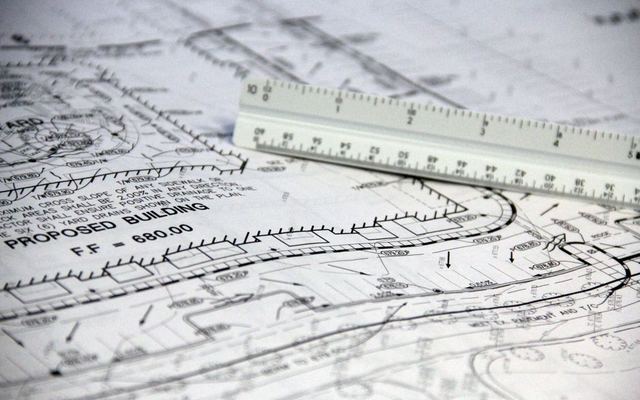
Site planning requires land beyond the playing lines. The LTA 2025 guidance note specifies a minimum area of 68.24 by 35.43 feet (20.80 by 10.80 meters) for one external court, including the ring beam. That footprint equals 2,418 square feet (224.64 square meters), creating a perimeter margin around the 2,152.8 square foot (200 square meter) interior. Test whether your available property accommodates these dimensions with our court space checker.
Vertical ceiling height limits overhead play. FIP rules require an indoor clear height of at least 19.7 feet (6 meters) across the entire court surface, while suggesting 26.2 feet (8 meters) for new facilities.
Real-world facilities often build higher. A Padel Browser survey published on 29 September 2026 recorded a median ceiling height of 30 feet across 108 measured American clubs. That median sits 10.3 feet (3.14 meters) above FIP's mandatory baseline.
Glass and Mesh Walls
End walls stand 13.1 feet (4 meters) tall. That vertical boundary pairs 9.8 feet (3 meters) of solid wall with 3.3 feet (1 meter) of metal mesh fence directly above it. FIP rules state that walls may be transparent or opaque, including materials like glass or brick.
Wall surfaces must meet rigid performance conditions. FIP specifies that walls must be hard, completely smooth, and deliver a uniform bounce.
Toughened glass is the standard material for transparent walls. The LTA 2025 guidance note allows 0.39-inch (10-millimeter) glass for indoor courts and requires 0.47-inch (12-millimeter) toughened glass for outdoor courts. In the United States, an article from Padel.fyi describes American clubs using 12-millimeter tempered glass walls.
Side walls incorporate both solid panels and metal mesh fencing. FIP rules confirm that the metal mesh fence is an active part of the court. See how the enclosure goes up in our guide on how to build a padel court.
The Playing Surface
FIP regulations authorize three surface materials: cement, synthetic material, or artificial grass. Permitted surface colors are limited to green, blue, or terracotta.
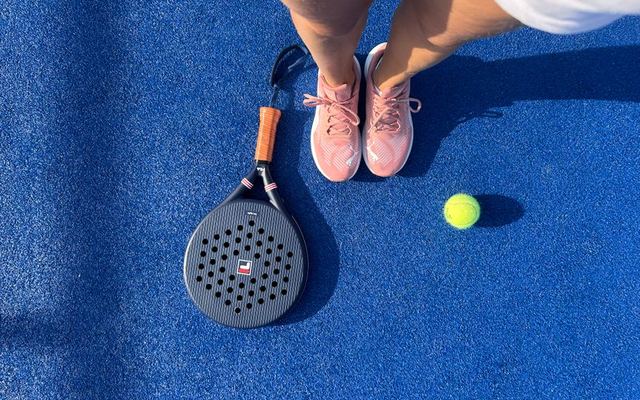
In its Code of Practice, SAPCA notes that most installations and tournaments in the United Kingdom and around the world are played on artificial grass. Learn about turf selection and sand infill systems in our guide to padel court surface options.
For outdoor courts, FIP recommends a north to south long axis.
What It Costs to Build
Published US padel court prices differ by source and scope, so our what a court costs to build guide lists each figure with its date and scope.
In the LTA's UK figures, groundwork costs almost as much as the court itself. The LTA 2025 guidance note details delivered-project costs of £71,000 excluding value-added tax (VAT) for one court. That figure combines £36,000 for the court structure with floodlights and £35,000 for the concrete ring beam, base, ducting, and drainage.
In that LTA delivered project dataset, ground engineering accounts for 49.3% of the total capital cost. Venue operators must also budget for ongoing operational maintenance. The LTA calculates light-emitting diode (LED) floodlight running expenses at about £1 per hour per court, while recommending an annual sinking fund of £1,500 per court.
Foundations and Build Steps
The LTA 2025 note says padel courts with glass walls "should be treated as a structure" and need site-specific, engineer-designed foundations.
Standardization efforts have begun in the United States. In September 2025, the American Sports Builders Association (ASBA) and USA Padel published the first US "Padel Courts: Installation and Maintenance Manual".
British standards follow the SAPCA Code of Practice, published in its 5th edition in September 2025. That document was produced in direct consultation with the LTA, the recognised national governing body for padel in the United Kingdom. Follow step-by-step construction sequencing in our guide on how to build a padel court.
Choosing a Builder
In its FAQ, USA Padel recommends builders that are bonded, licensed, and insured. USA Padel also wants courts built to FIP Standards of Play.
To help facility operators verify contractors, USA Padel operates an Endorsed Court Manufacturer or Builder program. USA Padel ties the program to compliance with FIP regulations.
Before signing a construction contract, ask candidates to show they are bonded, licensed, and insured. To evaluate contractor quotes and warranty terms, read our guide to vetting padel court builders before breaking ground on a padel court.
Indoor vs Outdoor Courts
Court design specifications differ between indoor and outdoor venues. Indoor courts need FIP's 19.7 feet (6 meters) of clear height. Outdoor courts need 0.47-inch (12-millimeter) toughened glass under the LTA note.
| Specification Feature | Indoor Court Requirement | Outdoor Court Requirement | Primary Source |
|---|---|---|---|
| Internal dimensions | 65.6 by 32.8 ft (20 by 10 m) | 65.6 by 32.8 ft (20 by 10 m) | FIP Rules of Padel |
| Minimum clear height | 19.7 ft (6 m), 26.2 ft (8 m) suggested | Not applicable | FIP Rules of Padel |
| Measured ceiling height | 30 ft median across 108 US clubs | Not applicable | Padel Browser (Sep 2026) |
| Glass panel thickness | 0.39 in (10 mm) allowed | 0.47 in (12 mm) toughened required | LTA Guidance Note 2025 |
| Total end wall height | 13.1 ft (4 m) | 13.1 ft (4 m) | FIP Rules of Padel |
| Foundation requirement | Site-specific, engineer-designed | Site-specific, engineer-designed | LTA Guidance Note 2025 |
| Minimum site area (one external court) | Not given in the LTA note | 68.24 by 35.43 ft (20.80 by 10.80 m) | LTA Guidance Note 2025 |
| Recommended axis | Not specified | North to south long axis | FIP Rules of Padel |
For indoor conversions, confirm overhead truss clearance using our court space checker.
Frequently Asked Questions
How big is a padel court compared to a tennis court?
A padel court is about a third the size of a tennis court according to the LTA. It measures 65.6 by 32.8 feet (20 by 10 meters) on the inside, creating a playing area of 2,152.8 square feet (200 square meters). Padel courts are fully enclosed rectangular boxes designed primarily for doubles play.
Are padel court walls made of glass?
Yes, most modern padel court walls are built with toughened glass, though FIP rules also allow opaque materials like brick. FIP mandates that any wall material must be hard, completely smooth, and deliver a uniform bounce. The LTA allows 0.39-inch (10-millimeter) glass for indoor venues and requires 0.47-inch (12-millimeter) toughened glass outdoors.
Can you play off the walls in padel?
Yes, you can play off the walls because FIP defines the interior walls and mesh fencing as official parts of the court. The ball remains live after rebounding from the glass or mesh during a rally.
What surface is a padel court?
Most padel courts use an artificial grass surface. FIP regulations allow cement, synthetic materials, or artificial grass in green, blue, or terracotta. SAPCA confirms that the majority of courts and competitive tournaments worldwide are installed with artificial grass.
How much does a padel court cost?
Padel court build costs vary by source and geographic scope. In the United States, Padel Browser reported estimates of $25,000 to $60,000 for a single outdoor court in June 2026, and $40,000 to $70,000 for an installed outdoor panoramic court in July 2026. Sports Venue Calculator reported $39,076 to $99,920 per court in late 2026. In the United Kingdom, the LTA reported delivered-project costs of £71,000 excluding VAT in 2025, which includes £36,000 for the court and lights plus £35,000 for groundworks and drainage.
How high does an indoor padel court ceiling need to be?
FIP requires a minimum indoor clear height of 19.7 feet (6 meters) across the entire court, while suggesting 26.2 feet (8 meters) for new facilities. Many operational facilities provide more vertical space. A Padel Browser survey from September 2026 found a median ceiling height of 30 feet across 108 measured American clubs.
Sources
- FIP Rules of Padel
- LTA Padel Court Construction Guidance Note 2025
- SAPCA Code of Practice for Padel Courts
- Padel.fyi Permitting and Regulation Report
- Padel Browser Cost to Build Guide
- Padel Browser Club Opening Guide
- Sports Venue Calculator Construction Cost
- Padel Browser Ceiling Height Survey
- ASBA and USA Padel Installation Manual
- USA Padel Technical FAQs
- USA Padel AFP Courts Endorsement
All Padel Courts Guides
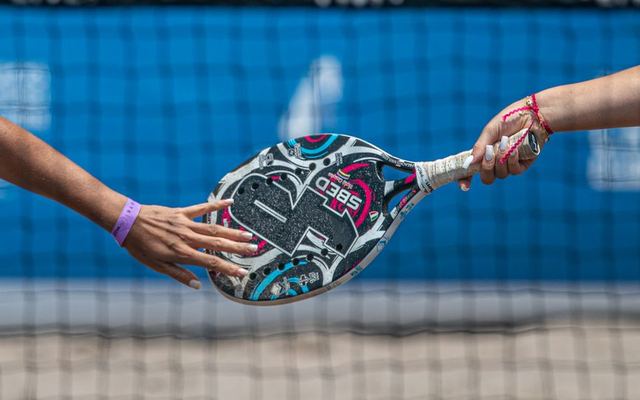 Padel Court Dimensions in Feet and MetersOfficial padel court dimensions are 65.6 by 32.8 feet (20 by 10 meters) inside the walls, with a net 2.89 feet high at the center. See every FIP measurement.
 What a Padel Court Costs to BuildPadel Browser put US padel court construction cost at $20,000 to past $100,000 per court in June 2026. Compare each source by date, currency and scope.
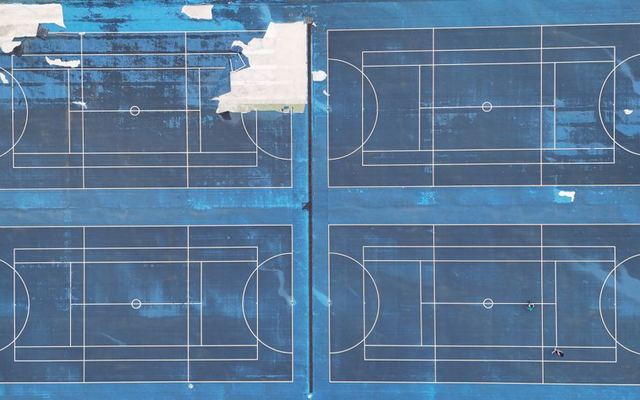 How to Build a Padel CourtPadel court construction follows the LTA eight-step plan, from measuring the site to collecting the manuals, on an engineer-designed ring beam or slab.
 How to Vet Padel Court Builders in the USPadel court builders should be licensed, bonded and insured in the US. The LTA also advises one main contractor so a single warranty covers the court.
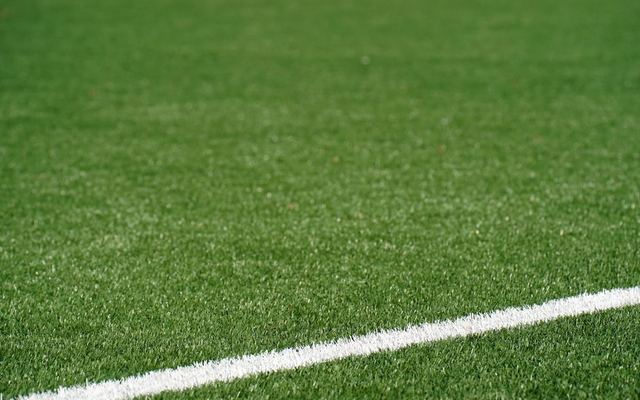 Padel Court Surfaces and Turf TypesA padel court surface is usually sand-dressed artificial turf 0.39 to 0.59 in (10 to 15 mm) tall. See the yarn and sand specs SAPCA and PADEL1969 publish.