Sports Like Pickleball, Compared by Rules
Four paddle games that play like pickleball, by their own rulebooks.
The sports most similar to pickleball are padel, POP Tennis, beach tennis, and platform tennis. At Wildcard Sport, we research paddle and emerging racket sports directly from governing body rulebooks and official equipment specifications. Each one changes the ball, the walls or the surface you play on.
The Short List
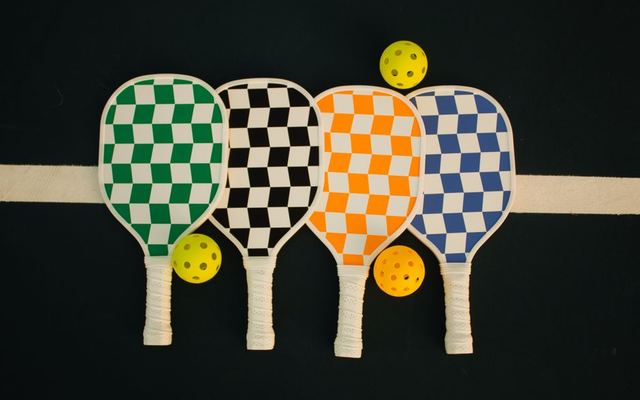
According to USA Pickleball, Joel Pritchard, Bill Bell, and Barney McCallum invented pickleball in 1965 on Bainbridge Island, Washington. They built the original game with ping-pong paddles, a plastic wiffle ball, and a lowered badminton net.
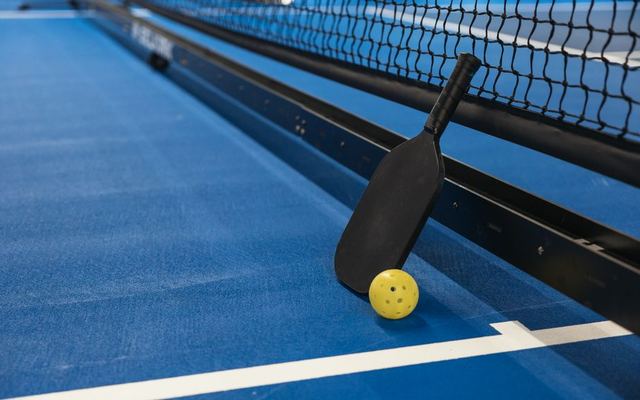
A standard pickleball court measures 44 by 20 feet (13.41 by 6.10 m) for both singles and doubles play. The net stands 36 inches (0.91 m) high at the sidelines and drops to 34 inches (0.86 m) at the center. Play features a 7-foot (2.13 m) non-volley zone on each side of the net, commonly called the kitchen, alongside a perforated plastic ball containing 26 to 40 holes.
Participation in pickleball reached 24.3 million Americans in 2025, rising from 4.2 million in 2020 as tracked by the Sports & Fitness Industry Association (SFIA). Our new sports guides sets that figure beside search interest for less-played games.
Padel: Doubles Inside Walls
Padel is played on a fully enclosed court whose walls stay in play. Under the International Padel Federation (FIP) Rules of Padel, a regulation court measures 65.6 by 32.8 feet (20 by 10 m) inside its boundaries. That footprint is roughly 21.6 feet (6.59 m) longer and 12.8 feet (3.9 m) wider than a pickleball court.
The court perimeter is fully enclosed by structural walls and metallic mesh fencing. The net stands 34.6 inches (0.88 m) high at the center and rises to 36.2 inches (0.92 m) at the posts. Service lines sit 22.8 feet (6.95 m) back from the net, leaving a deep backcourt for groundstrokes and off-the-wall returns.
Serving requires bouncing the ball once before striking it at or below waist height. Unlike pickleball, padel allows a second serve if the first delivery faults under FIP Rule 6. Padel uses traditional tennis scoring across games and sets, including optional deciding-point formats like Golden Point at deuce.
Participation in padel reached 1,073,000 Americans in 2025, which was the first year SFIA tracked padel, as reported by the United States Padel Association. Semrush US database figures from October 2026 record 60,500 searches a month for "padel". Players can review our breakdown of padel vs pickleball to compare the two side by side.
POP Tennis: Tennis on a Smaller Court
POP Tennis is the modern name for paddle tennis, played on a shorter court with a solid paddle and a low-compression ball. Paddle tennis was rebranded as POP Tennis in the mid-2010s, as Ken Lindner told Club + Resort Business in 2016. The game uses standard tennis scoring and traditional tennis stroke mechanics.
Official court dimensions published by POP Tennis feature two standard layouts: 50 by 20 feet (15.24 by 6.096 m) or 60 by 21 feet (18.29 by 6.40 m). On the 50-foot court, the net stands 31 inches (0.79 m) high at the center. This net sits three inches lower than a pickleball center net.
Players use a solid paddle built with a perforated fiberglass or carbon composite hitting surface. The ball has 50 to 75 percent of the compression of a standard tennis ball. POP Tennis allows only one underarm serve per point.
Search interest for "pop tennis" reached 590 monthly US searches in October 2026 according to the Semrush US database.
Beach Tennis: Played on Sand
Beach tennis adapts racket volleys to an outdoor sand court where the ball never bounces. The Association of National Olympic Committees notes that beach tennis emerged in Italy in the early 1970s. The sport is now governed globally by the International Tennis Federation (ITF).
ITF regulations mandate a sand court measuring 52.5 by 26.2 feet (16 by 8 m) for doubles play. Singles competition uses a narrower width of 14.8 feet (4.5 m). The net stands 5.6 feet (1.7 m) high for women, mixed, and junior divisions, and rises to 5.9 feet (1.8 m) for men's competition.
The ball is an ITF Stage 2 low-compression ball. Because the ball cannot touch the sand during a rally, every return is played out of the air as a volley or overhead smash. Players receive only one serve per point, and matches use no-ad scoring where a single deciding point settles any deuce.
Demand for "beach tennis" stood at 3,600 monthly US searches in October 2026 based on Semrush data. Beach tennis suits players who want sand play with no bounce. Check our overview of beach tennis to examine competitive formats and paddle requirements.
Platform Tennis: Winter Play on Heated Decks
Platform tennis is an outdoor paddle sport played in cold weather on an elevated, screen-enclosed deck. The American Platform Tennis Association explains that the game was created in 1928 in Scarsdale, New York. It is played outdoors in cool and cold weather.
Historical records from the Platform Tennis Hall of Fame state that paddle tennis was developed by Reverend Frank P. Beal as a child in Albion, Michigan. The first dedicated platform tennis deck was completed in Scarsdale in late November 1928. Heating equipment installed under the raised deck keeps the playing surface clear of snow and ice.
The court layout measures 44 by 20 feet (13.41 by 6.10 m), set within a 60 by 30 foot (18.29 by 9.14 m) raised deck. Wire screens 12 feet high enclose the deck. Players can let the ball hit the wire screen after a floor bounce and return it over the net, similar to padel wall rebounds.
US search volume for "platform tennis" reached 5,400 monthly queries in October 2026 in the Semrush database. Platform tennis suits outdoor winter play. Read our rules explainer for platform tennis for its full rules.
Courts and Gear Side by Side
Each figure below comes from the sport's governing body or official site.
| Sport | Court Dimensions | Center Net Height | Ball Construction | Serve Allowance | Scoring Format |
|---|---|---|---|---|---|
| Pickleball | 44 x 20 ft (13.41 x 6.10 m) | 34 in (0.86 m) | Perforated plastic (26 to 40 holes) | Underhand serve | Side-out scoring to 11 (win by 2) |
| Padel | 65.6 x 32.8 ft (20 x 10 m) | 34.6 in (0.88 m) | Felt ball | Two bounce serves | Tennis sets and games (deuce or Golden Point) |
| POP Tennis | 50 x 20 ft or 60 x 21 ft | 31 in (0.79 m) | 50 to 75% compression felt ball | One underarm serve | Tennis sets and games |
| Beach Tennis | 52.5 x 26.2 ft (16 x 8 m) | 66.9 in (1.7 m) | ITF Stage 2 felt ball | One serve | Tennis games (no-ad) |
| Platform Tennis | 44 x 20 ft court (60 x 30 ft deck) | 34 in (0.86 m) | Flocked rubber ball | One serve in doubles | Tennis sets and games |
A pickleball court spans 880 square feet (81.8 square meters). In comparison, a padel court covers 2,151.7 square feet (200 square meters), providing more than double the floor area. A beach tennis court covers 1,375.6 square feet (128 square meters) of deep sand.
Our guide to padel court dimensions covers the full padel layout, including the space around the court.
Serving and Scoring
Pickleball, POP Tennis and padel all require a low or underhand serve. In pickleball, the server must strike the ball below the waist with an upward arm arc. Only the serving team scores points, with standard games running to 11 points won by two under USA Pickleball guidelines.
POP Tennis and beach tennis allow one serve per point, while padel allows two. POP Tennis also requires the serve to be underarm.
Tennis players moving to these games will recognize the scoring systems immediately. Padel, POP Tennis, beach tennis, and platform tennis all use 15, 30, 40, and game scoring structures. To see how tennis rules contrast with short-court formats, compare pickleball vs tennis.
Doubles Games Without a Paddle
Two non-paddle games keep pickleball's doubles format without a racket.
Roundnet, widely known as Spikeball, is played two-against-two around a circular ground net. Official Spikeball rules set no boundary lines and use rally scoring. See our breakdown of spikeball rules for legal touches and rim violations.
Teqball is another doubles format played on a curved table using soccer touches. According to the International Teqball Federation, players compete in singles or doubles using any part of the body except hands and arms. Review our guide to teqball for table dimensions and service rules.
Which One to Try
Pick padel if you want walls that keep the ball in play. Padel is a poor fit if you cannot reach an enclosed court, because the FIP rules require one. POP Tennis needs only a 50- or 60-foot court. Those who dislike the kitchen line can transition to POP Tennis, which removes non-volley zones entirely while keeping court dimensions short.
Beach tennis fits players who want to volley on sand with no bounce. Platform tennis fits outdoor winter play, because heaters under the deck keep it playable.
If you are deciding between these formats, take our new sport quiz to get a shortlist of sports like pickleball that suit how you like to play.
Frequently Asked Questions
What sport is similar to pickleball?
The sport most similar to pickleball is padel, which also uses a low serve struck at or below the waist. Padel differs by adding playable walls, a larger 65.6 by 32.8 foot (20 by 10 m) court, and tennis scoring. Other close alternatives include POP Tennis, beach tennis, and platform tennis.
Which new sport is most like pickleball?
Padel is the paddle sport SFIA began tracking in 2025. SFIA counted 1,073,000 Americans who played padel that year, as reported by the United States Padel Association. Padel is played on a fully enclosed court with walls in play.
What sport is like tennis and pickleball?
POP Tennis blends elements of tennis and pickleball directly. It uses solid paddles on 50-foot or 60-foot courts with a 31-inch center net, but relies on tennis scoring, tennis strokes, and low-compression felt tennis balls. Padel also combines tennis scoring with compact court dimensions and solid rackets.
What sports is pickleball similar to?
Pickleball is historically and mechanically similar to badminton and table tennis. Its inventors created the game in 1965 using ping-pong paddles, a lowered badminton net, and a plastic wiffle ball. Modern alternatives sharing its compact doubles dynamics include padel, POP Tennis, platform tennis, and beach tennis.
Sources
- USA Pickleball
- Sports & Fitness Industry Association
- International Padel Federation
- United States Padel Association
- Club + Resort Business
- POP Tennis
- International Tennis Federation
- Association of National Olympic Committees
- American Platform Tennis Association
- Platform Tennis Hall of Fame
- Spikeball
- International Teqball Federation