Flag Football Positions and 5v5 Rules
Learn each 5v5 flag football position and the rules that shape it.
In 5 on 5 (5v5) flag football, the offense has a quarterback, a center who snaps and then runs a route, and wide receivers or a running back. At Wildcard Sport, we research emerging sports from federation rulebooks and official governing-body documents.
The defense has up to two rushers who start 7 yards behind the line, plus defensive backs and sometimes a deep safety. Traditional offensive linemen do not take the field in 5v5 play because blocking is prohibited, and players routinely compete on both offense and defense.
The Positions at a Glance
Every play begins with five players per side competing under non-contact rules. The offense arranges five players to advance the ball toward the end zone. The defense deploys five players to pull the ball carrier's flags.
On offense, the quarterback (QB) leads the unit from behind the line of scrimmage and distributes the ball. The flag football center delivers the snap from the scrimmage line and releases immediately into the field as an eligible receiver. Offenses then line up two or three wide receivers, or pair two receivers with a single running back.
Up to two designated rushers may pressure the passer from seven yards away. The remaining defenders line up as defensive backs to cover receivers in zone or man-to-man schemes, with some teams positioning a safety deep.
Offensive Positions
Every offensive player can catch a pass, including the quarterback after a handoff, pitch or lateral behind the line.
The quarterback serves as the offensive leader. This player calls the play or relays it from the coach, takes the snap on every play, and decides whether to hand off or pass. Listed skills on NFL FLAG (operated under the National Football League) include field vision, reading the defense, passing fundamentals, quickness to avoid the rush, and leadership.
The center snaps the ball to the quarterback and then becomes a receiver. NFL FLAG calls this immediate transition into a route runner the biggest difference from tackle football. Centers cannot run a direct "center sneak," because the quarterback may not hand off, pitch, or lateral the ball first to the center behind the line.
Wide receivers run precise routes to get open and catch passes. Most 5v5 teams put two to three receivers on the field depending on the play call.
A running back takes the handoff from the quarterback and can run or throw the ball. Running backs remain eligible for passes on every down. If the quarterback does not hand them the ball, running backs become receivers and run routes downfield.
Defensive Positions
Defensive positions must stop the offense without physical contact, tackling, or holding. Defenders end plays by pulling at least one flag from the ball carrier's belt.
The rusher attacks the backfield to disrupt the quarterback and stop completed passes. Rushers must start at least 7 yards behind the line of scrimmage at the snap and raise a hand to declare their rush. Rushers must charge immediately, and any contact with the quarterback beyond incidental contact is penalized as roughing the passer.
Defensive backs cover offensive receivers across the field. These defenders line up in man-to-man or zone coverages. Their primary goals are intercepting passes and pulling flags immediately after a catch.
The safety acts as a deep defender positioned behind the defensive backs. NFL FLAG describes the safety as a catch-all player who stops anyone who gets loose. Not every team uses a dedicated safety, and the alignment is more common in 7v7 leagues.
NFL FLAG notes that in 5v5 leagues, players rarely specialize in one role because everyone plays both offense and defense. Participants of different physical builds can succeed at any position. In addition, girls and boys play the same positions.
Rules That Shape Each Position
Rules on running, rushing, blocking and field zones shape what each flag football position can do.
Under the NFL FLAG rulebook, the quarterback cannot directly run with the ball across the line of scrimmage. The quarterback is defined as whichever player receives the snap, whether under center or in shotgun. Handoffs, pitches, and laterals are allowed behind the line of scrimmage only.
Any player who receives a handoff or backward pass can throw from behind the line, and all players are eligible to receive passes.
Pass rushers operate under strict timing and distance limits. The quarterback operates with a 7-second pass clock to pass or hand off the ball. After a handoff, pitch, or lateral, the 7-second clock is eliminated, and all defenders may rush across the line.
NFL FLAG formations require at least one player (the center) and up to four players on the line of scrimmage. The quarterback must align off the line of scrimmage. Only one player may move in motion at the snap.
Physical contact and screening are prohibited. NFL FLAG states that no blocking or screening is allowed at any time. The offensive team may not impede the rusher's direct path to the quarterback.
Field boundaries define passing requirements near the scoring markers. NFL FLAG enforces no-run zones located 5 yards before midfield and 5 yards before each end zone. In these zones, teams cannot run the ball across the line of scrimmage and must throw a forward pass.
Possessions begin at the offense's 5-yard line, giving teams four downs to cross midfield and three downs to score once past midfield.
How 5v5 and 7v7 Positions Differ
League formats change team size, roster structure, and position duties. NFL FLAG and IFAF rules both use 5v5, and some leagues run 7v7.
NFL FLAG rules allow 5 on 5 play, as well as 6 on 6, 7 on 7, and 9 on 9 setups depending on region and age division. Official NFL FLAG team rosters hold up to 10 players. In 5 on 5 games, offensive linemen are absent, and running backs are used alongside two wide receivers.
The 7v7 format introduces positions absent from 5v5. In 7v7 games, offensive linemen may appear on the line of scrimmage, tight ends can play alongside receivers and running backs, and linebackers can line up behind the rusher. Safeties appear more frequently in 7v7 formats.
In addition, some adult or college 7 on 7 leagues permit limited contact, whereas 5v5 enforces non-contact play.
| Position Feature | 5v5 Flag Football | 7v7 Flag Football |
|---|---|---|
| Offensive Linemen | Absent | May appear on the line of scrimmage |
| Tight Ends | Absent | Used alongside receivers and running backs |
| Linebackers | Absent | Can line up behind the rusher |
| Safety Usage | Less common; not every team uses one | More common deep coverage alignment |
| Allowed Contact | Non-contact play | Some adult leagues permit limited contact |
| Active Players on Field | 5 players per team | 7 players per team |
NFL FLAG vs IFAF Rules
NFL FLAG and the International Federation of American Football (IFAF) both publish flag football rules. Both organizations administer 5v5 non-contact football, but their rulebooks use distinct terminology and technical standards.
The IFAF 2021 rules define offensive players as a snapper, a runner, or a receiver. Defensive players are classified as a blitzer, a rusher, or a defender. The quarterback is defined as the offensive player who first gains possession after the snap.
Under IFAF rules, a blitzer must align more than 7 yards from the scrimmage line at the snap and raise one hand during at least the final second before the snap. Up to two blitzers get the right of way if they rush immediately and straight at the quarterback's snap point. A defender who crosses the scrimmage line without signaling is classified by IFAF as a rusher.
Under NFL FLAG rules, up to two rushers must raise a hand before the snap and rush immediately from at least 7 yards back. In regular-season NFL FLAG 8U, 7U, 6U, and first through third grade divisions, defenders may not rush the passer.
Quarterback running rules also carry different wording. NFL FLAG prohibits the quarterback from running directly across the line of scrimmage. IFAF states that the quarterback cannot run beyond the scrimmage line unless the ball has been solely possessed by another player and returned to them, or touched by a defender in flight.
Both IFAF and NFL FLAG enforce a 7-second pass clock for the quarterback to pass or hand off.
The NFL FLAG rules summary lists the field at 30 yards wide by 70 yards long with two 10-yard end zones. In contrast, the NFL FLAG rulebook gives Option A as 25 yards wide by 70 yards long with 10-yard end zones, and Option B as 25 yards wide by 64 yards long with 7-yard end zones. The IFAF rulebook establishes a 50-yard field of play with two 10-yard end zones and a 25-yard width.
IFAF also sets no-running zones only in the 5-yard areas in front of both goal lines.
NFL FLAG rosters hold up to 10 players. The organization publishes conflicting figures on its website, listing youth eligibility as ages 5 to 17 on its rules page, while the NFL FLAG about page cites ages 4 to 17 alongside more than 830,000 youth participants and both "2,000+" and "more than 1,800" leagues. IFAF rules limit rosters to 15 players (5 on the field and 10 substitutes) with a minimum of 4 players required, and teams compete in single-gender divisions.
Flag Football at the LA 2028 Olympics
Flag football will make its Olympic debut at the Los Angeles 2028 Summer Games. On 16 October 2023, the 141st International Olympic Committee (IOC) Session in Mumbai approved the proposal to add flag football, squash, baseball and softball, cricket (Twenty20), and lacrosse (sixes) to the program.
The Olympic tournament will feature two six-team tournaments, one for men and one for women, according to the LA28 organizing committee. Games will take place at Exposition Park Stadium (BMO Stadium) and will be played in two 20-minute halves.
The schedule places the men's medal games on Friday evening, July 21, 2028, and the women's medal games on Saturday afternoon, July 22, 2028, as reported by American Football International. IFAF President Pierre Trochet stated that the goal is to make flag football the hottest ticket at LA28.
NFL clubs voted on 20 May 2025 to permit professional NFL players to compete at the 2028 Games, as reported by NFL.com. To compete, NFL players must go through a tryout or qualification process with their national team, and each National Olympic Committee selects its final roster.
Roster sizes for the Olympics remain contested between outlets. NFL.com reports that Olympic rosters will carry 10 players per team, whereas NBC Olympics reports 12 players per team. We found no official Olympic rulebook from the IOC or LA28.
NBC Olympics, in a description it says is not final, reports that Olympic flag football uses 5 on 5 play with positions consisting of quarterback, running back, and receiver, with no special teams or offensive linemen.
Picking a Position
No official governing body ranks flag football positions by difficulty or identifies a single best position for beginners. Instead, NFL FLAG notes that 5v5 flag football features minimal role specialization because all five players regularly participate on both offense and defense.
Players of different physical builds can succeed at any position on the field. Both boys and girls compete across the same positions under identical rules.
Matching player attributes to a role depends on the specific skills published by NFL FLAG. Players with strong passing fundamentals, field vision, quickness to avoid rushers, and leadership fit the quarterback role. Those who catch cleanly and run precise routes can line up at wide receiver or center.
Players who want to run and sometimes throw can line up at running back.
Defenders who prefer tracking receivers and pulling flags in coverage can line up as defensive backs or safeties. For other new sports, take our new sport quiz, and read the NFL FLAG rules before your first game.
Frequently Asked Questions
What are the positions in 5v5 flag football?
Offense features a quarterback, a center who snaps and runs routes, and wide receivers or a running back. Defense features up to two rushers who start seven yards behind the line of scrimmage, defensive backs, and sometimes a deep safety. In 5v5 formats, offensive linemen are absent because blocking is prohibited, and players routinely compete on both offense and defense.
Can the quarterback run in flag football?
The quarterback cannot run directly across the line of scrimmage with the ball under NFL FLAG rules. IFAF rules state that the quarterback can only run beyond the scrimmage line if the ball has been possessed by another player and returned, or touched by a defender in flight. The quarterback operates with a 7-second clock to pass or hand off.
Does the center go out for a pass in flag football?
The center becomes an eligible receiver immediately after snapping the ball. NFL FLAG calls this immediate route-running role the biggest difference from traditional tackle football. However, quarterbacks cannot hand off, pitch, or lateral the ball back to the center on a direct center sneak.
How far back does the rusher have to be in flag football?
A rusher must align at least 7 yards behind the line of scrimmage at the snap. In IFAF play, this player must raise a hand during at least the final second before the snap to gain right of way. In regular-season NFL FLAG leagues for 8U, 7U, 6U, and first through third grade divisions, rushing the passer is prohibited.
How many rushers are allowed in flag football?
NFL FLAG allows up to two rushers, who must raise a hand before the snap. Under IFAF rules, up to two signalling blitzers get right of way, and a defender who crosses the line without signalling is called a rusher. Under NFL FLAG rules, once the quarterback hands off, pitches or laterals the ball, all defenders may rush.
Is there blocking in flag football?
Blocking and screening are illegal under NFL FLAG and IFAF rules. NFL FLAG strictly prohibits blocking or screening at any time during a play. IFAF rules define flag football as non-contact, barring blocking, tackling and kicking.
What is the best position for a beginner or a kid in flag football?
No official governing body ranks positions for beginners. NFL FLAG notes that players of different physical builds can succeed at any position, and boys and girls play the exact same roles. Because 5v5 play requires athletes to compete on both offense and defense, beginners learn multiple positions during games.
Is flag football in the 2028 Olympics?
Flag football will make its Olympic debut at the Los Angeles 2028 Games following approval by the IOC in October 2023. The tournament will feature six men's teams and six women's teams competing at Exposition Park Stadium. Medal games take place on July 21 and July 22, 2028.
How many players are on the field in Olympic flag football?
Olympic flag football will be played with five players per side on the field in a 5 on 5 format. Roster sizes remain contested, with NFL.com reporting 10 players per team and NBC Olympics reporting 12 players per team. Games will consist of two 20-minute halves under non-contact rules.
Sources
Try a Free Tool

More Sports to Explore
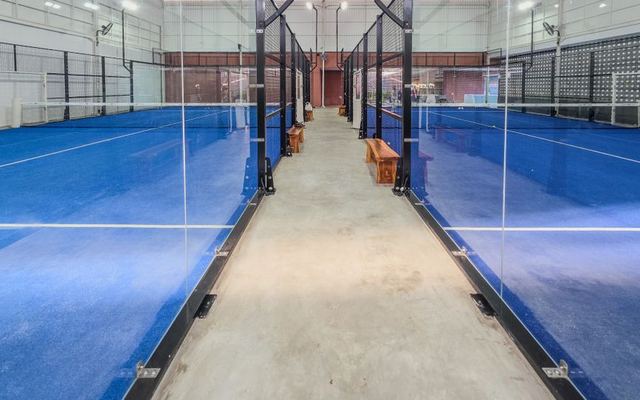 PadelDoubles racket sport on an enclosed 20 x 10 m court where the walls stay in play.
 TeqballSoccer skills over a curved table, singles or doubles, with no physical contact allowed.
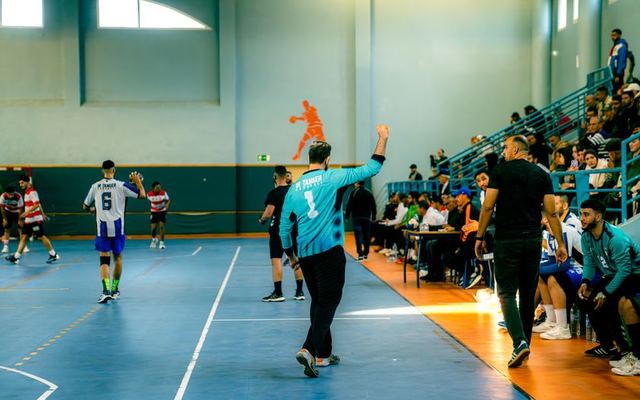 TchoukballSeven-a-side handball variant where you score off rebound frames and interceptions are banned.
 SpikeballTwo-on-two, up to three touches, then spike the ball onto a round net; no sides after the serve.
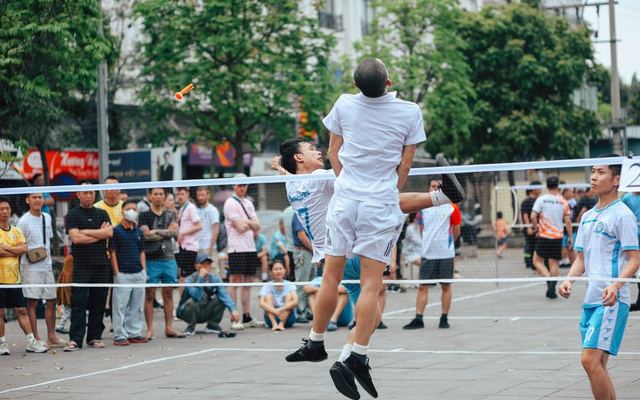 FootvolleyBeach volleyball rules, but no hands, arms or forearms: two-on-two on sand.
 Beach TennisTennis scoring on sand with stringless rackets and low-compression balls, no bounce allowed.
 Platform TennisCold-weather doubles on a heated raised deck inside wire screens that stay in play.
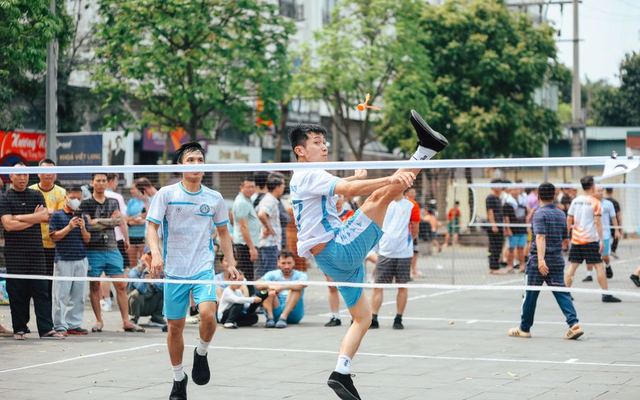 Sepak TakrawThree-a-side kick volleyball with a woven ball: feet, legs, chest and head only.