Jugger Rules and How to Play
Five a side, padded pompfen and a foam jugg, under the German rulebook.
Jugger is a five-a-side team sport that grew out of the 1989 post-apocalyptic film The Blood of Heroes. At Wildcard Sport, we research emerging sports from official federation rulebooks and published governing documents to explain how new athletic competitions work. In every match, one unarmed runner tries to place a foam ball into the opponent's goal while four teammates use padded foam weapons to tag opponents out of play.
Tagged players must kneel on the turf and sit out of the action for a set count of acoustic beats called stones. The runner, also known as the qwik, is the only competitor allowed to touch the game ball. The sport blends sprinting, wrestling between runners, and tactical weapon combat into a fast field contest.
If you are exploring other non-traditional team competitions, check our guides to tchoukball, kin-ball, and other new sports.
How Jugger Is Scored
A jugger match is won by scoring points with a padded game ball called the jugg. Only the unarmed runner on each squad may touch, carry, or place the jugg. The other four teammates carry padded equipment called pompfen to tag opposing players and protect their runner.
To score a point, the runner must place the jugg into the opponent's goal, which is a padded foam receptacle called the Mal. Under the rules published by The Colorado Jugger League, the runner must place the jugg into the Mal by hand. It cannot be thrown or dropped into the goal.
According to official German Jugger rules, a point counts only when the jugg remains stationary inside the opening of the Mal without either runner touching it. Matches are contested either over fixed halves of acoustic beats or in a multi-point set format.
The Pitch and the Goals
Jugger pitch shape differs between rulebooks. Under German regulations, the field forms an elongated octagon measuring 131.2 feet (40 m) in length and 65.6 feet (20 m) in width, with 32.8-foot (10 m) baselines. Children under German rules compete on a reduced field measuring 98.4 by 49.2 feet (30 by 15 m).
By contrast, the Colorado league defines the playing area as a simple rectangle measuring 131.2 by 65.6 feet (40 by 20 m). A German news agency report carried by dpa in Volksstimme says a 131.2 by 65.6 foot (40 by 20 meter) field is roughly the size of a handball court. Each Mal sits 6.6 feet (2 m) inward from the midpoint of its respective baseline.
The Mal is built as a truncated cone made entirely of padded foam. It must measure at least 11.8 inches (30 cm) across at the base, with a central receptacle roughly 4.7 inches (12 cm) wide and 7.9 inches (20 cm) deep. The jugg itself is a padded cylindrical object 7.9 to 9.8 inches (20 to 25 cm) long, 3.1 to 3.9 inches (8 to 10 cm) in diameter, and weighs between 7.1 and 10.6 ounces (200 to 300 g) with no hard edges.
Who Does What on a Team
A standard jugger roster features exactly five active field players and allows up to three substitutes under German tournament rules, creating an eight-player match squad. The Colorado rulebook permits larger rosters of five to ten players, though only five take the field at one time. There is no competitive separation by gender, as documented by Jungle World.
Every five-player lineup must include exactly one runner, known in German as the Läufer and internationally as the qwik. The runner does not carry any pompfe. Because the runner is the only squad member permitted to touch the jugg, scoring relies entirely on keeping this player active and clear of opposing pompfen.
The remaining four field positions are enforcers, known in German as Pompfer. These players select from approved weapon options, but a team may field at most one chain player at any time. In Germany, competitive play is organized into three age categories: children aged 8 to 13, youth aged 14 to 17, and adults aged 18 and older. Children play with smaller equipment and shorter field boundaries.
Pompfen and Other Gear
Pompfen are the padded implements jugger players use to tag opponents. The name comes from the "pompf" sound two of them make when they collide. Pompfen are partly home-made, usually with a core of bamboo, fiberglass or carbon fiber covered in layers of foam.
Players choose from six equipment configurations, subject to strict maximum size limits under German adult regulations:
- Short pompfe: Maximum length of 33.5 inches (85 cm). A player may wield two short pompfen simultaneously, or pair a single short pompfe with a round shield.
- Shield: A circular defensive buckler with a maximum diameter of 23.6 inches (60 cm). Shields are used purely for blocking and cannot be used to strike or pin opponents.
- Long pompfe: Maximum length of 55.1 inches (140 cm).
- Staff: Maximum overall length of 70.9 inches (180 cm), with a permitted striking reach of 43.3 inches (110 cm).
- Q-tip: A symmetrical double-ended weapon with a maximum length of 78.7 inches (200 cm) and a striking reach of 55.1 inches (140 cm).
- Chain: A flexible flail consisting of a hand loop, cord, and padded ball with a total extended length of 126.0 inches (320 cm). The terminal padded ball must measure at least 7.5 inches (19 cm) in diameter.
Under German rules, players must cover their torsos and wear athletic shoes. Hard-plastic guards and rigid protective gloves are banned, leaving each competitor to choose how much soft padding to wear. Colorado rules require closed-toe footwear and recommend soccer cleats, but ban metal studs.
| Weapon configuration | Maximum total length | Striking reach limit | Stabbing legality (Germany) | Stabbing legality (Colorado) |
|---|---|---|---|---|
| Short pompfe | 33.5 in (85 cm) | Not specified | Legal | Not specified |
| Long pompfe | 55.1 in (140 cm) | Not specified | Legal | Legal |
| Q-tip | 78.7 in (200 cm) | 55.1 in (140 cm) | Legal | Legal |
| Staff | 70.9 in (180 cm) | 43.3 in (110 cm) | Illegal | Legal |
| Chain | 126.0 in (320 cm) | Not specified | Not specified | Not specified |
| Round shield | 23.6 in (60 cm) diameter | Cannot hit or pin | Cannot hit | Not specified |
Stone Counts and Hit Penalties
Match time in jugger is tracked using acoustic intervals called stones instead of a running clock. A stone is a single acoustic beat repeated every 1.5 seconds under German regulations. The Colorado rulebook specifies this interval as a tempo of 40 beats per minute, delivered by a drum, a digital timer, or a mechanical device.
A regulation game played to stones consists of two halves of 100 stones each. That equals 150 seconds of live action per half, or five minutes of total live playing time per match. Colorado uses 100-stone halves for regular games and expands finals to 150 stones. Jungle World says games average about 20 minutes because of stoppages. If a timed match ends in a draw, the tie is broken by playing for a Golden Jugg.
When a player is tagged on a legal hit zone by a rigid pompfe, or steps over the boundary line, that player must kneel out of play for five stones. A tag from the chain ball carries a heavier penalty of eight stones. The German press agency dpa notes that this eight-beat chain penalty takes roughly 12 seconds to serve.
The legal hit zone includes the entire body and clothing, excluding the head and neck. A hand that is gripping a pompfe does not register as a hit. When struck, the downed player drops their weapon to the ground, kneels, and counts out the required stones visibly using a hand held behind their back.
An opposing player carrying a rigid pompfe can pin a kneeling player by resting the padded end of their weapon on the downed player's body. Pinning pauses the player's return to play, keeping them inactive until the pompfe is lifted. Chains and shields cannot pin an opponent.
Players call their own hits on the field, and the dpa coverage says the game only works if everyone plays fair. In Colorado matches, accidental tags against teammates count as valid hits under friendly-fire rules.
What Contact Is Allowed
The Colorado rulebook treats any body contact other than between the two runners as a charging penalty.
Runners are permitted to wrestle one another. Under German tournament rules, runners can make direct body contact, lift their opponent, and push or pull each other to the ground. Certain dangerous actions remain strictly illegal:
- Throws that lift both of an opponent's feet off the ground at the same time.
- Takedowns that force an opponent to land head-first or torso-first.
- Shoving an opponent in the direction they are actively running.
- Charging or sprinting directly into an opposing runner.
German rules require the two runners to confer and agree on their level of wrestling intensity before each game begins. Colorado regulations place further limits on grappling, banning holds above the armpits, contact below the knees, and all joint locks.
A university course listing from the University of Tübingen notes that the sport builds agility and endurance outdoors with no previous athletic background needed. A 2010 reader comment on Region Canberra called jugger "a relatively low contact sport".
A player quoted by Jungle World compared the sport to biathlon. That player described constant switching between sprinting to the jugg and using skill and game sense in the fight.
How Rules Differ by League
While the core mechanics of jugger remain consistent across clubs, specific tournament rules vary between governing bodies. Field boundaries represent one obvious split. German clubs play on an elongated octagon with clipped corners, while Colorado clubs set up a rectangular pitch.
Thrusting techniques with the staff show another major rules divergence. German rules permit stabbing attacks with the short pompfe, long pompfe, and Q-tip, but explicitly ban thrusting with the staff. Furthermore, German close-combat players cannot stab while running at full speed or launching forward in a jump. Colorado calls the staff stab-legal, along with the Q-tip and long pompfe.
Match scoring structures also differ depending on the tournament format:
- German set matches: Official German rules outline a set structure where the first team to win two sets of five points takes the match.
- Colorado rulebook matches: The official Colorado League rulebook states that the first team to score three points wins a set, with matches decided by the best of three sets.
- Colorado website guidelines: The homepage says five points win a set.
- Australian tournament play: An event listing for the 2019 Down Under International on Turniere Jugger noted that the Australian ruleset integrates circle wrestling, qwik blocking, and dagger-chain weapon variations.
Jungle World says the season usually runs April to September because jugger is hard to play indoors, though a few winter tournaments exist.
From a 1989 Film to Real Tournaments
Jugger was inspired directly by the 1989 film The Blood of Heroes, which was released internationally as The Salute of the Jugger. Written and directed by David Webb Peoples, the film starred Rutger Hauer, Joan Chen, Vincent D'Onofrio, and Delroy Lindo, as detailed by JoBlo. Danny Stewart documented the production and the sport's beginnings in his book Saluting The Blood of Heroes: Behind the Apocalyptic Film.
The movie portrays wandering bands of competitors in a post-apocalyptic world who travel between villages to play a brutal blood sport. In the film, fighters wore improvised armor, swung heavy steel weapons, and fought to place a dog skull onto a stake while time was counted by throwing stones against metal.
Fans recreated the film's game in 1992 at Berlin's Tiergarten and the Hamburg Planetarium. After watching the movie that year, Lester Balz and his friends wondered how the game could be played without a high risk of injury. Balz helped turn it into a real sport and now runs jugger.de.
The modern sport replaced heavy weapons with padded foam equipment and traded the skull for the foam jugg:
- 1998: The first German Jugger Championships took place with five competing squads.
- 2003: The German Jugger-Liga was established.
- 2007: Germany officially recognized jugger as an established sport.
- 2007: The first Jugger International Tournament took place in Hamburg, matching the Irish club Setanta against northern German teams.
- 2008: Irish and Australian squads traveled to compete in the German Open.
- 2017: Jungle World reported more than 80 active teams across German-speaking countries, with additional clubs active in Australia, Costa Rica, and the United States.
- 2026: The dpa reported that the Dresden World Club Championship expected up to 120 teams from Europe, Australia, Japan, and the United States. Coverage from Sachsen Fernsehen referred to the gathering as the World Cup Championship, listing expected squads from Australia, North America, Costa Rica, Japan, Hong Kong, and Europe.
According to Topend Sports, the transition from movie concept to organized athletic sport occurred first in Germany and Australia. The sport has since expanded to Ireland, England, Costa Rica, the Netherlands, Spain, Denmark, and the US states of Ohio, Wyoming and Oklahoma. In the United States, the Colorado Jugger League operates as a registered 501(c)(3) nonprofit organization celebrating ten years of league operations.
Balz has expressed hope that jugger could reach the Olympic Games in roughly ten years. He says it would need to be established in at least 30 countries on three continents.
Who Will Enjoy Jugger
Jugger appeals to athletes who enjoy tactical team sports, active movement, and weapon fencing disciplines. If you are comparing non-standard combat sports, you can also read about chess boxing rules to see how boxing and chess integrate under formal timed rounds.
The sport is not suitable for players seeking a non-contact sport without running, or those who require indoor court surfaces. If you want a non-contact team sport with no physical tackling, consider tchoukball instead. For fast indoor team games using enclosed boards, look into floorball.
Our assessment of jugger would change if national bodies unified the rules. If national organizations adopt a shared standard for field shape, staff thrusting legality, and set lengths, local rules variations between European and American clubs will disappear.
To see which sport matches your athletic goals, try our new sport quiz.
Find a local practice through your regional club network, review the gear safety requirements, and test your speed on the field in a game of jugger.
Frequently Asked Questions
What is jugger?
Jugger is a five-a-side field sport where two teams compete to score points using a padded foam ball called the jugg. One unarmed runner attempts to carry the jugg into the opposing team's foam goal cone. Four armed teammates use padded weapons called pompfen to tag opposing defenders and clear a path for their runner.
Is jugger a real sport?
Jugger is a real sport with published rulebooks and international tournaments. Germany officially recognized it as an athletic sport in 2007, and leagues operate across Europe, Australia, and North America. Rules still differ between Germany, Colorado and Australia.
What movie is jugger from?
Jugger originated from the 1989 post-apocalyptic film The Blood of Heroes, also released as The Salute of the Jugger. Written and directed by David Webb Peoples, the movie featured Rutger Hauer, Joan Chen, Vincent D'Onofrio, and Delroy Lindo playing a brutal combat game. Fans in Germany adapted the fictional game into a padded sport starting in 1992.
How many players are on a jugger team?
A standard jugger lineup fields five active players at a time. The roster includes exactly one runner and four pompfen players, with a maximum of one chain weapon on the field. German tournament squads carry up to three substitutes for an eight-person match roster, while Colorado leagues allow rosters of five to ten competitors.
What are pompfen and what are they made of?
Pompfen are the padded sporting weapons used by enforcers to tag opposing players during a match. They are usually built around a core of bamboo, fiberglass, or carbon fiber covered in layers of foam. The lineup includes short pompfen, two-handed long pompfen, staves, double-ended Q-tips, padded flail chains, and blocking shields.
What is a "stone" in jugger?
A stone is an acoustic timing interval repeated every 1.5 seconds, or at a tempo of 40 beats per minute. Match halves last for 100 stones, which equals five minutes of active play per game. Players tagged by close-combat weapons must kneel out of the action for five stones, while hits from the chain require an eight-stone penalty count.
Is jugger a full-contact sport?
Jugger permits physical wrestling and body contact only between the two unarmed runners. Under Colorado rules, any body contact other than between the runners is a charging penalty. Dangerous takedowns that lift both feet or force a head-first landing are strictly prohibited under official rulebooks.
Where can I play jugger in the US?
In the United States, organized jugger operates through the Colorado Jugger League, a 501(c)(3) nonprofit organization running community matches. Jugger has also appeared in Ohio, Wyoming, and Oklahoma according to Topend Sports.
Sources
Try a Free Tool
More Sports to Explore
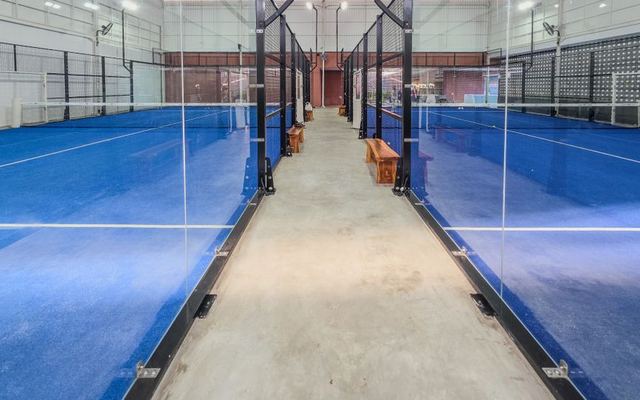 PadelDoubles racket sport on an enclosed 20 x 10 m court where the walls stay in play.
 TeqballSoccer skills over a curved table, singles or doubles, with no physical contact allowed.
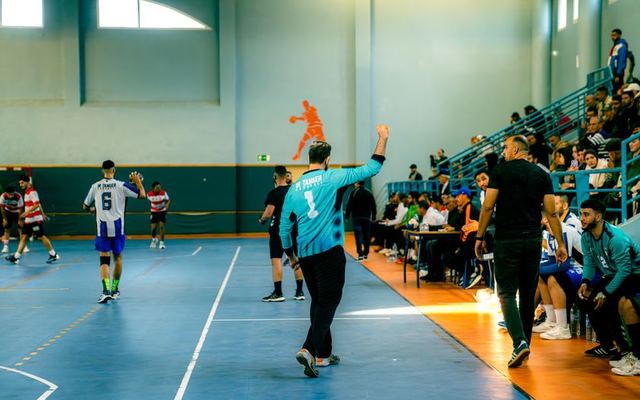 TchoukballSeven-a-side handball variant where you score off rebound frames and interceptions are banned.
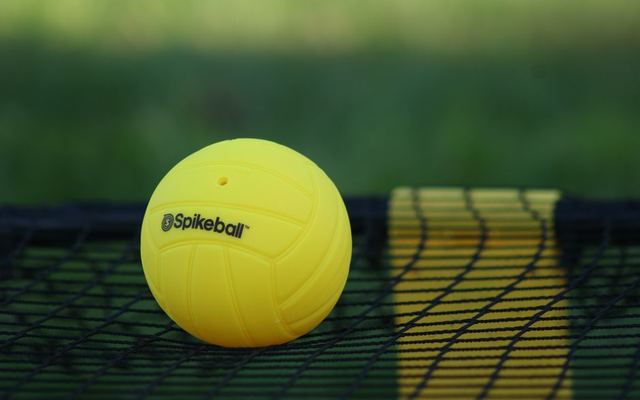 SpikeballTwo-on-two, up to three touches, then spike the ball onto a round net; no sides after the serve.
 FootvolleyBeach volleyball rules, but no hands, arms or forearms: two-on-two on sand.
 Beach TennisTennis scoring on sand with stringless rackets and low-compression balls, no bounce allowed.
 Platform TennisCold-weather doubles on a heated raised deck inside wire screens that stay in play.
 Sepak TakrawThree-a-side kick volleyball with a woven ball: feet, legs, chest and head only.