Padel Rules for the Serve and the Walls
The FIP rules in plain English: the waist-height serve and the walls.
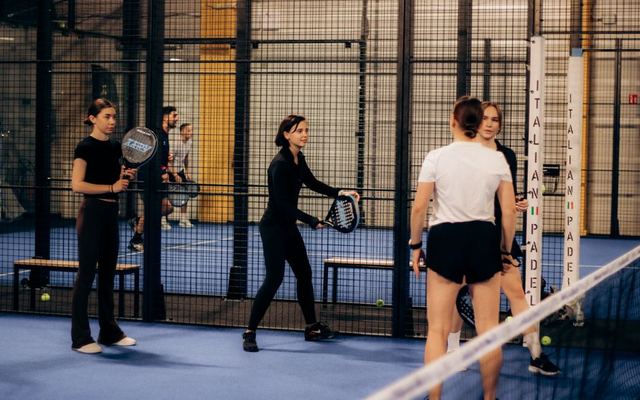
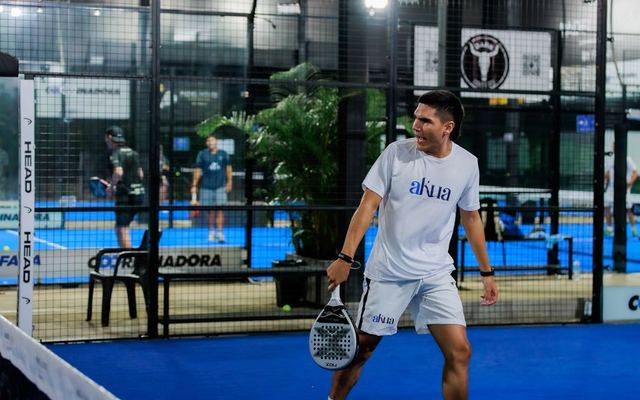
In padel, two pairs play on an enclosed court where every point begins with a bounced serve struck at or below waist height into the diagonal service box. At Wildcard Sport, we research official federation rulebooks to make competitive standards clear for recreational and tournament players. After the ball bounces in your court, it can rebound off the glass and stay live, but a shot that hits the opponents' wall or fence before bouncing loses the point.
The International Padel Federation (FIP) publishes the sport's global standards in its document titled Rules of Padel (review of application 01.01.2026). In the United States, the United States Padel Association (USPA) Rules and Regulations (2026 Edition 8.11, updated June 1, 2026) fall back on the FIP rules wherever the USPA document gives no guidance. If you are learning the sport, see our padel basics guides for equipment and court overviews.
The Rules in 60 Seconds
Padel is played on an enclosed court divided by a central net. LTA Padel (the padel branch of the Lawn Tennis Association) says padel is played only as doubles on a dedicated court. Each point begins with a serve that the server bounces once, then strikes at or below waist height diagonally into the opponents' service box.
The receiver must let the ball bounce once inside their service box before hitting a return. After that initial return, both teams may hit volleys directly out of the air or play balls off the glass walls on their own side. A ball that hits the opponent's metal fence or glass wall before touching the ground is out.
Points follow standard tennis scoring intervals of 15, 30, 40, and game. You can review how games, sets, and tie-breaks function in our guide to padel scoring. To see how match play flows from warm-up to final point, read our companion guide on how to play padel.
Court, Net and Walls
A regulation padel court is an enclosed rectangle measuring 65 ft 7 in long by 32 ft 10 in wide (20 m by 10 m) using interior measurements, with an allowed manufacturing tolerance of 0.5 percent. A net spans the center of the court at 32 ft 10 in (10 m) in length. It stands 34.6 in (0.88 m) high at the center and rises to 36.2 in (0.92 m) at the posts, with a maximum height tolerance of 0.2 in (0.005 m).
Service lines run parallel to the net at 22 ft 10 in (6.95 m) on each side. A central service line divides the area between the net and the service line in half, extending at least 7.9 in (20 cm) past each service line. All court lines are about 2 inches (5 cm) wide.
The court must be completely enclosed. End enclosures reach a total height of 13 ft 1 in (4 m), consisting of 9 ft 10 in (3 m) of solid wall topped by 3 ft 3 in (1 m) of metal fence. Solid walls are typically glass or brick, and you can explore court structural layouts in our padel court dimensions guide.
Equipment must also meet strict federation limits. Official padel balls are rubber spheres with a diameter of 2.50 to 2.67 in (6.35 to 6.77 cm) and a weight of 1.98 to 2.10 oz (56.0 to 59.4 g). Dropped onto a hard surface from 8 ft 4 in (2.54 m), a new ball must rebound between 53 and 57 in (135 to 145 cm), as detailed in our guide to padel balls.
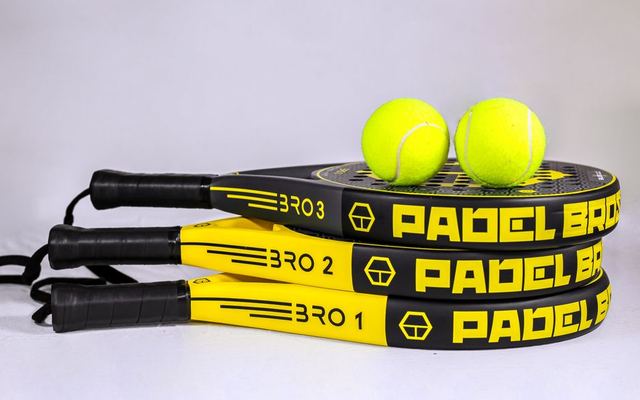
Rackets have a maximum length of 17.9 in (45.5 cm), a maximum width of 10.2 in (26 cm), and a maximum thickness of 1.5 in (38 mm). Every racket must have a non-elastic cord with a maximum length of 13.8 in (35 cm) fixed to the handle and worn around the wrist, and FIP says its use is obligatory. Before buying gear, read our guide to choosing a padel racket.
The Serve and the Waist-Height Test
Every point starts with a serve struck at or below waist level after bouncing once on the court surface. The server must stand with one foot behind the service line, positioned between the imaginary extension of the center service line and the side wall. The server must remain in this area until the ball is served and may not touch the service line or the imaginary center line with their feet.
The server must bounce the ball on the turf within the service box they are serving from before striking it. At the moment of contact, the ball must be at or below waist level, and the server must have at least one foot in contact with the ground.
FIP does not use the word underhand or underarm in its rulebook. LTA Padel calls the serve underarm.
The serve must travel diagonally over the net and land inside the receiver's service box. The first serve of every game begins from the right side, with servers alternating sides after each completed point. If the server misses the ball or violates footing rules, they receive a second serve.
Serve faults occur when the ball lands outside the receiver's box, strikes the server or their partner, or misses the swing entirely. Court lines count as good. A served ball that bounces in the correct box and then touches the metal fence before its second bounce is an immediate fault.
If a served ball bounces in the box and hits the glass back wall, the ball is live. If the serve touches the net or posts and then lands in the correct service box without touching the metal fence before its second bounce, the serve is a let and is repeated. A let on a second serve repeats only that second serve.
Return of Serve and the Two-Bounce Rule
The receiver must let the serve bounce once in their service box before returning it. If the ball touches the receiver or their racket before bouncing, the server automatically wins the point. The receiver must return the ball before its second bounce on the turf.
The receiver's partner and the server's partner can stand anywhere on their own side of the court. The receiver can also position themselves anywhere on their side, provided they allow the ball to bounce in the box first. Only the server has fixed positional boundaries during the delivery.
LTA Padel states that each player serves for an entire game, with servers alternating between teams as games conclude. After the return of serve clears the net, players can hit the ball out of the air or let it bounce once before striking it. Consecutive bounces on the same side always end the point.
Wall and Fence Rules in a Rally
During active rallies, walls and fences keep the ball in play after it touches the ground on your opponent's side. If the ball bounces in the opponent's court and then hits the side walls, back glass, metal fence, net, or net posts, it remains live and must be returned before its second bounce. Players can hit the ball directly over the net or strike it off the glass walls on their own side first so that it crosses the net into the opponent's court.
A shot that strikes the opponent's glass wall or metal fence before bouncing on the turf is out. In addition, you cannot strike your own metal fence. If your shot touches the metal fence or the ground on your own side, your team loses the point immediately.
A return that lands in the corner where the wall meets the ground is a correct return under FIP Rule 14. Under FIP Rule 15, a ball that bounces in the opponents' court and then escapes the court wins the point for the player who hit it. That covers a ball that goes out through a hole in the fence, sticks in the mesh, or rests on the flat top of the wall.
| Court surface | Legal status on serve | Legal status in active rally |
|---|---|---|
| Opponent's glass wall | Live after ground bounce in box | Live after ground bounce |
| Opponent's metal fence | Fault if touched before second bounce | Live after ground bounce |
| Own glass wall | Illegal (serve must cross net) | Live if struck to clear the net |
| Own metal fence | Illegal (serve must cross net) | Lost point immediately |
How You Lose a Point
Under FIP Rule 13, a pair loses the point if any player, their racket, or their clothing touches the net, net posts, tension cable, or the opponent's court while the ball is in play. You also forfeit the point if you strike the ball before it has crossed the net to your side. Both partners hitting the ball or a single player double-hitting the ball ends the rally in favor of the opposing team.
You lose the point if the ball touches you, your partner, or any item of clothing you wear. Throwing a racket to hit the ball is illegal and forfeits the point immediately. If a player breaks their wrist cord or drops their racket, their team loses the point on the spot.
A pair also loses the point if they commit two consecutive service faults or jump over the net during active play. Involuntary interference results in a let, but a second unintentional interference by the same pair awards the point to the opponents. Deliberate interference gives the point to the opponents on the first occurrence.
Playing the Ball Outside the Court
Players may leave the court through an open doorway to return a live ball only if the facility meets official FIP safety clearance standards. Under FIP Rule 16, out-of-court play needs an obstacle-free zone on each side. The zone must be at least 9 ft 10 in (3 m) wide, 13 ft 1 in (4 m) long and 9 ft 10 in (3 m) high, with two access points per side.
When out-of-court play is not authorized, the point terminates the moment a ball travels beyond the court enclosure after bouncing. Where safety conditions are met, LTA Padel confirms that players may exit through the doorway to retrieve a ball that has bounced in court and exited the enclosure. In sanctioned competitive events, the USPA requires courts to be installed to FIP-approved standards, including protective padding around doorways and net posts.
Time Limits, Conduct and Who Writes the Rules
FIP enforces strict pacing intervals during tournament play under Rule 2. Players have a maximum of 20 seconds between points and 90 seconds during changes of ends. Play is continuous after the first game of each set and during tie-breaks, with a maximum rest period of 120 seconds allowed at the end of each set.
Before match play begins, players receive an obligatory 3-minute courtesy warm-up rally. A walkover occurs if a pair is not present on court within 10 minutes of the scheduled match start time. Pairs change sides after the 1st, 3rd, and every subsequent odd game in a set, and after every 6 points during a tie-break.
Choice of side and service is determined by a coin toss, with the winner choosing to serve, receive, select a court side, or pass the initial choice to the opponents. Players must wear suitable sportswear and footwear. Swimwear is not allowed.
Equipment abuse and ball abuse carry progressive penalties under the FIP conduct code. A player receives a warning on their first infraction, a point penalty on their second infraction, and disqualification on their third infraction.
FIP describes itself as the governing body of the game of padel and changes the Rules of Padel at its General Meeting. Book a practice session through our guide to finding a padel court near you.
Frequently Asked Questions
Can you hit the ball off the wall before it bounces in padel?
No. An incoming ball must bounce on the ground before it touches the walls on your side, and if it hits a wall first, the player who hit it loses the point. You may volley it or hit it into your own walls, as long as it then crosses the net and bounces in the opponents' court.
Does the serve have to be underhand in padel?
Not by name, since the FIP rulebook never uses the word underhand. It requires only contact at or below waist level with one foot on the ground. A sidearm motion is legal as long as contact stays at or below waist level.
Can you hit the fence (cage) in padel?
You can play a ball that rebounds off your opponent's metal fence during a rally, but you can never hit your own fence. Striking the ball into the metal fence on your own side loses the point immediately under FIP Rule 13. On a serve, a ball that bounces in the box and touches the fence is an immediate fault.
What happens if the serve hits the back glass?
A serve that bounces in the correct service box and then hits the back glass wall remains live. The receiver must play the ball before its second bounce on the turf. If the serve strikes the back glass wall directly without bouncing in the service box first, the serve is an immediate fault.
Can you leave the court to hit the ball in padel?
Yes, but only on courts built with official FIP safety clearance zones. The facility must have an unobstructed exterior area of at least 9 ft 10 in (3 m) wide, 13 ft 1 in (4 m) long, and 9 ft 10 in (3 m) high on each side of the court. If a court lacks this space, out-of-court play is unauthorized and the point ends when the ball leaves the court.
Can you volley the serve in padel?
No, the receiver cannot volley the serve out of the air. FIP Rule 8 requires the receiver to let the serve bounce once inside the diagonal service box before striking it. If the ball touches the receiver or their racket before bouncing, the server automatically wins the point.
What happens if you touch the net in padel?
Touching the net while the ball is in play results in an immediate lost point. Under FIP Rule 13, any physical contact with the net, net posts, tension cable, or the opponent's court by a player, their racket, or their clothing forfeits the point.
Is it a fault if the serve hits the net?
A served ball that touches the net is a let if it clears the cord and lands in the correct service box without touching the metal fence before its second bounce. The server repeats that specific serve without penalty. If the ball touches the net and fails to land in the correct box, it is a fault.