Teqball Rules and Equipment Guide
The three-touch limit and the curved table, from the 2026 rulebook.
Teqball is a football-based sport played on a curved table, where you get up to three touches to return the ball without hands or arms. At Wildcard Sport, we research primary federation rulebooks and equipment standards to explain how new court games work. Sets go to 12 points in a best-of-three match format.
Matches run as singles, doubles, or mixed doubles. The game is governed globally by the Fédération Internationale de Teqball (FITEQ), which was established in Budapest in March 2017.
Like sepak takraw and footvolley, the sport demands aerial ball control with feet, chest, and head.
The Table and Court
The official teqball table measures 9.84 feet (3,000 mm) in length and 4.92 feet (1,500 mm) in width without the net. Including the net, the total width reaches 5.58 feet (1,700 mm). The total height of the unit from the floor to the top of the net is 35.43 inches (900 mm).
The playing surface is curved. According to the FITEQ Official Rules and Regulations of Teqball, the highest point of the table stands 29.92 inches (760 mm) from the ground. The lowest outer edge drops to 22.24 inches (565 mm) above the floor.
This geometry creates an exact height drop of 7.68 inches (195 mm) between the crest and each end. The horizontal distance from the lowest point of the surface to the net is 58.66 inches (1,490 mm). FITEQ specifies High-Pressure Laminate (HPL) for the surface material.
The net is completely rigid. It measures 5.58 feet (1,700 mm) wide, 0.79 inches (20 mm) thick, and stands 5.51 inches (140 mm) above the table. Rule 1.2 requires the net to be permanently fixed and manufactured from polymethyl methacrylate (PMMA) plexiglass.
Official tournament play requires an indoor or outdoor court measuring at least 39.37 feet (12 m) wide by 52.49 feet (16 m) long. The competition hall must provide a minimum ceiling height of 22.97 feet (7 m). The service line sits 11.48 feet (3.5 m) from the middle of the table, which places it 6.56 feet (2 m) behind the table edge.
FITEQ recognizes three distinct table models in its official rulebook. Tournament organizers must match the table model to the sanctioned competition level.
| Table Model | FITEQ Classification | Competition Level |
|---|---|---|
| TEQ One | Class A | Official FITEQ tournaments |
| TEQ Smart | Class B | National and club tournaments |
| TEQ Lite | Class C | Amateur competitions |
The Touch Rules
Under Rule 9.1.1, players may touch the ball with any part of the body except the hands and arms. Each side receives a maximum of three touches to return the ball across the net.
Unintentional touches count toward the three-touch limit under Rule 9.1.2.
Three more touch rules apply:
- No consecutive body touches: A player cannot touch the ball twice in a row with the same body part before passing or returning it under Rule 9.1.5.
- No consecutive return limbs: A player may not use the same body part for two consecutive returns over the net in the same rally under Rule 9.1.6.
- No holding: Holding the ball on or between body parts is forbidden under Rules 9.1.3 and 9.1.4.
Rallies stop immediately when an edgeball occurs. Under Rule 15, an edgeball happens when the ball strikes the side edge of the opponent's surface rather than the top face. Referees order the rally repeated without awarding a point to either side.
FITEQ regulations define strict standards for the match ball. Matches use a standard Size 5 football measuring 26.38 to 27.17 inches (67 to 69 cm) in circumference. The ball must weigh between 13.05 and 14.11 ounces (370 to 400 g) with an internal pressure of 0.3 to 0.5 atmospheres at sea level.
Serving and Scoring
A teqball serve must be tossed from the hand and struck in the air with a single touch. Servers have five seconds to initiate the delivery. The server must stand behind the service line, positioned 11.48 feet (3.5 m) from the middle of the table.
Players receive two service attempts per point. Two consecutive failed deliveries result in a double fault that awards the point to the receiver. Rule 10.1 adds a constraint: the second serve cannot be struck with the hands, arms, or feet.
This restriction forces players to serve with the head, chest, or thigh on a second attempt. Service rotates between opponents every two points.
Every set is played to 12 points under Rule 6.2. Matches use a best-of-three set format. Teqball does not require a two-point margin in every set.
The first two sets can finish with a score of 12-11. Only the final, deciding third set must be won by a margin of two points. A team winning sets one and two by 12-11 takes the match in straight sets without playing a decider.
Singles, Doubles and Other Formats
FITEQ recognizes three official competitive disciplines: singles, doubles, and mixed doubles. Singles pits two solo players against each other on opposite ends of the curved table. Solo players manage their own ball reception, setup, and attack within three touches.
Doubles competition introduces mandatory team passing rules. Under Rule 21, teammates must pass the ball to each other before returning it across the net. If only one player touches the ball before it crosses the net, the referee calls a no pass violation.
A no pass call awards the point directly to the opposing team. Doubles teams must execute at least two touches per possession.
Mixed doubles pairs one male and one female athlete on each side of the net.
Who Invented Teqball
Teqball comes from Hungary, and FITEQ lists Gábor Borsányi, György Gattyán and Dr Viktor Huszár as its co-founders. Official FITEQ records state that Borsányi came up with the idea. Borsányi serves as FITEQ President, while Gattyán oversees business strategy as Vice President and Huszár serves as Chairman.
A Reuters report published by Euronews profiles the contrasting professional backgrounds of the co-founders. It describes Borsányi as a former professional footballer and Huszár as a computer scientist.
Sources document different dates for the initial invention of the game. The Polish Olympic Committee states that teqball was created in 2012. In contrast, the December 2019 Reuters report states that the first teqball tournament took place about five years earlier, pointing to approximately 2014.
The founders established FITEQ in Budapest in March 2017. Headquarters remain in Hungary.
Recognition and Major Tournaments
FITEQ won recognition from three regional sports bodies between 2018 and 2020, according to a FITEQ announcement. The Olympic Council of Asia (OCA) granted recognition in August 2018. The Association of National Olympic Committees of Africa (ANOCA) followed with official recognition in June 2019.
The Organisation of Sports Federations of Oceania granted recognition in March 2020. FITEQ gained full membership in the Global Association of International Sports Federations (GAISF) in November 2020.
FITEQ reported surpassing 50 national federations in April 2020, reaching 51 across five continents. By May 2021, FITEQ reported 102 national federations under its governance.
The 2nd Teqball World Championships took place in Reims, France in 2018 featuring athletes from 42 nations. Budapest hosted the 3rd World Championships in 2019.
At that 2019 tournament, Hungary's Adam Blazsovics won the men's singles world title. Brazilian duo Natalia Guitler and Marcos Viera won the first-ever mixed doubles world championship.
Teqball debuted as a medal sport at the 2023 European Games in Kraków-Małopolska. The event featured a maximum field of 70 athletes competing across singles, doubles, and mixed doubles. FITEQ states that its aim is to guide teqball to Olympic recognition.
Where to Play in the US
The United States National Teqball Federation was formed in July 2020. Ajay Nwosu served as the organization's first president. By June 2021, the federation registered more than 60 clubs and sanctioned over 25 official tournaments.
Houston, Texas hosted the federation's first official Challenger Cup tournament. The LA Teqers club in Los Angeles was named as the first notable domestic club.
US search interest for teqball sits at 2,900 searches a month (Semrush, October 2026). If you want to evaluate alternative new sports, compare formats using our new sports to try guide. Contact the US National Teqball Federation to find a registered club with a teqball table near you.
Frequently Asked Questions
How many touches are allowed in teqball?
Players are allowed a maximum of three touches before the ball must be returned across the net. Unintentional touches count toward this total under Rule 9.1.2. In doubles, teammates must pass to each other at least once, meaning a team cannot return the ball on a single touch.
Is teqball in the Olympics?
Teqball is not an Olympic sport, though FITEQ states that its aim is Olympic recognition. The sport achieved medal status at the 2023 European Games in Kraków-Małopolska with a quota of 70 athletes. FITEQ also holds recognition from the Olympic Council of Asia, ANOCA, and full membership in GAISF.
Where was teqball invented?
Teqball was invented in Hungary, according to a 2019 Reuters report. FITEQ lists Gábor Borsányi, György Gattyán and Dr Viktor Huszár as co-founders and says Borsányi came up with the idea. The Polish Olympic Committee dates its creation to 2012, while the same Reuters report notes the first tournament occurred around 2014.
Why is the teqball table curved?
The FITEQ rulebook defines the curve by its measurements. The surface crests at 29.92 inches (760 mm) in the center and slopes to 22.24 inches (565 mm) at the outer ends, creating a 7.68-inch (195 mm) height differential. The horizontal distance from the lowest point to the net is 58.66 inches (1,490 mm).
Is teqball a real sport?
Yes, teqball is an officially recognized sport governed worldwide by FITEQ, which was established in Budapest in 2017. The federation achieved full membership in the Global Association of International Sports Federations in November 2020. FITEQ reported 102 national member federations in May 2021.
How do you score in teqball?
Sets are played to 12 points, and matches use a best-of-three set format under Rule 6.2. The first two sets do not require a two-point margin and can conclude at 12-11. Only the deciding third set requires a team to win by two clear points.
Where can you play teqball in the US?
You can play teqball through clubs registered with the United States National Teqball Federation, which was established in July 2020. The federation registered over 60 clubs by June 2021, including the LA Teqers in Los Angeles. Players can connect with regional clubs or local tournaments sanctioned by the national body.
Sources
Try a Free Tool
More Sports to Explore
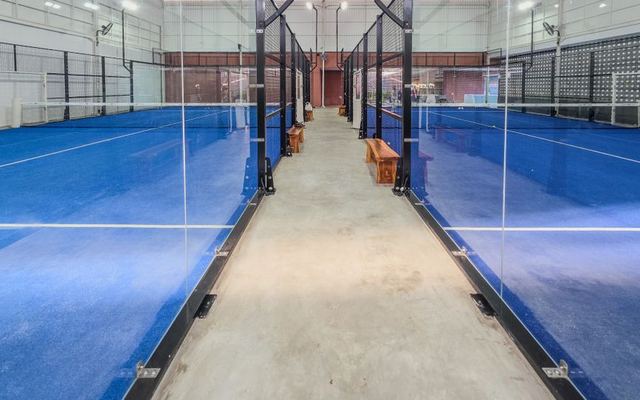 PadelDoubles racket sport on an enclosed 20 x 10 m court where the walls stay in play.
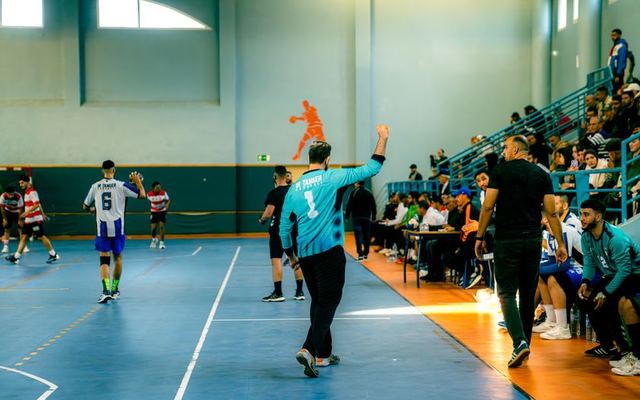 TchoukballSeven-a-side handball variant where you score off rebound frames and interceptions are banned.
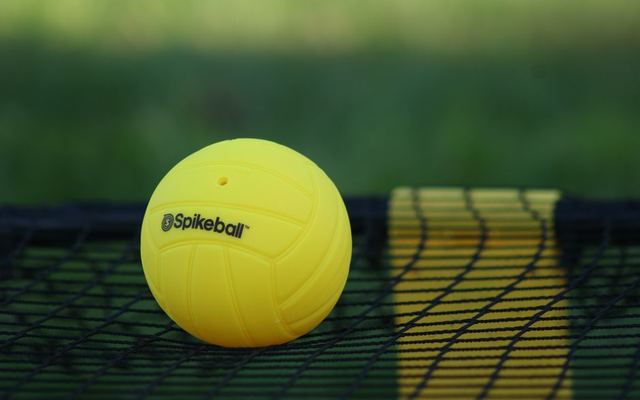 SpikeballTwo-on-two, up to three touches, then spike the ball onto a round net; no sides after the serve.
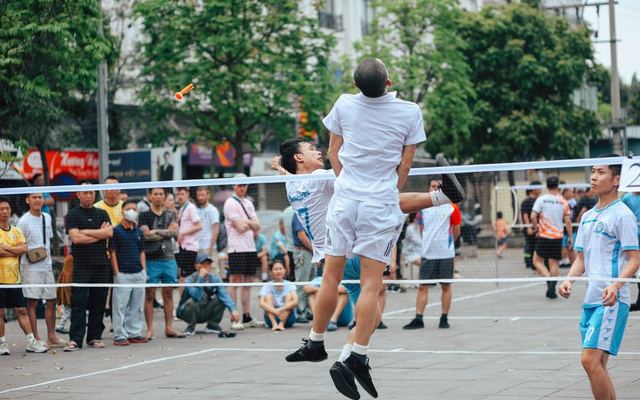 FootvolleyBeach volleyball rules, but no hands, arms or forearms: two-on-two on sand.
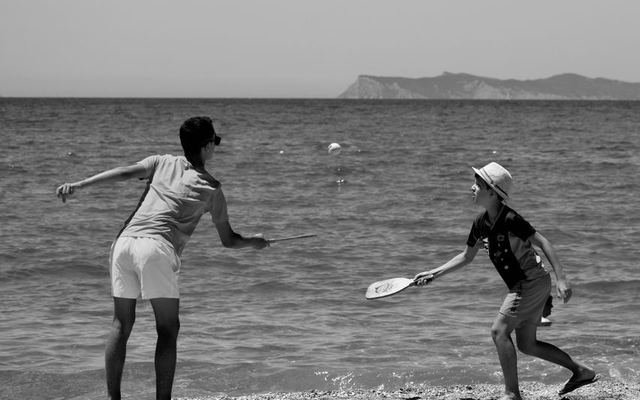 Beach TennisTennis scoring on sand with stringless rackets and low-compression balls, no bounce allowed.
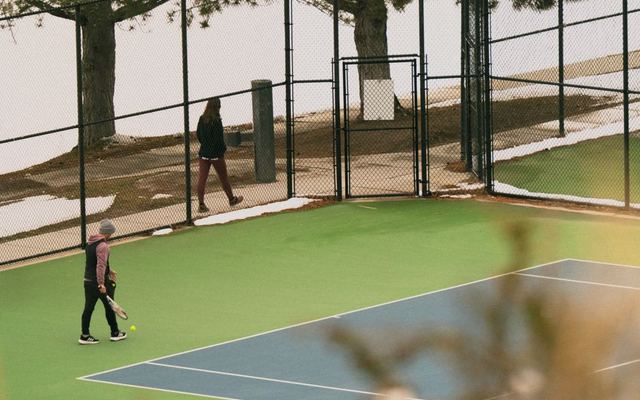 Platform TennisCold-weather doubles on a heated raised deck inside wire screens that stay in play.
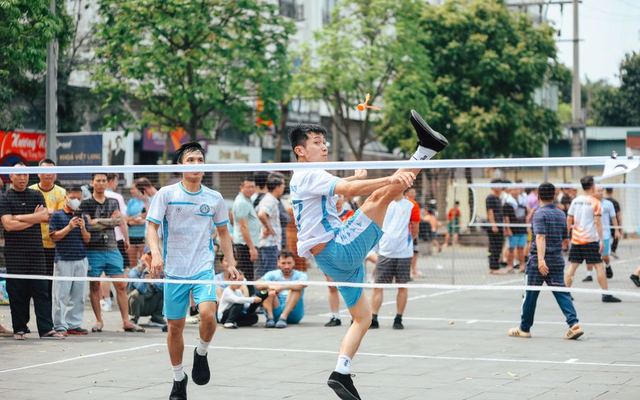 Sepak TakrawThree-a-side kick volleyball with a woven ball: feet, legs, chest and head only.
 Chess BoxingOne-on-one, alternating rounds of fast chess and amateur boxing; win by checkmate or knockout.