Speedgate Rules and How to Play
How gate possession and scoring work, and the field you need.
Speedgate is a six-a-side field game developed in 2019 by agency AKQA, using concepts generated by artificial intelligence models. At Wildcard Sport, we research emerging sports from official rules and published reporting, and we link each source.
Two teams pass and kick a size 4 rugby training ball across three connected circular zones. To score, a team must kick the ball through the center gate to gain possession, then kick it through an end gate for two points, or three points on a ricochet.
How Speedgate Works
A full team consists of six active players on the field. The roster splits into three forwards and three defenders according to the archived Speedgate rules site. Forwards move freely across all three circular zones during active play.
Defenders guard their own end zone during neutral play. Once their team clears the center gate, defenders may advance into the opposing half of the field to join the attack. Each team can make three substitutions during each period of play.
Player movement depends on who holds the ball. Any player holding the ball must remain completely stationary. The ball carrier has three seconds to pass or kick the ball to a teammate.
Engadget reported that the ball must move at least every three seconds. After three seconds, opponents may go after the ball. Players can jump while in possession, and the ball remains live if it touches the ground.
Passing mechanics follow strict physical restrictions. Every pass must start from below waist level. Players can throw the ball with one hand or two hands in any direction, forward or backward.
Gates and Scoring
Teams cannot score directly on an end gate without first clearing the center gate. This requirement establishes gate possession. A coin toss decides which team begins the match with a kickoff through the center gate.
Gate possession remains with the clearing team until they score or the opposing team clears the center gate. A throw through the center gate does not count, because every gate must be cleared with a drop kick or a grubber kick.
No player from either team may step inside the center gate zone at any time. Crossing through this zone is an immediate foul that surrenders ball possession to the opponent.
Kicking the ball through an end gate awards two points. Players can kick the ball through the end gate posts from either direction. To count as a goal, the ball must travel below the tips of the six-foot gate poles.
Every scoring attempt must use a drop kick or a grubber kick. Players cannot kick the ball while standing inside the 14-foot end circle. Only one defender may stand inside that circle.
A ricochet goal increases the score to three points. This occurs when a teammate catches a ball that just cleared the end gate and immediately kicks it back through the posts. Creative director Whitney Jenkins told TechCrunch that the game blends elements of soccer, rugby, croquet, and ultimate frisbee.
Fouls and Match Length
A standard match consists of three periods of seven minutes each. Teams take a two-minute break between consecutive periods. The team that did not start the first period kicks off the second period.
The third period kicks off to the team trailing on the scoreboard. If regulation time ends in a tie, teams play overtime of three 3-minute periods with 1-minute breaks. If the score remains tied after overtime, a penalty shootout determines the winner.
In a shootout, each designated kicker attempts to kick the ball through an end gate from the center gate mark. No goalkeeper defends the goal during shootout kicks. Two officials oversee each game, including an on-pitch referee who manages active play and a sideline referee who tracks gate possession.
Physical contact remains strictly controlled under official rules. Tackling, pushing, shoving, hitting, elbowing, and kicking other players are forbidden. Non-aggressive body blocking is allowed.
When the possessing team commits a foul, ball possession passes to the opposing team. That team must clear the center gate again before attempting an end-gate shot. If the ball travels out of bounds, the opposing team restarts play with a throw-in or kick-in while gate possession stays unchanged.
After any goal, possession passes to the other team. All defenders must return to their own defensive half before they can legally interact with play.
The Field and Setup
A regulation Speedgate field consists of three equal circles arranged end to end in a straight line. Each circle measures 60 feet (18.29 meters) in diameter. The full playing surface extends 180 feet (54.86 meters) long by 60 feet wide.
The official site says the field can be scaled to fit the available space. The center gate sits inside a circular zone measuring 20 feet (6.10 meters) across. Two vertical gate poles stand 20 feet apart, with a large X marked on the turf between them.
Each end gate features two poles placed 10 feet (3.05 meters) apart within a 14-foot (4.27-meter) diameter circle. The gate posts stand six feet (1.83 meters) tall and feature high-visibility coloring with spring-loaded, weighted bases. The archived Speedgate rules site notes that athletic slalom poles serve as functional alternatives.
Matches require a size 4 rugby training ball. The official site said to use it until official Speedgate balls were made.
| Field Component | Regulation Dimension | Markings and Equipment |
|---|---|---|
| Full Field Length | 180 ft (54.86 m) | Three connected 60 ft (18.29 m) diameter circles |
| Full Field Width | 60 ft (18.29 m) | Boundary lines of outer circular perimeters |
| Center Gate Zone | 20 ft (6.10 m) diameter | Marked with large X; no-go zone for all players |
| Center Gate Posts | 20 ft (6.10 m) apart | Two 6 ft (1.83 m) spring-loaded poles |
| End Gate Zones | 14 ft (4.27 m) diameter | One per end; maximum one defender inside |
| End Gate Posts | 10 ft (3.05 m) apart | Two 6 ft (1.83 m) spring-loaded poles per end |
| Game Ball | Size 4 | Rugby training ball |
How AI Designed the Game
AKQA developed Speedgate in 2019 for Portland's design week. Creative director Whitney Jenkins told TechCrunch the agency wanted something ambitious for the event. Text-generating recurrent neural networks processed data from over 400 popular sports worldwide.
The neural network generated roughly 1,000 distinct sports concepts. Human designers analyzed the raw outputs and filtered them down to ten candidate sports. The agency then organized physical playtests for three finalists, with Speedgate emerging as the functional winner.
Early algorithm drafts generated unworkable concepts. Rejected ideas included underwater parkour, an exploding Frisbee game, and a match played in hot air balloons and on a tightrope. The system also generated the sport motto: "Face the ball to be the ball to be above the ball."
For visual identity, AKQA AI lead Kathryn Webb told TechCrunch that the team fed more than 10,400 sports logos into a generative network. The model produced 6,400 logo concepts that human graphic designers used for inspiration. AKQA later noted on its portfolio page that the model analyzed 10,000 logos.
The project adopted the tagline "Imagined by AI. Proven by Humans." The agency stated that rule selection prioritized accessibility, learnability, enjoyability, and physical exercise. The official site described the result as fun, fast and physical, relying heavily on teamwork and passing.
Leagues and Who Plays It Now
AKQA demonstrated Speedgate at a Portland event in April 2019. Adweek reported AKQA's claims that 10 universities had committed to hosting intramural leagues and that inquiries had come from at least 40 countries. HotHardware reported that AKQA was in talks with an Oregon sports authority and that an intramural league might start that summer.
AKQA published promotional metrics claiming the campaign reached half a billion media impressions. The agency also claims that the same authority officially recognized the sport and that it is growing into a US-wide university league. We found no independent source that confirms either claim.
We found no recent public activity: no Speedgate news, league play or tournaments after 2019. The original domain playspeedgate.org now hosts unrelated online gaming content, while playspeedgate.com fails to load.
For another unusual team game, see kin-ball. You can also explore our new sports guides or take our new sport quiz to pick one to try.
Frequently Asked Questions
What is Speedgate?
Speedgate is a six-a-side field game created in 2019 by the agency AKQA. AKQA describes it as a mix of croquet, rugby and soccer. Teams kick and pass a rugby ball across three circular zones to score through upright gate posts.
Was Speedgate really invented by AI?
Artificial intelligence generated the raw concepts, but humans selected and refined the playable game. AKQA used recurrent neural networks to process over 400 sports and produce roughly 1,000 concept drafts. Human designers narrowed those ideas to ten candidates, playtested three finalists, and finalized the formal rules.
How many players are on a Speedgate team?
Each team fields six active players, divided into three forwards and three defenders. Forwards can move across the entire field, while defenders must stay in their defensive half until their team earns gate possession. Teams are allowed three substitutions during each period of play.
How do you score in Speedgate?
Teams must first kick the ball through the center gate to earn gate possession. Once possession is secured, kicking the ball through an end gate with a drop kick or grubber kick scores two points. If a teammate catches that scoring kick and immediately kicks it back through the gate, the ricochet scores three points.
Can you run with the ball in Speedgate?
No player can run or step while holding the ball. The ball carrier must remain in place and pass or kick within three seconds. Players without the ball are allowed to run freely across open zones.
Is Speedgate a contact sport?
Speedgate bans most physical contact. Tackling, pushing, shoving, hitting, kicking, and elbowing opponents are strictly prohibited. The rules do permit non-aggressive body blocking for positioning and shielding.
How big is a Speedgate field and what equipment do you need?
A regulation field measures 180 feet (54.86 meters) long by 60 feet (18.29 meters) wide, made of three connected 60-foot circles. Play requires a size 4 rugby training ball and six 6-foot tall spring-loaded poles to form the three gates. Agility slalom poles can substitute for official gate markers.
Is Speedgate still played?
We found no recent public activity, active leagues, or tournaments for Speedgate after 2019. The original official website no longer hosts sports content. Adweek reported AKQA's claim that 10 universities had committed to intramural leagues, but we found no record that any of them ran one.
Sources
- AKQA Speedgate Case Study
- TechCrunch: AKQA Says It Used AI to Invent a New Sport Called Speedgate
- Engadget: AI-Generated Sport Speedgate Combines Frisbee and Croquet
- Adweek: AKQA Created a Sport Using AI
- HotHardware: Speedgate Is the First AI-Created Sport
- Speedgate Official Rules (Archived April 2019)
Try a Free Tool
More Sports to Explore
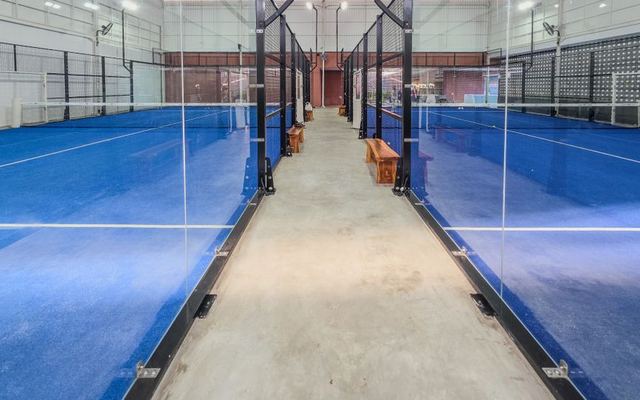 PadelDoubles racket sport on an enclosed 20 x 10 m court where the walls stay in play.
 TeqballSoccer skills over a curved table, singles or doubles, with no physical contact allowed.
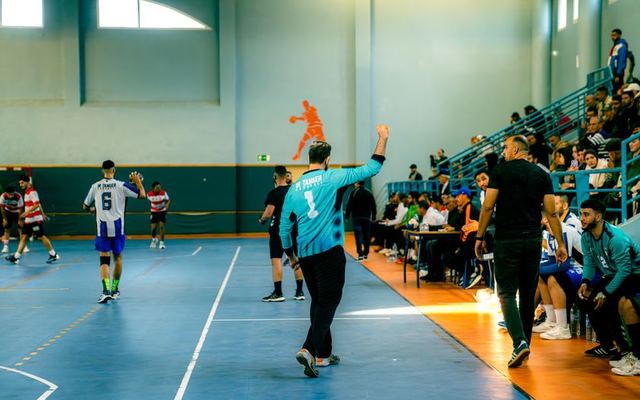 TchoukballSeven-a-side handball variant where you score off rebound frames and interceptions are banned.
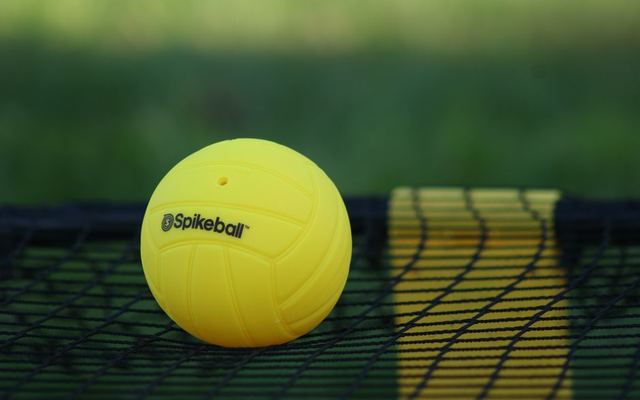 SpikeballTwo-on-two, up to three touches, then spike the ball onto a round net; no sides after the serve.
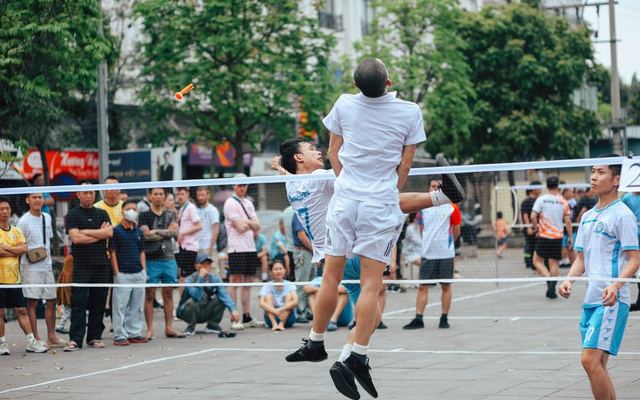 FootvolleyBeach volleyball rules, but no hands, arms or forearms: two-on-two on sand.
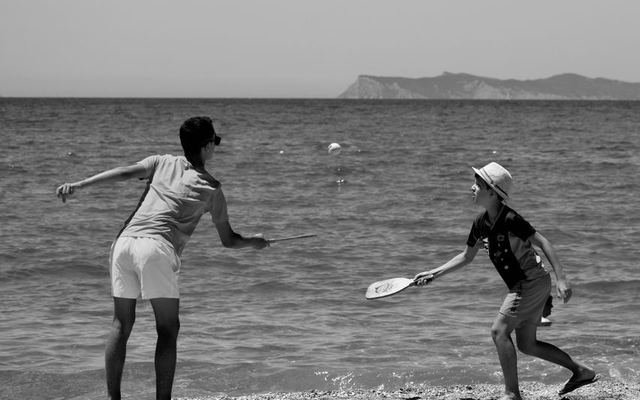 Beach TennisTennis scoring on sand with stringless rackets and low-compression balls, no bounce allowed.
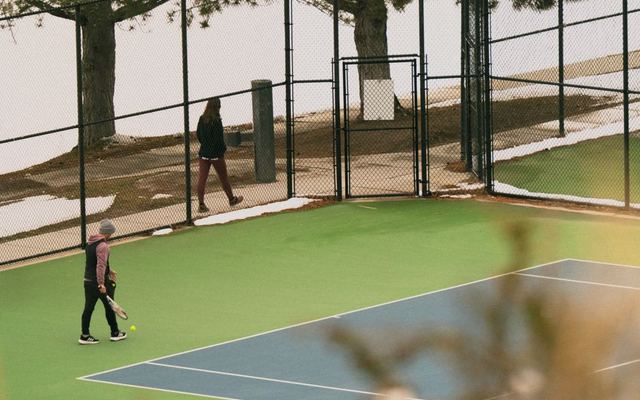 Platform TennisCold-weather doubles on a heated raised deck inside wire screens that stay in play.
 Sepak TakrawThree-a-side kick volleyball with a woven ball: feet, legs, chest and head only.