Sepak Takraw Rules and How to Play
How sepak takraw is played under the 2024 ISTAF rules, and where in the US.
Sepak takraw is a Southeast Asian net sport where two opposing teams volley a woven synthetic ball across a net without using their hands or arms. At Wildcard Sport, we research new sports from official federation rulebooks and link each source. Often called kick volleyball, sepak takraw combines elements of volleyball, soccer, and martial arts on a compact court.
Matches rely on three-player sides known as a regu. Players use feet, legs, shoulders, and the head to pass the ball. Under the 2024 International Sepaktakraw Federation (ISTAF) regulations, sets run to 15 points in a best of three match.
Two to four athletes compete on each side depending on the specific event category. Regu represents the standard three-on-three competition. ISTAF also regulates Double and Quad events with two and four players per team.
Similar foot-based net games include footvolley and teqball.
Court, Net and Ball
An official sepak takraw court measures 44 ft (13.4 m) long by 20 ft (6.1 m) wide with a required overhead clearance of 26 ft 3 in (8.0 m). The Hangzhou Asian Games page notes that the playing area is about the size of a badminton court. Run-off zones must extend at least 9 ft 10 in (3.0 m) clear of obstacles beyond all boundary lines.
The net is at least 20 ft (6.1 m) long and 2 ft 4 in (0.7 m) wide. Cord mesh measures between 2.4 and 3.1 in (0.06 to 0.08 m). Center net height is 4 ft 11.8 in (1.52 m) for men and 4 ft 7.9 in (1.42 m) for women.
Posts hold the net slightly higher at the sidelines. Height at the posts reaches 5 ft 1 in (1.55 m) for men and 4 ft 9 in (1.45 m) for women. Both the ISTAF rulebook and the ActiveSG equipment guide give the same heights.
The modern ball is spherical and woven from synthetic fiber in a single layer. Competition balls feature 12 holes and 20 intersections. A soft synthetic rubber coating is permitted under rule 4.4 to soften impacts against the body.
Men use a ball weighing 6.0 to 6.3 oz (170 to 180 g) with a circumference of 16.1 to 16.9 in (0.41 to 0.43 m). The women's ball weighs 5.3 to 5.6 oz (150 to 160 g) with a circumference of 16.5 to 17.3 in (0.42 to 0.44 m). Players wear jerseys, shorts, socks, and rubber-soled sports shoes without raised heels.
| Equipment Specification | Men's Standard | Women's Standard |
|---|---|---|
| Net height at center | 4 ft 11.8 in (1.52 m) | 4 ft 7.9 in (1.42 m) |
| Net height at posts | 5 ft 1 in (1.55 m) | 4 ft 9 in (1.45 m) |
| Ball circumference | 16.1 to 16.9 in (0.41 to 0.43 m) | 16.5 to 17.3 in (0.42 to 0.44 m) |
| Ball weight | 6.0 to 6.3 oz (170 to 180 g) | 5.3 to 5.6 oz (150 to 160 g) |
| Ball holes and intersections | 12 holes, 20 intersections | 12 holes, 20 intersections |
Positions and Team Size
A standard sepak takraw regu fields three active players assigned to specific court positions. The back athlete is the Tekong, who serves the ball from the service circle. Two forward teammates play as Inside players.
The ActiveSG rules page classifies these on-court roles as striker, server, and feeder. In official Regu events, a roster carries three to five registered players. This structure provides three active starters along with up to two reserves.
Team events organize squads differently. A full team consists of three separate regus totaling 9 to 12 registered athletes. Each regu is allowed up to two substitutions during a single set under ISTAF Law of the Game section 7.3.
Governing rules also recognize two alternative competitive formats. ISTAF publishes distinct rulebooks for Double and Quad tournaments. Double matches use two players per side, while Quad competitions feature four players on each half.
Serving and Faults
Service execution requires strict positioning before the Tekong kicks the ball over the net. The service circle has a radius of 1 ft (0.3 m) located 8 ft 0.5 in (2.45 m) from the back baseline. The Tekong must keep their non-kicking foot planted inside this circle.
Both Inside players must remain inside their respective quarter circles near the net during the serve. The serve must be kicked. Committing a positional error or failing to kick the serve awards an immediate point to the opponent.
Teams may contact the ball up to three consecutive times before sending it over the net. Striking the ball more than three times in succession is an immediate fault under rule 11.3.3. Athletes volley the ball using their feet, legs, torso, shoulders, and head.
Arms and hands are completely prohibited. An arm touching the ball at any point is called as a fault. Under rule 11.1.9, using a hand or arm to support a kick is also a fault, even without touching the ball.
Crossing boundary planes creates another common violation. No part of a player's body may enter the opposing court above or below the net. The only exception is the natural follow-through motion after an aerial kick or block.
Five officials manage international play. Rule 10.1 assigns a Referee, Assistant Referee, Court Referee, and two Line Referees to supervise every match.
How Scoring Works
Modern sepak takraw matches use a 15-point rally scoring system under the 2024 ISTAF rulebook. Any fault committed immediately awards one point to the non-offending side. The first regu to reach 15 points wins the set.
Close sets feature an extension ceiling. When the score ties at 14 to 14, play continues until a side reaches 17 points. A full match is decided through a best of three sets format with two-minute breaks between sets.
Service rotation changed substantially in 2024. Under section 10.3 of the updated rules, service alternates after every single point regardless of who won the rally. The official ISTAF Law of the Game page highlights this one-service format per side alongside 15-point scoring as the core modern standard.
Older reference materials still describe superseded regulations. The ActiveSG rules guide still outlines an earlier framework where sets required 21 points with a cap of 25. That older format also allowed a single server to retain service across three consecutive rallies.
ActiveSG notes that point targets vary depending on competition organizers. However, the official 2024 ISTAF rulebook sets 15 points as the current standard. Teams may also request one 60-second time-out per regu in each set under rule 13.1.
History and Big Tournaments
Sepak takraw developed from traditional Southeast Asian kicking pastimes with centuries-old regional roots. The sport's name joins the Malay word "sepak," meaning kick or smash, with the Thai word "takraw," meaning a woven or rattan ball. MPR News notes historical play tracing across Thailand, Indonesia, Laos, and Vietnam.
Historical origins remain contested between sources. The ISTAF profile traces the game to 15th-century "sepak raga" in the Malay Archipelago, where players kept rattan balls aloft using feet and heads. In contrast, the Hangzhou government documentation states that play dates as early as the 9th century.
The modern structured sport emerged in Malaysia. Rattan balls have mostly given way to woven synthetic balls, which the Hangzhou administration calls safer and more durable. ISTAF's 2024 rulebook lists its address in Singapore.
Official federation records show conflicting founding dates. ISTAF's own site gives both 1982 and 1988 for its establishment across different pages. Federation leadership represents nations including Thailand, Singapore, South Korea, Malaysia, India, Japan, Brazil, and Germany.
Sepak takraw debuted at the 1990 Asian Games in Beijing alongside wushu, kabaddi, softball, and canoeing according to the Olympic Council of Asia. It was contested in seven subsequent Asian Games editions, and the 2022 Hangzhou Games were set for the Jinhua Sports Center Gymnasium.
ISTAF also lists the sport at the Asian Beach Games, first held in 2008 in Bali, and the Asian Indoor Games, first held in 2005 in Bangkok. Past events on the federation calendar listed the ISTAF World Sepaktakraw Championship 2026, known as the 39th Thai King's Cup, from 3 to 11 August 2026 in Bangkok. That schedule also listed the 20th Asian Games in Aichi-Nagoya from 19 September to 4 October 2026.
Where to Play in the US
In September 2018, the city of St. Paul opened public courts at Marydale Park and the Duluth and Case Recreation Center. The facility at Duluth and Case was built on former tennis-court space.
City officials partnered with the Saint Paul Parks Conservancy and Sepak Takraw of USA to install the facilities. The Conservancy recognized them as the nation's first public sepak takraw courts. The Conservancy says more courts have since been added at rec centers such as Frogtown.
A report from Sahan Journal says funds from Minneapolis's 2019 Super Bowl hosting helped finance three dedicated courts in St. Paul. In 2018, Sepak Takraw of USA president Lee Pao Xiong described Lao, Hmong and Karenni players playing together.
Xiong has said he hopes sepak takraw becomes an Olympic sport, which would first require more players, teams and leagues. American athletes achieved international success at the 2022 ISTAF World Cup in Daejeon, South Korea. Representing Sepak Takraw of USA, Inc., the team won gold medals in both three-versus-three and four-versus-four events.
The players trained together for only two days before competition began. They beat teams from Germany, Bangladesh, Pakistan, and Iran. Roster members were of Southeast Asian descent, resided in Minnesota, Iowa, Nebraska, Indiana, and California, and paid their own airfare to South Korea.
MPR News says the sport emphasizes high jumping and flexibility. To compare it with other games, take our new sport quiz.
Frequently Asked Questions
What is sepak takraw?
Sepak takraw is a Southeast Asian net sport where two opposing teams volley a synthetic woven ball across a net without using their arms or hands. Matches are played on a badminton-sized court by teams of two, three, or four players who strike the ball using their feet, legs, head, and torso.
Can you use your hands in sepak takraw?
No, touching the ball with an arm or hand is an immediate fault in sepak takraw. Under ISTAF rules, athletes are also penalized if they use a hand or arm to support a kick.
How many players are on a sepak takraw team?
A standard sepak takraw match is played in the regu format with three active players on each side. Rosters carry three to five athletes in regu events, while full team competitions feature three regus with 9 to 12 players. ISTAF also sanctions Double events with two players and Quad events with four players.
How is sepak takraw scored?
Sets are played to 15 points under the 2024 ISTAF rulebook, and a match is decided by best of three sets. If the score ties at 14 to 14, the set extends to 17 points, and service alternates after every point. Older guides citing 21-point sets describe an earlier scoring format that ISTAF updated in 2024.
What is a sepak takraw ball made of?
Modern competition balls are made of synthetic fiber woven into a single spherical layer with 12 holes and 20 intersections. A soft synthetic rubber coating is permitted to cushion impacts during play. Rattan was traditionally used, and the Hangzhou Asian Games page calls synthetic balls safer and more durable.
Is sepak takraw an Olympic sport?
No, sepak takraw is not an Olympic sport. It has been a medal event at the Asian Games since 1990 and appears in several regional Asian competitions. While national organizers in the United States have expressed hopes for future Olympic recognition, it is not currently on the Olympic program.
Where can you play sepak takraw in the US?
Public dedicated courts are located in St. Paul, Minnesota, including outdoor courts at Marydale Park and the Duluth and Case Recreation Center, plus more at rec centers such as Frogtown. The courts were developed through municipal partnerships with the Saint Paul Parks Conservancy and Sepak Takraw of USA.
How tall is a sepak takraw net?
The net measures 4 ft 11.8 in (1.52 m) tall at the center for men and 4 ft 7.9 in (1.42 m) for women. At the posts along the sidelines, the net stands 5 ft 1 in (1.55 m) high for men and 4 ft 9 in (1.45 m) for women.
Sources
Try a Free Tool
More Sports to Explore
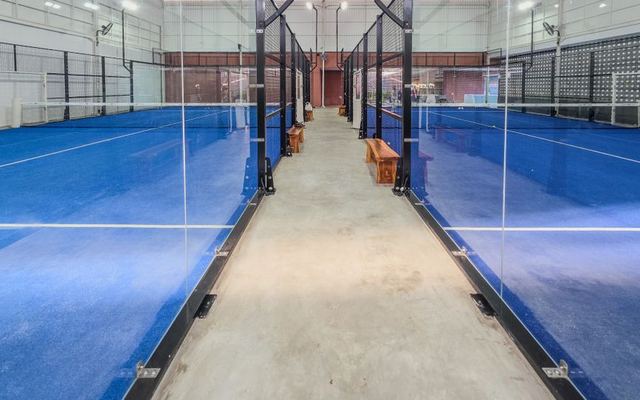 PadelDoubles racket sport on an enclosed 20 x 10 m court where the walls stay in play.
 TeqballSoccer skills over a curved table, singles or doubles, with no physical contact allowed.
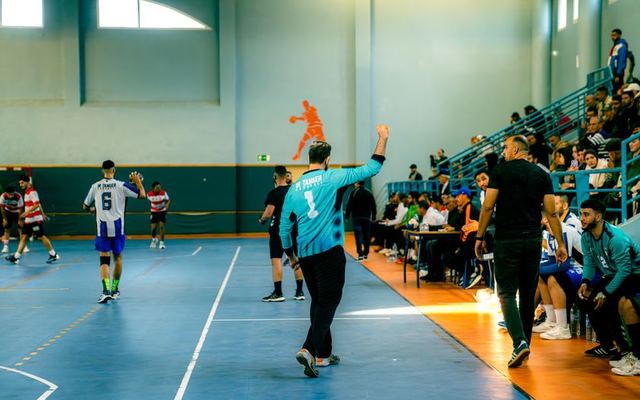 TchoukballSeven-a-side handball variant where you score off rebound frames and interceptions are banned.
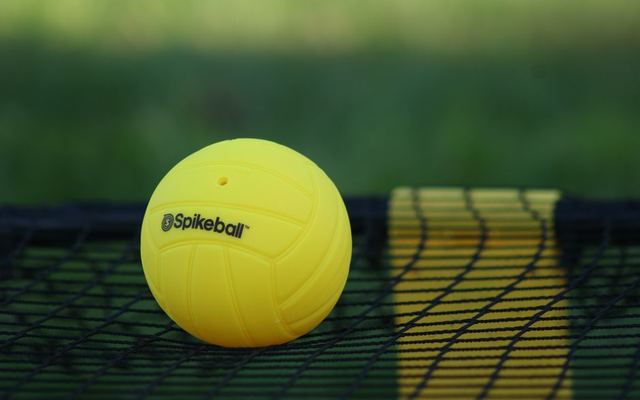 SpikeballTwo-on-two, up to three touches, then spike the ball onto a round net; no sides after the serve.
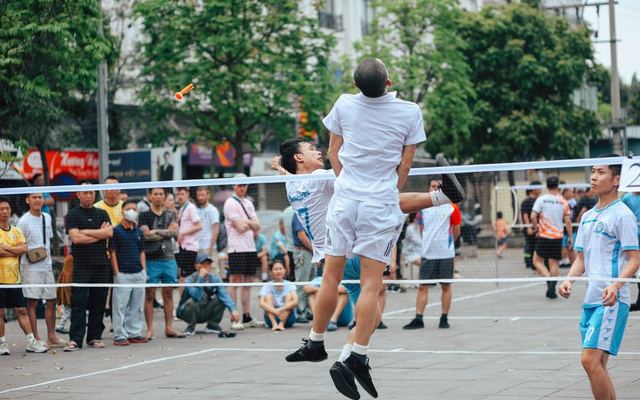 FootvolleyBeach volleyball rules, but no hands, arms or forearms: two-on-two on sand.
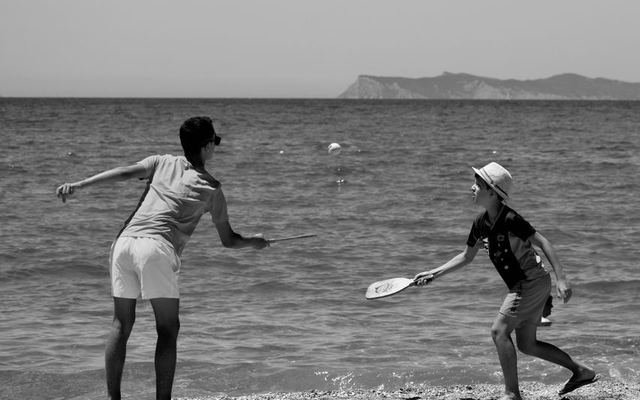 Beach TennisTennis scoring on sand with stringless rackets and low-compression balls, no bounce allowed.
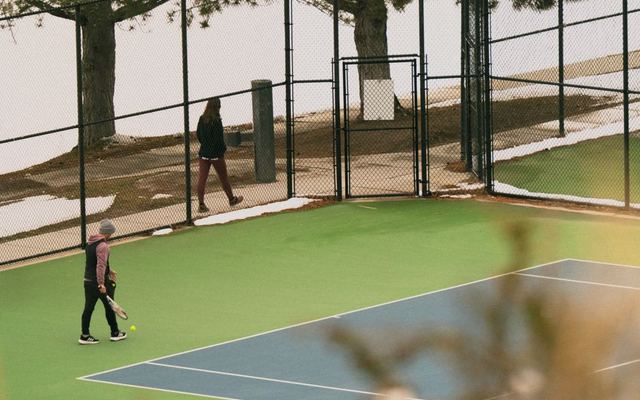 Platform TennisCold-weather doubles on a heated raised deck inside wire screens that stay in play.
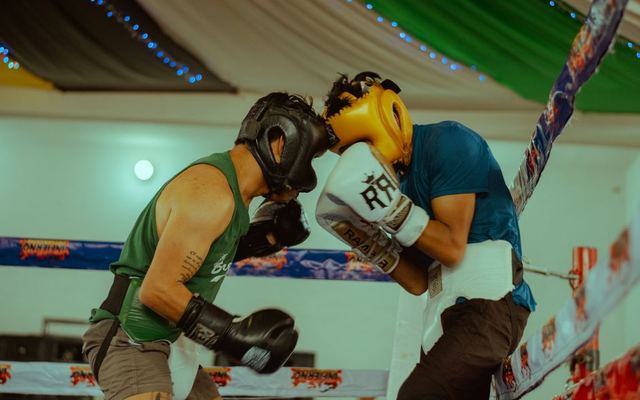 Chess BoxingOne-on-one, alternating rounds of fast chess and amateur boxing; win by checkmate or knockout.