Kin Ball Rules and How the Game Works
How three-team scoring works, plus the ball and court you need.
Kin ball is a team sport from Quebec in which three teams of four play at once with a 1.22 m (48 in) ball that weighs about 1 kg (2.2 lb). At Wildcard Sport, we research emerging sports from official rulebooks, governing-body publications, and manufacturer specifications.
The defending team must catch the ball before it touches the gym floor. A defensive failure awards one point to each opponent. For other team games, see our new sports guides.
Three Teams, One Giant Ball
A standard match features three opposing teams competing on the same court simultaneously. Each roster carries 4 to 8 players, a head coach, and two assistant coaches. Four players from each team take the court at any time to form an active cell.
Twelve players share the playing surface during every rally. Teams wear distinctive colored bibs in grey, black, and either pink or blue. A six-faced die featuring the three team colors determines which team starts with the ball.
Rallies continue until a cell commits an infraction. When a team commits a fault, both opposing teams receive one point. This scoring formula means mistakes benefit both rivals on the scoreboard equally.
Court Size and Equipment
An official match is played in a gym, bounded by its walls, floor, ceiling and fixed objects. According to the International Kin-Ball Federation rulebook, the court cannot exceed 20 by 20 m (about 66 by 66 ft). Equipment manufacturer Omnikin lists the playing area as no larger than 60 by 60 ft (20 by 20 m).
Twenty meters converts to roughly 66 feet, which means Omnikin's 60-foot figure understates the metric boundary. The Quebec Kin-Ball Federation notes that a match needs only a gymnasium, the ball, and three teams. Omnikin also states that matches can take place outdoors on grassed areas.
The official sport ball measures 1.22 m (48 in) in diameter and weighs 2.2 lb (1 kg). It features a 100 percent high-tenacity nylon cover fitted with latex bladders, and a thermoplastic polyurethane (TPU) bladder is also offered. Omnikin also manufactures a 33-inch practice ball, a 40-inch outdoor ball, and a 24-inch street ball.
Tournament organizers must prepare specific accessories before play begins. Each court requires two official balls, three sets of colored bibs, an inflator, and a timing clock. Officials also rely on a scoreboard, a noise device, the colored die, and two linesmen flags.
Hitting and Catching
Every rally begins when an attacking cell executes a coordinated strike. Before striking the ball, an attacker must call Omnikin followed by the designated defending color. The caller must finish the vocal call at the exact instant of the hit.
All four players of the attacking cell must maintain physical contact with the ball during the hit. Failing to touch the ball constitutes a fault. Swiss Kin-Ball notes that this mandatory four-player contact instills cooperation, fair play, and team spirit directly into match play.
The hit must travel a minimum distance of 1.8 m (6 ft). At least part of the ball's trajectory must travel horizontally or upward. Directing a downward angle hit or failing to clear the minimum distance results in an immediate fault.
Attackers cannot strike or push the ball using any body part below the hips. Once the called defending team touches the ball, a ten-second shot clock begins. Defenders may use any part of their bodies to catch the ball before it contacts the floor.
Scoring and Common Fouls
Kin ball penalizes mechanical errors and strategic violations by awarding points to both opponents. If a defending team allows the ball to hit the floor, both rival teams earn one point. Hitting the ball below the hips or driving it downward also awards points to both opponents.
The rules include an unjustified attack fault. An attacking cell may only target the team with the highest score on the scoreboard. When the leading team attacks, its players must call the second-place team.
Targeting the lowest-scoring team results in an immediate fault. Defenders must also respect proximity boundaries during hits. No team may position more than one defender within 1.8 m (6 ft) of the ball during an offensive strike.
The International Kin-Ball Federation rulebook incorporates an official sportsmanship charter. Sportsmanship ranking points count toward overall tournament standings. Players who want to compare these tactical mechanics to net sports can read our guide to spikeball rules.
| Infraction | Rule Trigger | Point Result |
|---|---|---|
| Missing a contact | Fewer than four cell members touching at the hit | One point to each opposing team |
| Throw too short | Ball travels less than 1.8 m (6 ft) | One point to each opposing team |
| Downward angle hit | Trajectory lacks a flat or upward path | One point to each opposing team |
| Illegal offence | Ball struck or pushed below hip level | One point to each opposing team |
| Unjustified attack | Attacking a team other than the leader | One point to each opposing team |
| Clock expiration | Defense exceeds ten seconds to execute hit | One point to each opposing team |
Periods and Winning Scores
Match lengths vary according to competition tier and participant age. Matches divide into periods separated by two-minute intervals. Each team receives one 40-second timeout during each period.
For beginner and intermediate players, the rulebook suggests fixed-period games lasting 1 to 3 periods of 5 to 10 minutes. Competitive leagues use variable series where teams compete to win 2 of 4, 3 of 7, or 4 of 10 periods. In these tournaments, individual periods run to 9 to 15 points or span 7-minute blocks.
The French Kin-Ball Federation uses a format where matches require four winning periods of 11 points, shortened for younger players. This setup follows the official best-of-ten option approved by international authorities.
Official tournament matches run under the complete formula established by the international federation. Each period sets a target score alongside a critical score placed exactly two points below that target. In a period played to 13 points, the critical score sits at 11 points.
When any team reaches the critical score, the team with the lowest score leaves the court. The two remaining teams play out the final points until one team reaches the target score. Players seeking other fast non-traditional team games can read about tchoukball or test their preferences with our new sport quiz.
Who Can Play and Contact Rules
Kin ball rules penalize body contact between attackers and defenders in specific situations. An attacking player who steps outside their body axis to block, slow, or contact a defender commits an illegal offence. A defender who causes contact by invading an attacker's body axis commits an illegal defence.
Teams can compete in single-gender or mixed-gender rosters. International championships do not feature mixed-gender divisions. For mixed play, the international federation recommends maintaining at least two female players on the court at all times.
Omnikin lists the game for participants aged 8 and up, supporting 12 to 30 players per ball. The French Kin-Ball Federation states that no specific physique is necessary to participate.
Omnikin claims the activity builds cardiovascular capacity alongside eye-hand, eye-foot, and hand-foot coordination. The Quebec federation notes that physical strength, speed, strategy, and endurance all contribute to team success.
The German federation highlights spectacular strikes and acrobatic rescues. Omnikin claims kin ball is the only organized cooperative sport in the world. The company also states the game integrates participants with disabilities and supports school programs addressing childhood obesity and bullying.
Where Kin Ball Came From
Kin ball originated in Quebec, Canada, during the mid-1980s. The sport is credited to physical education teacher Mario Demers and the company he founded, Omnikin. Historical records report differing creation dates across national governing bodies.
Swiss Kin-Ball states that Mario Demers created the sport in 1986 out of concern about young people's declining motivation for physical activity and rising obesity. The Quebec federation records 1987 as the official creation year. Omnikin lists its corporate founding year as 1985.
The German Kin-Ball Federation history presents a different perspective. It records that sports students developed the game in the mid-1980s for an examination task before designing the three-team model in October 1986. An official rulebook appeared in August 1987, followed by the Quebec provincial federation in 1992.
The International Kin-Ball Federation was created in 2000 and is based in Lévis, Quebec. Member federations operate in Germany, China, Denmark, Spain, France, Hong Kong, Japan, Singapore, Slovakia, Switzerland, South Korea, Czechia, Belgium, and Canada. The international federation homepage links no US member federation.
International competition began with the inaugural World Cup in Canada in 2001, featuring Canada, the United States, Japan, and Belgium. Subsequent tournaments occurred in Canada, Belgium, Spain, France, and Japan. The German federation notes that Japan's men's victory at the 2015 tournament in Spain broke Canada's streak of sweeping both World Cup divisions.
Thirteen nations competed at the eleventh World Cup in Seoul, South Korea, in 2024. Belgium will host the 2027 World Cup. The German federation listed 40 teams from nine nations for the European Cup and International Open in Erfurt, Germany, in August 2026.
The Quebec provincial federation lists nine regional associations and runs regional and provincial championships. Kin-Ball UK is working with the UK's university sports body to get more university teams.
Omnikin reports that nearly 4 million players participate across more than 40 countries worldwide. If you want to explore other tactical court games, consider learning about teqball or reading our breakdown of speedgate. You can take your next step by contacting a local recreation department to ask if gym space is available for kin ball.
Frequently Asked Questions
What is kin ball?
Kin ball is a cooperative team sport played by three teams of four players on a single court. Teams use a lightweight 1.22 m (48 in) nylon ball weighing 1 kg (2.2 lb). The attacking team shouts Omnikin and a rival color before hitting the ball, and all four cell members must touch the ball at the moment of the strike.
How big is a kin ball and how much does it weigh?
An official kin ball measures 1.22 m (48 in) in diameter and weighs 2.2 lb (1 kg). It features a 100 percent high-tenacity nylon outer cover containing a latex or TPU bladder. Omnikin also manufactures smaller variations, including a 33-inch practice ball and a 40-inch outdoor version.
How many players are on a kin ball team?
A kin ball roster includes between 4 and 8 players, but exactly four active players take the court to form a cell. Three opposing teams compete simultaneously, putting 12 players on the court at once. Rosters also include a head coach and up to two assistant coaches.
What do you say before hitting the ball in kin ball?
Attackers must shout the word Omnikin immediately followed by the color of the targeted defending team. The vocal call must finish at the precise moment the player strikes the ball.
How do you score in kin ball?
Teams score points when an opposing team commits a fault during play. Whenever a cell drops the ball, hits it incorrectly, or violates a rule, both opposing teams receive one point. In the rulebook's best-of formats, periods are played to 9 to 15 points or for 7 minutes.
Who invented kin ball and when?
Kin ball is credited to physical education teacher Mario Demers and the Canadian company Omnikin in the mid-1980s. Exact founding dates remain contested, as Swiss Kin-Ball cites 1986 while the Quebec federation lists 1987. German federation records state sports students developed the game for an exam task before introducing the three-team format in October 1986.
Is kin ball a contact sport?
Official kin ball rules penalize body contact between attackers and defenders in specific situations. Players must respect the body axis of opposing athletes during defensive movement and offensive hits. The rules restrict defenders from placing more than one player within 1.8 m (6 ft) of the ball during an offensive strike.
Can kin ball be played outside?
Kin ball can be played outdoors on grassed areas using specialized balls manufactured by Omnikin. The company produces a 40-inch outdoor ball and a 24-inch street ball designed for outside surfaces. Official international federation matches take place indoors inside a gymnasium.
Sources
Try a Free Tool
More Sports to Explore
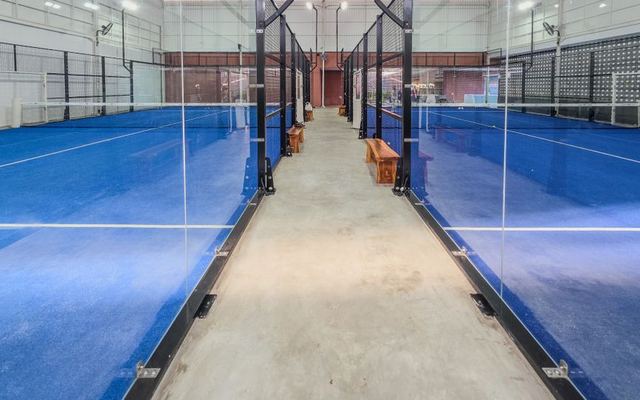 PadelDoubles racket sport on an enclosed 20 x 10 m court where the walls stay in play.
 TeqballSoccer skills over a curved table, singles or doubles, with no physical contact allowed.
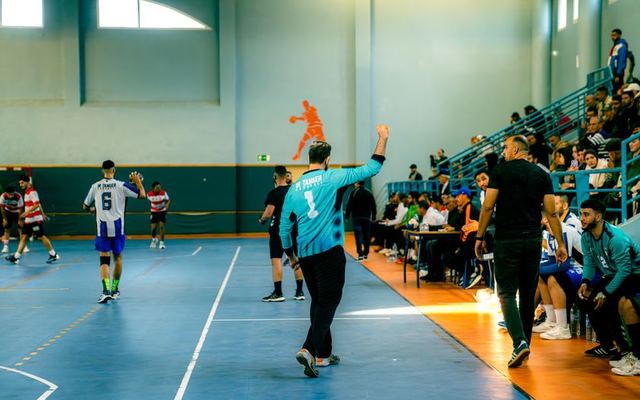 TchoukballSeven-a-side handball variant where you score off rebound frames and interceptions are banned.
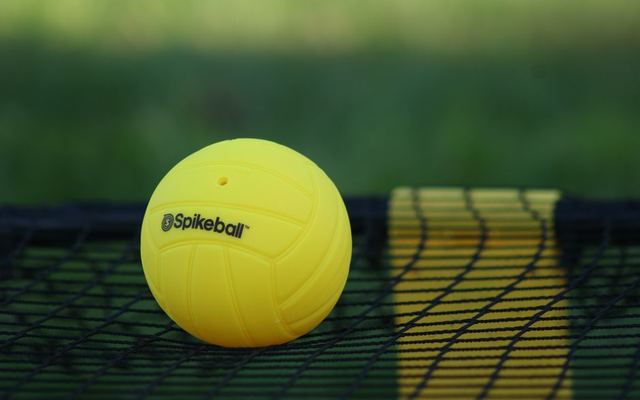 SpikeballTwo-on-two, up to three touches, then spike the ball onto a round net; no sides after the serve.
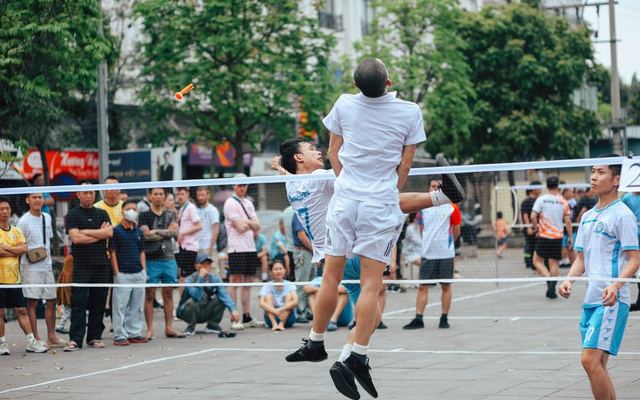 FootvolleyBeach volleyball rules, but no hands, arms or forearms: two-on-two on sand.
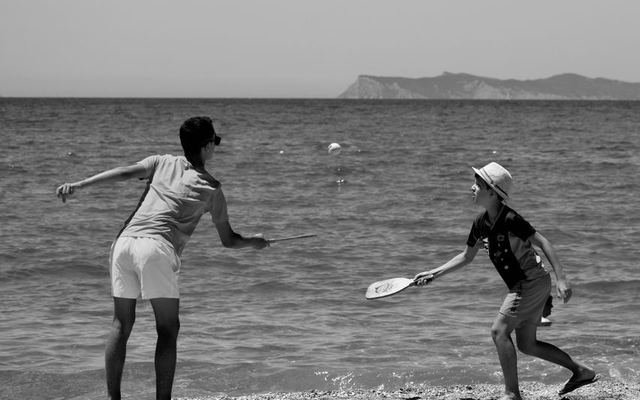 Beach TennisTennis scoring on sand with stringless rackets and low-compression balls, no bounce allowed.
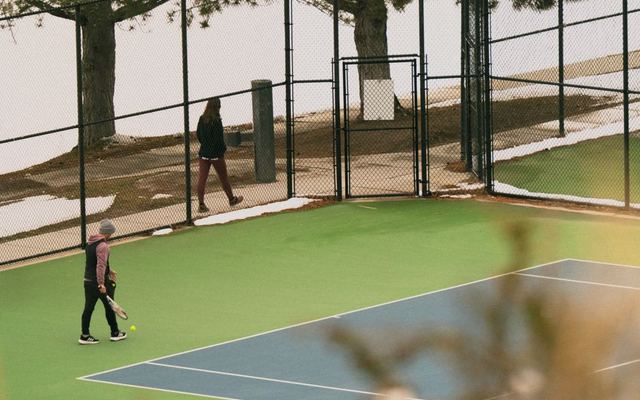 Platform TennisCold-weather doubles on a heated raised deck inside wire screens that stay in play.
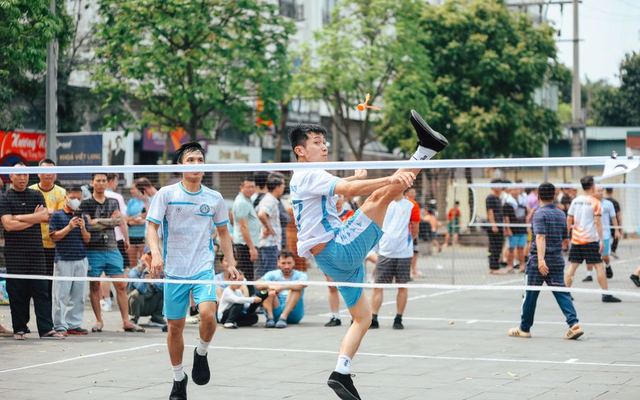 Sepak TakrawThree-a-side kick volleyball with a woven ball: feet, legs, chest and head only.