Chess Boxing Rules, Round by Round
Rounds, clocks and the six ways a FISP 2025 bout can end.
Under standard chess boxing rules, two fighters alternate rounds of speed chess and boxing until the bout ends by checkmate, knockout, running out of chess clock time, technical knockout, disqualification, resignation, or boxing points. At Wildcard Sport, we research emerging sports from primary rulebooks and federation records to explain how new competitive formats actually function. A standard bout runs for a maximum of 11 rounds, opening and finishing with chess.
A checkmate or a knockout ends the bout at once.
The Rules in Brief
A regulation match consists of 11 alternating rounds, dividing the contest into 6 rounds of chess and 5 rounds of boxing with a 1-minute interval between rounds. The contest always has an odd number of rounds, starts with a chess round, and finishes with a chess round. During chess rounds, a small table with a chessboard and a chess clock is placed inside the ring. An athlete wins immediately by delivering checkmate, knocking out the opponent, forcing a stoppage, or letting the opponent run out of time on the chess clock.
How the Rounds Alternate
Rounds alternate strictly between the chessboard and boxing gloves, starting with chess and ending with chess. The odd-numbered rounds consist of rapid chess, while the even-numbered rounds consist of standard boxing. A 1-minute rest interval separates every round.
Chess rounds follow international chess rules unless modified by federation regulations, with the Italian Chess Boxing Federation (FISP) allowing and encouraging Chess960 positions. Boxing rounds follow international amateur boxing rules unless modified.
Fighters must cope with sharp shifts in physiological state between rounds. A chess-boxing instructor told the Globe and Mail that you are out of breath but you have to keep your wits about you. The same report noted that a fighter suffered body blows in round four that led to a chess error in round five. The 2008 report described training that included push-ups between chess moves.
Round Lengths and Clocks by Category
Round lengths vary depending on the sanctioning body, the era, and the age and gender category of the competitors. A World Chess Boxing Organisation (WCBO) event document from Berlin in 2011 defines the standard format as six rapid-chess rounds alternating with five boxing rounds, decided within a maximum of 11 rounds by knockout or checkmate. Modern federations adjust these times depending on the skill class of the athletes.
Under the FISP 2025 technical regulations, elite adult men compete in modern bouts featuring 3-minute chess rounds and 3-minute boxing rounds, lasting up to 43 minutes total. Classic format men compete with 4-minute chess rounds and 3-minute boxing rounds, running up to 49 minutes total. Women compete across 9 rounds with 4-minute chess rounds and 2-minute boxing rounds, while Pioneers and juniors aged 16 to 18 also fight 4-minute chess rounds and 2-minute boxing rounds.
FISP also sanctions shorter competition schedules for specific events. These include a 9-round format consisting of 5 chess rounds and 4 boxing rounds with 10 minutes on the chess clock per athlete. A 7-round format features 4 chess rounds and 3 boxing rounds with 8 minutes per athlete. Chessboxing NYC specifies 3-minute rounds of speed chess and boxing for up to 11 rounds. A sponsor report from the 2025 World Championship in Loznica, Serbia, noted 4-minute blitz chess rounds and 3-minute boxing rounds.
| Category or Event | Chess Round Length | Boxing Round Length | Total Rounds | Rest Between Rounds |
|---|---|---|---|---|
| FISP Elite Men (Modern) | 3 minutes | 3 minutes | 11 rounds | 1 minute |
| FISP Classic Men | 4 minutes | 3 minutes | 11 rounds | 1 minute |
| FISP Women | 4 minutes | 2 minutes | 9 rounds | 1 minute |
| FISP Juniors (16 to 18) | 4 minutes | 2 minutes | Not published | 1 minute |
| FISP Pioneers | 4 minutes | 2 minutes | Not published | 1 minute |
| 2003 World Championship | 4 minutes | 2 minutes | 11 rounds | Not published |
| 2008 Berlin Title Bout | 4 minutes | 3 minutes | Not published | Not published |
| 2025 World Championship | 4 minutes | 3 minutes | Not published | Not published |
| Chessboxing NYC | 3 minutes | 3 minutes | Up to 11 rounds | Not published |
How to Win, and What Happens on a Draw
A chess boxing match ends as soon as a decisive outcome occurs in either discipline. According to FISP technical rules, there are seven distinct ways to win a bout:
- Resignation in either discipline.
- Checkmate on the board.
- Running out of time on the chess clock.
- Knockout in the boxing ring.
- Technical knockout, called by the referee or doctor, including stoppage for injury.
- Points in boxing.
- Disqualification.
Under FISP rules, players cannot offer a draw, and games must always be played to a decisive conclusion without applying the 50-move or 75-move rules. If a draw occurs on the board through stalemate, three-fold repetition, or an unavoidable dead position before the final scheduled round, fighters contest one additional boxing round. If that extra round yields no stoppage, the outcome is decided by boxing points.
If the chess game ends in a draw during the final scheduled round, the judges' boxing scorecards decide the match immediately. If the boxing scorecards are also completely level, the contest is officially scored as a draw.
No Coaching and No Stalling
Athletes must play chess without assistance from spectators, coaches, or commentators. During chess rounds, athletes wear earplugs beneath over-ear headphones that play music or static noise to block outside audio. FISP mandates these headphones whenever venue commentary can be heard, and the 2025 World Championship in Loznica used noise-cancelling headphones.
Corner coaching is strictly restricted to prevent outside chess guidance. During the 1-minute intervals between rounds, athletes may receive boxing advice, but talking about the ongoing chess game through words or gestures is forbidden. FISP punishes this with disqualification. Chessboxing NYC also explicitly prohibits coaching during chess rounds.
Anti-stalling regulations prevent fighters from freezing at the board to run out the round clock. A referee can initiate a 10-count against any athlete who takes too long to make a move. If the fighter fails to execute a legal move before the count of 10, that fighter loses the game. Receiving three referee counts in a single chess round, or four counts across the bout, means the fighter loses the bout. Making a third illegal move in one chess round, or a fourth illegal move throughout the match, also loses the bout.
Who Can Compete and What They Wear
Under FISP technical rules, elite competitors box without headgear, while headgear remains mandatory for all under-18 competitors and veterans. Elite fighters wear 12 oz gloves, though flyweight through featherweight competitors wear 10 oz gloves. Mixed-sex bouts are not permitted.
Weight classes establish parity in the boxing ring. Chess.com outlines weight classes for adult competitors over 17 years old. Men compete across four weight classes: lightweight up to 154.3 lbs (70 kg), middleweight up to 176.4 lbs (80 kg), light heavyweight up to 198.4 lbs (90 kg), and heavyweight over 198.4 lbs (90 kg). Women compete across four weight classes: lightweight up to 121.3 lbs (55 kg), middleweight up to 143.3 lbs (65 kg), light heavyweight up to 165.3 lbs (75 kg), and heavyweight over 165.3 lbs (75 kg).
FISP's elite class sets minimum chess and combat records before an athlete can enter the top division. Elite fighters must hold an official chess rating of at least 1500 Elo and document at least 11 prior bouts in chess boxing or other combat disciplines. Athletes who do not meet those minimums enter as Pioneers. Every athlete must present a valid medical certificate and pass an examination by the event doctor. A 2008 report noted that top international competitors held chess ratings between 1,700 and 2,000 Elo. FISP also publishes a separate rule set called Chessboxing Light.
From Comic Book to Boxing Ring
The idea appears in Enki Bilal's 1992 graphic novel Froid Équateur (Equator Cold). Dutch artist Iepe Rubingh staged the first official match in 2003.
The first Chess Boxing World Championship took place at the Paradiso venue in Amsterdam in 2003 in front of about 800 spectators, according to ChessBase. The event was organized by the WCBO with support from the Royal Dutch Chess Association (KNSB) and the Dutch Boxing Organisation. In that inaugural title bout, Iepe "The Joker" Rubingh defeated Luis "The Lawyer" in the 11th round when Luis exceeded his chess clock limit, despite Luis holding an advantage on the board. Guinness World Records lists Rubingh, recorded as Lepe, as the first Chess Boxing World Champion.
A 2011 WCBO document noted that Chess Boxing Club Berlin, founded in 2005, served as the cradle of the sport, while the London Chessboxing Club has existed since 2008. The 5th Chessboxing World Championships ran 28 October to 2 November 2023 in Riccione, Italy, using standard 11 alternating rounds with 1-minute rest breaks. The 2025 ChessBoxing World Championship took place from September 23 to 28, 2025, in Loznica, Serbia, attracting competitors from 25 countries.
Who Runs It and Where to Train
Multiple sanctioning bodies operate international chess boxing events, without a single unified governing federation. The WCBO formed in Berlin in 2003 and organized world championships through 2013, after which the World Chess Boxing Association (WCBA) formed in 2013. Chess.com states that Chess Boxing Global, founded in 2013, has organized the officially recognized world championships since its inception. Chessboxing Nation in London states that the WCBA serves as the official sanctioning body for all international titles, while FISP remains affiliated with the WCBO.
Beginners who want to try the sport do not start with full-contact sparring. Chessboxing Nation in London introduces newcomers through punch bags and focus pads, keeping combat non-contact until basic skills develop. Its WCBA-sanctioned grade system spans eight levels, running from Grade 1 for novices who understand piece movement up to Grade 8 for fighters with at least a 1700 Elo rating and two completed bouts.
In the United States, Chessboxing NYC runs from Gleason's Gym in New York. If you are comparing emerging athletic sports to find a new activity, you can also explore rules for court and hybrid sports like sepak takraw, tchoukball, or speedgate across our new sports guides. You can also use our interactive tool to see which new sport you should try based on your athletic background.
Frequently Asked Questions
How many rounds are in chess boxing?
A standard chess boxing bout has 11 rounds, consisting of 6 rounds of chess and 5 rounds of boxing. The match always starts and ends with a chess round. FISP also sanctions shorter tournament formats featuring 9 rounds or 7 rounds.
How long is each round in chess boxing?
Round lengths depend on the category and rule set being used. Under FISP elite rules for adult men, rounds last 3 minutes for chess and 3 minutes for boxing. Other rule sets and classic formats use 4 minutes for chess and 2 or 3 minutes for boxing.
How do you win a chess boxing match?
You win by checkmate, knockout, technical knockout, disqualification, resignation in either discipline, or by your opponent running out of time on the chess clock. If the chess game is drawn, an extra boxing round or the boxing scorecards decide the bout.
What happens if the chess game ends in a draw?
If the chess game ends in a draw before the final round, competitors fight an additional boxing round. If neither fighter scores a stoppage, the bout is decided by the judges' boxing scorecards. If a chess draw occurs in the final scheduled round, the boxing scorecards decide the winner immediately, and level scores result in a drawn bout.
Why do chess boxers wear headphones?
Chess boxers wear headphones and earplugs to block chess commentary. The headphones play music or noise, and FISP makes them mandatory when commentary can be heard.
Do you need to be good at chess to chess box?
You do not need a high rating to begin training at a local club, but elite competitions set strict entry standards. FISP requires at least a 1500 Elo chess rating for its elite class, plus at least 11 bouts, and athletes below those minimums compete as Pioneers. A 2008 report put the best players at about 1,700 to 2,000 Elo.
Can coaches help with the chess between rounds?
Coaches cannot provide any chess advice between rounds. FISP rules prohibit speaking or gesturing about the ongoing chess game during the 1-minute intervals, punishing violations with disqualification. Corners may give boxing advice during breaks.
Is chess boxing a real sport, and who governs it?
Chess boxing is an established competitive sport governed by several international and national bodies rather than a single unified federation. The World Chess Boxing Organisation (WCBO) was created in 2003, and the World Chess Boxing Association (WCBA) formed in 2013. National bodies such as Italy's FISP publish their own technical rules.
Sources
Try a Free Tool
More Sports to Explore
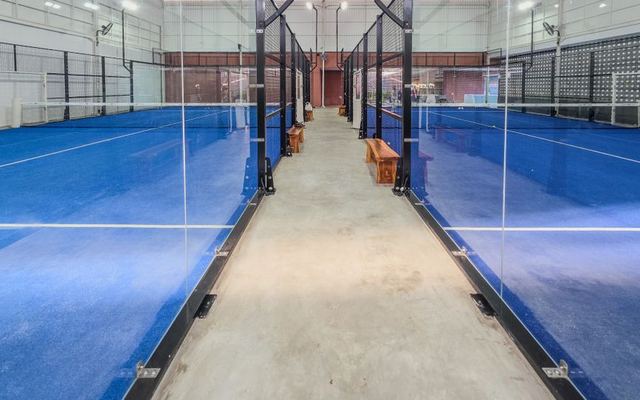 PadelDoubles racket sport on an enclosed 20 x 10 m court where the walls stay in play.
 TeqballSoccer skills over a curved table, singles or doubles, with no physical contact allowed.
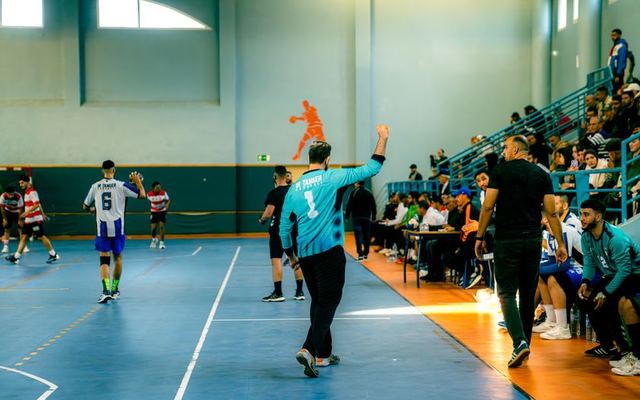 TchoukballSeven-a-side handball variant where you score off rebound frames and interceptions are banned.
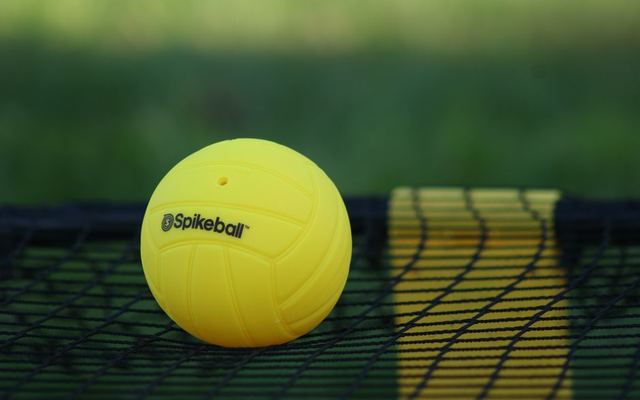 SpikeballTwo-on-two, up to three touches, then spike the ball onto a round net; no sides after the serve.
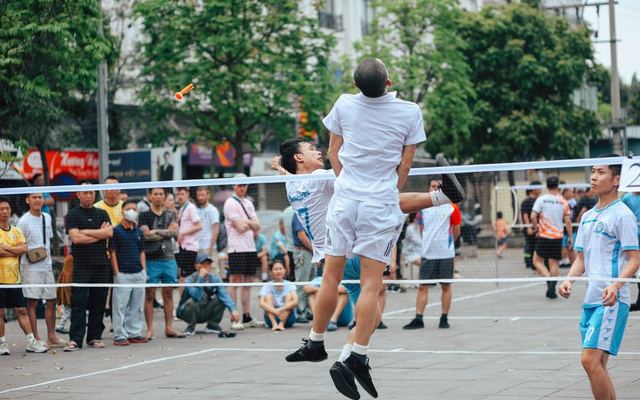 FootvolleyBeach volleyball rules, but no hands, arms or forearms: two-on-two on sand.
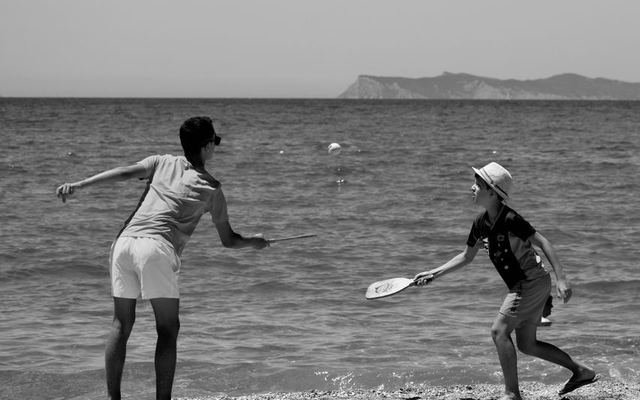 Beach TennisTennis scoring on sand with stringless rackets and low-compression balls, no bounce allowed.
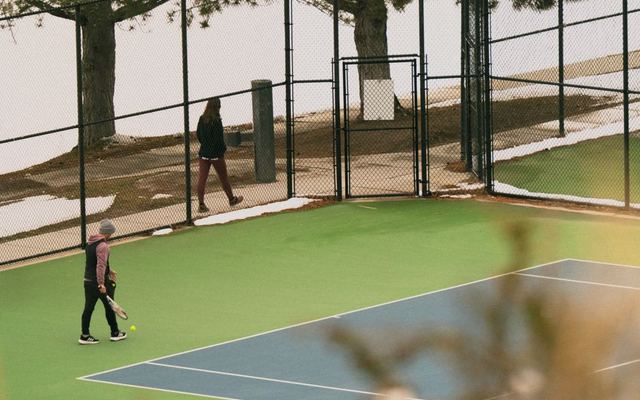 Platform TennisCold-weather doubles on a heated raised deck inside wire screens that stay in play.
 Sepak TakrawThree-a-side kick volleyball with a woven ball: feet, legs, chest and head only.