Quadball Rules and How the Sport Works
Positions, scoring, the 20-minute seeker floor, and full-contact rules.
Quadball is a full-contact, mixed-gender team sport in which two squads of seven athletes play with brooms between their legs, one volleyball, three dodgeballs, and three hoops at each end. At Wildcard Sport, we research emerging sports from federation rulebooks and official governing-body documents.
According to the IQA play page, it is the international governing body for quadball. See our new sports guides.
How a Quadball Match Works
A match pits two teams of up to 21 athletes against each other, with seven active players on the pitch for each side. The sport was previously called quidditch and has existed since 2005. In July 2022, the sport was renamed quadball, as detailed on the International Quadball Association play page.
One volleyball and three dodgeballs are in play. The primary ball is a volleyball, which chasers and keepers pass to attack and score through the opponents' hoops. Three rubber dodgeballs circulate among beaters, who throw them to disrupt and knock out opposing athletes.
See also jugger.
Positions and Headbands
Players wear colored headbands to indicate their tactical roles on the field. The International Quadball Association Rulebook 2026 lists seven players on the pitch across four positions.
One keeper per team wears a green headband. The keeper is also one of the four chasers in play.
Three chasers wear white headbands. Chasers pass the volleyball and score through one of three opposing hoops. On defense, opposing chasers defend by tackling and intercepting.
Two beaters on each squad wear black headbands. Beaters throw dodgeballs to knock out opposing players. A player struck by a live dodgeball must drop any ball they carry, dismount their broom, and run back to their own hoops before rejoining the game.
One seeker wears a yellow headband. The seeker enters the pitch only after the opening seeker floor ends. Seekers try to catch the flag, a tail attached to the flag runner.
| Position | Headband Color | Ball Handled | Primary Responsibilities |
|---|---|---|---|
| Keeper | Green | Volleyball | Chaser in play; passes and scores through hoops |
| Chaser | White | Volleyball | Pass the volleyball, score through hoops, defend by tackling and intercepting |
| Beater | Black | Dodgeballs | Throw dodgeballs to knock out opposing players (back-to-hoops) |
| Seeker | Yellow | Flag (tail) on the flag runner | Chase and catch the flag runner's tail after seeker floor |
Scoring and the Flag Runner
Teams score points in quadball by driving the volleyball through hoops or catching the flag. A standard goal awards 10 points when the complete volleyball passes through any of the three opposing hoops from either side.
Catching the flag awards 30 points to the catching seeker's team. The flag is a tennis-sized ball held in a sleeve attached to an impartial official known as the flag runner. According to the IQA Rulebook 2026, the flag ball measures 65 to 69 mm (2.56 to 2.72 in) in diameter and weighs 55 to 60 g (1.94 to 2.12 oz).
The visible length of the flag measures 25 to 30 cm (9.84 to 11.81 in).
The Seeker Floor and Overtime
The seeker floor consists of the first 20 minutes of active game time. During this opening period, the flag cannot be caught, and neither team may place a seeker on the pitch.
Seekers are released from the penalty box by the timekeeper at the 20-minute mark. Only then can either seeker attempt to catch the flag from the flag runner.
The match ends after a flag catch only if the team that catches the flag leads in total score. If the catch creates a tie or leaves the catching team trailing, the match advances to overtime.
The game sets the overtime target score equal to the non-catching squad's score plus 30 points. During overtime, each team plays with six athletes on the pitch.
The Pitch and Hoops
The quadball playing field is a rectangle bounded by sidelines and endlines. The IQA rulebook specifies that sidelines run 57 to 63 m (187 to 206.7 ft) in length, while endlines measure 30 to 36 m (98.4 to 118.1 ft) wide.
A midfield line divides the pitch at the midpoint of each sideline. Keeper zone lines sit 11 m (36.1 ft) on either side of the midfield line. Goal lines sit 16.5 m (54.1 ft) on either side of the midfield line.
Three hoops stand on each goal line. The tallest hoop stands at the center of the line, while two shorter hoops stand 2.75 m (9.0 ft) to its left and right. Every hoop features an inner circular diameter of 81 to 86 cm (31.9 to 33.9 in).
The short hoop stands 89 to 93 cm (35.0 to 36.6 in) tall, the medium hoop stands 135 to 139 cm (53.1 to 54.7 in) tall, and the tall center hoop stands 181 to 185 cm (71.3 to 72.8 in) tall. See also tchoukball.
| Pitch Element | Metric Dimension | Imperial Dimension |
|---|---|---|
| Sideline Length | 57 to 63 m | 187.0 to 206.7 ft |
| Endline Width | 30 to 36 m | 98.4 to 118.1 ft |
| Keeper Zone Line (from midfield) | 11 m | 36.1 ft |
| Goal Line (from midfield) | 16.5 m | 54.1 ft |
| Hoop Lateral Spacing | 2.75 m | 9.0 ft |
| Hoop Inner Diameter | 81 to 86 cm | 31.9 to 33.9 in |
| Short Hoop Height | 89 to 93 cm | 35.0 to 36.6 in |
| Medium Hoop Height | 135 to 139 cm | 53.1 to 54.7 in |
| Tall Center Hoop Height | 181 to 185 cm | 71.3 to 72.8 in |
Balls, Flag and Brooms
The equipment for quadball includes one volleyball, three dodgeballs, brooms, and hoops. The volleyball features a circumference of 65 to 67 cm (25.6 to 26.4 in).
The rubber dodgeballs measure 67 to 70 cm (26.4 to 27.6 in) in circumference and are kept slightly deflated.
Brooms are long straight poles made from PVC, fibreglass, or wood. As described on the IQA play page, brooms are typically just under a meter long and capped on either end. Each player must keep a broom between their legs at all times, per the IQA Rulebook 2026.
Gender Maximum Rule and Contact
Quadball operates as a mixed-gender contact sport where athletes compete as their stated gender. The sport applies a gender maximum rule on the pitch.
Under rule 1.2.3 of the IQA rulebook, a team may not field more than three players who identify as the same gender during the seeker floor or overtime periods. Outside of those periods, a team may field no more than four players of the same gender. The IQA play page summarizes this rule as a maximum of three players of the same gender on pitch.
The IQA describes quadball as full-contact. The IQA rulebook classifies tackling a helpless receiver as a red-card offense under rule 6.1.7.
Where Quadball Came From
Quidditch began in 2005 at Middlebury College in Vermont, United States. Two undergraduate students, Xander Manshel and Alex Benepe, decided to try playing quidditch rather than bocce.
The game started as an adaptation of the fictional sport Quidditch from the Harry Potter book series. Fans adapted the fantasy concept into a real-world athletic competition, hosting the first intercollegiate match in 2007.
The IQA was incorporated as a not-for-profit organization in 2010, (IQA play page). In 2014 the predominantly US-based IQA split into US Quidditch and an international IQA. At the 2016 IQA Quidditch World Cup in Frankfurt, Germany, 21 teams from five continents competed. The Australian Dropbears won the grand final 150*-130, marking the first time the US was defeated (IQA play page).
At the 2018 World Cup in Florence, Italy, the United States beat Belgium in the grand final (IQA play page).
Who Governs the Sport
The International Quadball Association is the international governing body for quadball. It aims to lead and promote the sport by holding international events and supporting other quadball groups.
The IQA play page says over 30 official member nations; the IQA Rulebook 2026 says players gather daily in 40 countries.
Frequently Asked Questions
Is quadball the same as quidditch?
Quadball is the official name for the real-life sport formerly known as quidditch. In July 2022, it was renamed quadball.
How many players are on a quadball team?
A quadball team roster carries up to 21 athletes, with seven on the field at a time (six in overtime). The seven active positions consist of one keeper, three chasers, two beaters, and one seeker.
How do you score in quadball?
Teams score 10 points when the complete volleyball passes through any of the three opposing hoops from either side. A team earns 30 points when its seeker legally catches the flag tail from the flag runner.
What is the seeker floor?
The seeker floor is the opening 20-minute period of a quadball match during which no seekers are in play and the flag cannot be caught. The timekeeper releases the seekers from the penalty box at the 20-minute mark.
How big is a quadball pitch?
An official quadball pitch measures 57 to 63 m (187.0 to 206.7 ft) along the sidelines and 30 to 36 m (98.4 to 118.1 ft) along the endlines. The pitch includes two goal lines situated 16.5 m (54.1 ft) on either side of the midfield line.
Is quadball a contact sport?
Quadball is a full-contact sport, according to the IQA. Tackling a helpless receiver is a red-card offense (rulebook 6.1.7).
Do you fly in quadball?
Athletes do not fly in quadball. Players run on foot while keeping a broom held between their legs throughout the game.
Sources
Try a Free Tool
More Sports to Explore
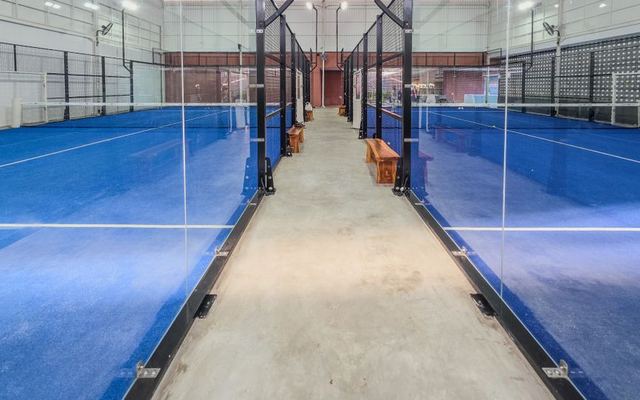 PadelDoubles racket sport on an enclosed 20 x 10 m court where the walls stay in play.
 TeqballSoccer skills over a curved table, singles or doubles, with no physical contact allowed.
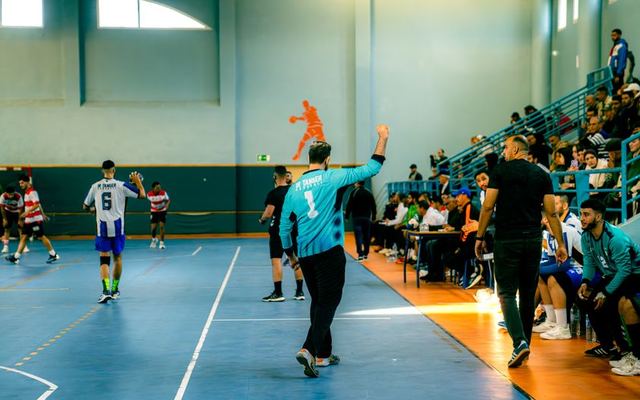 TchoukballSeven-a-side handball variant where you score off rebound frames and interceptions are banned.
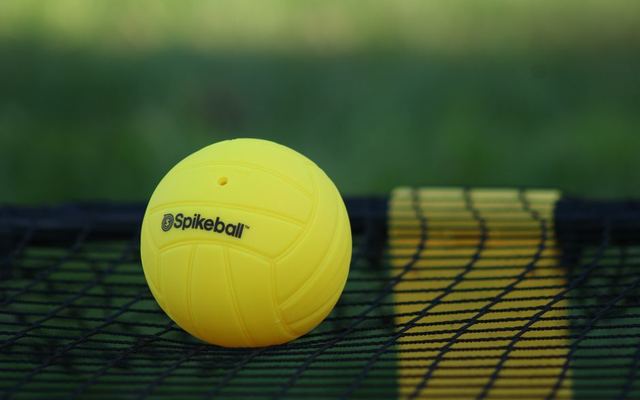 SpikeballTwo-on-two, up to three touches, then spike the ball onto a round net; no sides after the serve.
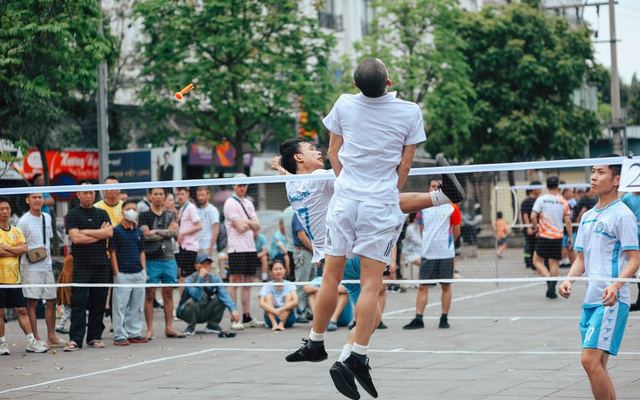 FootvolleyBeach volleyball rules, but no hands, arms or forearms: two-on-two on sand.
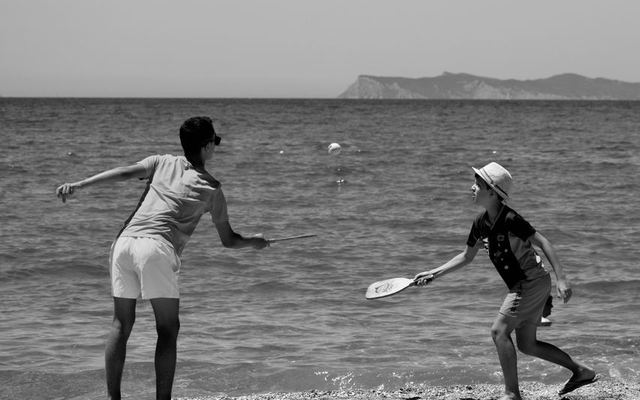 Beach TennisTennis scoring on sand with stringless rackets and low-compression balls, no bounce allowed.
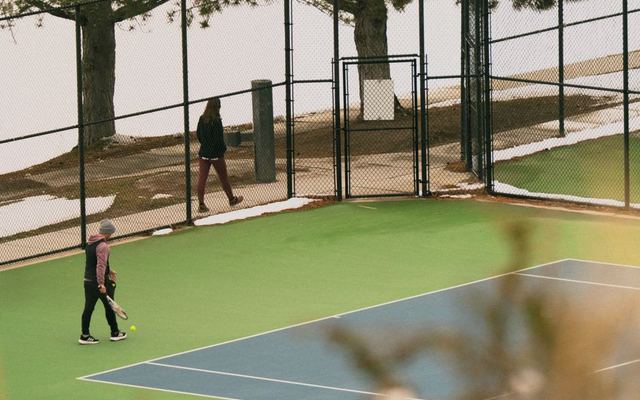 Platform TennisCold-weather doubles on a heated raised deck inside wire screens that stay in play.
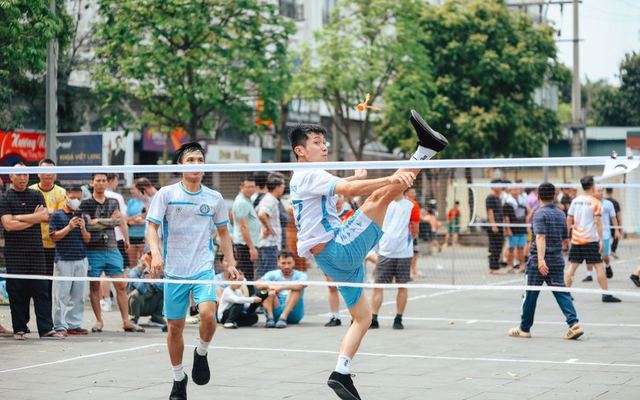 Sepak TakrawThree-a-side kick volleyball with a woven ball: feet, legs, chest and head only.